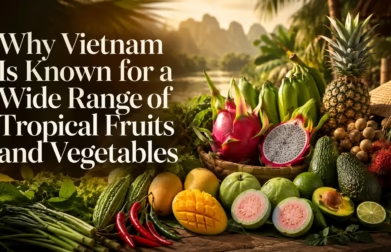
When discussing the global agricultural trade map, Vietnam is recognized not only as one of the world’s leading exporters of rice and coffee, but also as a major powerhouse in tropical agricultural products. In recent years, the question “Why Vietnam Is Known for a Wide Range of Tropical Fruits and Vegetables” has become a topic of growing interest among international importers, distributors, and supermarket chains.
This strong growth is clearly reflected in record-breaking figures: “According to statistics from the Vietnam Customs Department, Vietnam’s fruit and vegetable export turnover reached USD 793.76 million in December 2025, up 13.2% from the previous month and sharply higher by 50.2% compared with the same period in 2024. This result brought Vietnam’s total fruit and vegetable export value for 2025 to a record high of USD 8.56 billion the highest level ever recorded by the industry representing a 19.83% increase compared with 2024.” (1) What has enabled this S-shaped country to produce such an abundant, high-quality, and highly competitive supply of tropical fruits and vegetables?
>> Fruit and Vegetable Market 2025 : USD 8.5B Record, Trends & Future Strategy
The following article provides an in-depth analysis of the key factors behind this strength from natural conditions and soil characteristics to advances in agricultural technology offering a comprehensive perspective on the vast potential of Vietnamese agricultural products.
1. Geographical Location and Climate: Nature’s Advantage for Tropical Fruits and Vegetables
Located within the tropical monsoon zone and stretching on land from approximately 8°27′N to 23°23′N, Vietnam possesses highly diverse climatic conditions that vary clearly by season, region, altitude, and along the North–South axis. This creates multiple ecological sub-regions that are well suited for the cultivation of tropical fruits and vegetables.
1.1. A Distinctive Tropical Monsoon Climate
Vietnam receives abundant annual rainfall, averaging between 1,500 and 2,000 mm, along with a high number of sunshine hours, ranging from 1,500 to 3,000 hours per year. The ideal combination of plentiful humidity and strong sunlight provides a favorable environment for Tropical Fruits and Vegetables to grow, photosynthesize, and accumulate natural sugars. As a result, Vietnamese produce develops a rich and distinctive flavor profile that is difficult for crops grown in other climatic regions to match.
1.2. Diverse Climate Differentiation from North to South
Beyond its hot and humid climate, Vietnam’s long geographical stretch also creates significant climatic diversity, allowing the country to cultivate a wide range of agricultural products throughout the year.
-
Northern Vietnam: This region is characterized by a subtropical climate with a clearly defined cold winter. These conditions are ideal for fruits that require a period of dormancy before flowering, such as lychee, longan, peach, and plum, as well as cool-season vegetables including kohlrabi, cabbage, carrot, and potato.
-
Central Vietnam and the Central Highlands: The climate in this region combines equatorial characteristics with highland elevations, creating a significant difference between daytime and nighttime temperatures. Thanks to this advantage, fruits such as avocado, passion fruit, and durian, along with premium vegetables such as bell peppers and cherry tomatoes grown in Da Lat, can achieve excellent quality, high sweetness, and a longer shelf life.
-
Southern Vietnam: With a typical tropical climate and warm sunshine year-round, Southern Vietnam is considered a “paradise” for key tropical fruits such as durian, banana, mangosteen, dragon fruit, jackfruit, mango, and passion fruit. The region’s stable weather conditions enable continuous supply throughout all 12 months of the year.
2. Fertile Soil: The “Cradle” That Nurtures Tropical Fruits and Vegetables
Alongside climate, soil quality is the second crucial factor that helps explain why Vietnam is able to export such a large volume of Tropical Fruits and Vegetables to the global market. The country’s dense river system has formed vast and fertile delta regions, creating favorable conditions for agricultural production.
2.1. The Mekong Delta – Vietnam’s Largest Fruit-Producing Region
Formed by the massive alluvial deposits of the Mekong River over thousands of years, the Mekong Delta contributes more than 60% of Vietnam’s total fruit export output. The alluvial soil in this region is rich in essential minerals such as potassium and phosphorus, allowing fruit trees to grow vigorously without excessive reliance on chemical fertilizers. In addition, the region’s extensive network of rivers and canals supports efficient irrigation and makes the transportation of agricultural products within the area easier and more cost-effective.
2.2. The Central Highlands – Mineral-Rich Basaltic Red Soil
The Central Highlands is home to more than 2 million hectares of basaltic red soil, a highly fertile soil type known for its loose texture and strong water-retention capacity. Once primarily recognized as Vietnam’s capital of coffee and pepper, the Central Highlands has now emerged as a new growth hub for Tropical Fruits and Vegetables. Durian, passion fruit, and avocado cultivated on basaltic soil often feature larger sizes, attractive skin colors, thick flesh, and a deep, distinctive aroma.
2.3. The Red River Delta and the Central Coastal Region
The Red River Delta, with its ancient alluvial soil, is one of Vietnam’s leading cultivation areas for leafy vegetables and short-cycle root crops, serving both the domestic market and export processing industries. Meanwhile, the sandy soils of the Central Coastal region are particularly suitable for crops that require good drainage, such as dragon fruit, mango, and garlic. Binh Thuan is widely known as Vietnam’s largest dragon fruit production hub, while Ly Son garlic has gained strong recognition for its distinctive quality.
3. Exploring the Diversity of Tropical Fruits and Vegetables in Vietnam
To better understand the core strengths of Vietnamese agriculture, it is essential to take a closer look at the product categories that are making a strong impact on the international market. The richness of Tropical Fruits and Vegetables in Vietnam lies not only in the number of species available, but also in the wide range of distinctive crop varieties that offer high commercial value.
3.1. Billion-Dollar Export Fruits
-
Durian: Known as the “King of Fruits,” Vietnamese durian especially popular varieties such as Ri6 and Monthong has been creating a major impact in the Chinese market and across many Asian countries. In 2025, Vietnam’s durian exports reached an estimated USD 4 billion, accounting for nearly half of the country’s total fruit and vegetable export turnover (2). Vietnamese durian is highly valued for its thick golden flesh, small seeds, rich creamy taste, and intensely distinctive aroma. One of its greatest competitive advantages is the ability to harvest durian across different seasons throughout the year, helping Vietnam avoid direct supply overlap with Thailand’s main harvest season.
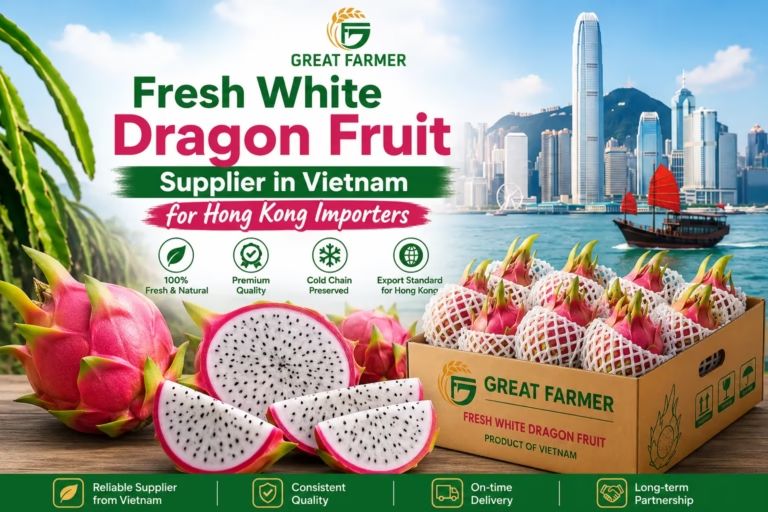
- Dragon Fruit: Vietnam’s red-flesh and white-flesh dragon fruit have long established themselves as globally recognized products, with strong exports to the United States, the EU, Japan, and China. Thanks to its eye-catching appearance, naturally rich antioxidant content, and refreshing taste, dragon fruit is not only consumed fresh but also processed into juice, jam, and dried powder.
- Banana: Banana is one of Vietnam’s most stable export commodities. The Cavendish banana variety, widely cultivated on an industrial scale in Vietnam, features a thin peel, an elongated shape, and naturally sweet, tender flesh. These qualities allow it to meet the strict standards of supermarket chains in demanding markets such as Japan and South Korea.
- Mango: Vietnam is well known for its premium mango varieties, especially Cat Hoa Loc and Cat Chu. Vietnamese mangoes win over consumers with their smooth, fiberless flesh, high Brix sweetness, and intensely fragrant aroma.
- Jackfruit and Passion Fruit: Red-flesh jackfruit and early-bearing Thai jackfruit have been recording rapid growth in production volume. Meanwhile, Vietnamese passion fruit especially concentrated passion fruit juice has become a highly sought-after ingredient in the global F&B industry thanks to its refreshing tartness and distinctive tropical aroma.
- Lychee and Longan: Small in size but high in commercial value, lychee and longan are among Vietnam’s distinctive tropical fruits. Luc Ngan lychee from Bac Giang Province is especially renowned for its thick, juicy flesh and very small seeds. Every summer, this premium specialty is exported directly by air to markets such as Australia, Japan, and the United States.
3.2. Tropical Vegetables and Spices
In addition to fruits, Vietnam’s Tropical Fruits and Vegetables portfolio also stands out strongly thanks to its diverse range of vegetables and spices:
-
Sweet Potato: Vietnamese purple sweet potato and honey sweet potato are being exported through official channels in large volumes, driven by their soft texture, natural sweetness, and high nutritional value.
-
Culinary Herbs and Spices: Lemongrass, ginger, turmeric, fresh chili, and shallots are essential ingredients in Asian cuisine and are increasingly being sourced in large quantities by international spice-processing factories.
-
Fruit Vegetables: Okra, bell peppers, tomatoes, and pumpkin are cultivated in high-tech greenhouse systems in Da Lat, meeting GlobalGAP standards and positioning them to enter even the most demanding international markets.
Classification Table of Key Agricultural Products by Region
To provide a clearer overview of Vietnam’s supply landscape, the table below presents the distribution of major tropical fruits and vegetables across the country’s key production regions:
| Ecological Region | Distinctive Climate | Key Fruits | Key Vegetables |
|---|---|---|---|
| Mekong Delta | Warm tropical climate with sunshine year-round | Durian, dragon fruit, mango, banana, jackfruit, pomelo, rambutan | Okra, chili, sweet potato, shallot, various mushrooms |
| Central Highlands | Sub-equatorial climate, basaltic soil, and cool highland conditions | Passion fruit, avocado, durian, macadamia | Tomato, bell pepper, carrot, potato, napa cabbage |
| Red River Delta | Subtropical climate with a cold winter season | Lychee, longan, pink banana, Dien pomelo | Kohlrabi, cabbage, onion, tomato, Malabar spinach |
| Central Coastal Region | Tropical monsoon climate with sandy soils | Dragon fruit, grape, apple, watermelon | Garlic, white onion, ginger, turmeric, peanut |
4. Production Capacity and the Agricultural Standardization Revolution
Having favorable natural conditions is only the foundation. To fully answer the question of why Vietnam is known for a wide range of Tropical Fruits and Vegetables, it is essential to highlight the transformation in mindset and production capacity within Vietnam’s agricultural sector over the past decade. Vietnamese agriculture has undergone a significant shift from a model focused primarily on production volume to one centered on quality optimization.
4.1. Synchronized Adoption of Good Agricultural Practices
A growing number of cooperatives and large-scale agricultural enterprises in Vietnam have successfully adopted strict standards such as VietGAP, Vietnam’s Good Agricultural Practices standard, and GlobalGAP, the internationally recognized global standard for good agricultural practices. Today, cultivation processes are increasingly governed by strict principles, including:
-
Strict control of pesticide residue levels, known as Maximum Residue Limits, or MRLs.
-
The use of organic and microbial fertilizers as alternatives to conventional inorganic fertilizers.
-
Clean irrigation water management to ensure that water sources are free from heavy metal contamination.
4.2. Planting Area Codes and Traceability Systems
For international markets, especially China, the EU, and the United States, transparency is a critical requirement. Vietnam has been digitizing its agricultural sector through the issuance of thousands of planting area codes and packing facility codes. Each exported durian carton or dragon fruit shipment can be linked to a traceability QR code. With a simple scan on a smartphone, importers and end consumers can identify exactly where the fruit was grown, when the last fertilizer application took place, and which farming household was responsible for its cultivation.
4.3. Application of High Technology in Cultivation
Israeli drip irrigation technology, smart greenhouse systems with microclimate control that automatically regulate temperature and humidity, and the use of drones for crop spraying and fertilizer application are becoming increasingly common. These technologies not only enable more precise pest and disease management but also help ensure consistent fruit quality across large-volume shipments.
5. Vietnam’s Outstanding Advantages on the Global Agricultural Trade Map
The competitive strength of Vietnam’s Tropical Fruits and Vegetables supply does not come solely from the intrinsic quality of its products. It is also strongly supported by an increasingly developed trade ecosystem and improving logistics infrastructure.
5.1. Benefits from a Wide Network of Free Trade Agreements
Vietnam is one of the world’s most deeply integrated economies, participating in 16 bilateral and multilateral Free Trade Agreements. The most notable agreements include:
-
EVFTA the EU Vietnam Free Trade Agreement: This agreement eliminates nearly all tariffs on Vietnam’s fresh and processed fruit and vegetable products entering the European market, which covers 27 countries. Thanks to the EVFTA, agricultural exports to markets such as the Netherlands, Germany, and France have recorded double-digit growth.
-
CPTPP and RCEP: These agreements create a more favorable legal framework and provide clear tariff advantages for exports to Japan, South Korea, Australia, New Zealand, and ASEAN member countries.
-
Protocols with China: The signing of a series of protocols allowing official exports of products such as durian, banana, sweet potato, bird’s nest, and, in the near future, fresh coconut and frozen durian, has opened wider access to China’s 1.4-billion-consumer market with enormous purchasing power.
5.2. Logistics Infrastructure and Cold Chain Supply
Tropical fruits are often highly sensitive to temperature and prone to spoilage. Understanding this, logistics companies in Vietnam have made strong investments in cold chain systems. From the moment agricultural products are harvested at the farm, they are quickly transferred to pre-cooling facilities, then cleaned, packed, and transported by refrigerated trucks and reefer containers directly to seaports or airports.
Irradiation centers that meet the requirements of the United States and Australia, together with Vapor Heat Treatment facilities that comply with Japanese standards, are operating at large capacity. These systems help eliminate fruit flies and harmful microorganisms, ensuring that exported products meet strict phytosanitary requirements in demanding international markets.
6. Nutritional Benefits: Why Global Consumers Are Seeking Vietnamese Agricultural Products
Global consumption trends are shifting strongly toward plant-based, health-oriented, and naturally sourced products. Vietnam’s Tropical Fruits and Vegetables align perfectly with this trend thanks to their outstanding nutritional value.
-
A Rich Source of Vitamins and Minerals: Vietnam’s sunny tropical climate allows fruits to naturally accumulate high levels of vitamins C, A, and E. For example, Vietnamese mangoes and papayas are abundant sources of beta-carotene, a precursor to vitamin A that supports eye health. Green-skin pomelo and passion fruit also contain naturally high levels of vitamin C, which contributes to immune system support.
-
Powerful Antioxidants: Red-flesh dragon fruit is rich in lycopene and anthocyanins, compounds associated with cellular protection and heart health support. Mangosteen contains xanthones, natural compounds known for their strong anti-inflammatory properties.
-
High in Fiber and Potassium: Vegetables and fruits such as purple sweet potato and Cavendish banana provide clean energy, complex carbohydrates, and potassium. They are well suited for consumers with active lifestyles, balanced diets, or controlled eating plans when consumed in appropriate portions.
Rather than relying solely on synthetic dietary supplements, consumers in Western and North Asian markets are increasingly turning to fresh tropical fruits as a natural, flavorful, and enjoyable way to support a healthier lifestyle.
7. Future Outlook and Trade Cooperation Opportunities with Vietnam’s Agricultural Sector
Vietnam is no longer positioning itself merely as a “fresh fruit basket” for the world. The future of the Tropical Fruits and Vegetables industry is witnessing a strategic shift from raw exports toward deeply processed products in order to increase added value and extend shelf life.
7.1. The Rise of Processed Fruits
Amid fluctuations in global transportation costs, processed fruits and vegetables are emerging as a new growth driver. Vietnam is actively expanding exports of various product lines, including:
-
Soft-dried and freeze-dried fruits such as dried mango, dried durian, and dried jackfruit.
-
Concentrated fruit juices such as passion fruit concentrate, pineapple juice, and canned coconut water.
-
Individually Quick Frozen fruits, known as IQF products, such as separated durian pulp and diced dragon fruit.
The application of IQF technology, or Individual Quick Freezing, helps fruits retain their cellular structure, flavor, and color after thawing. This opens up strong opportunities to supply year-round ingredients for ice cream, confectionery, and beverage manufacturers around the world.
7.2. Golden Opportunities for Investors and Importers
Vietnam continues to welcome and create favorable conditions for international partners. For importers, distributors, and companies operating within the global food supply chain, Vietnam offers strategic cooperation opportunities.
-
Stable and Large-Scale Supply: Vietnam has the capacity to enter into long-term supply contracts involving thousands of tons of agricultural products per year.
-
Guaranteed Quality and Clear Traceability: Products can be supplied with full international certifications, helping reduce legal, food safety, and import compliance risks.
-
Competitive Pricing: Reasonable production costs, combined with tariff advantages from Free Trade Agreements, help importers optimize their profit margins.
Conclusion
Vietnam has been steadily affirming its strong and irreplaceable position on the global agricultural map. The answer to the question “Why Vietnam Is Known for a Wide Range of Tropical Fruits and Vegetables” lies in the perfect convergence of natural advantages from its vibrant tropical monsoon climate and vast fertile lands to the hard work, innovative mindset, and continuous standardization efforts of millions of Vietnamese farmers and agricultural enterprises.
From the fruit-laden Mekong Delta to the mist-covered basalt hills of the Central Highlands, Vietnamese agricultural products carry not only the sweet flavors of the tropics, but also a strong commitment to quality, safety, and sustainable development. For any international business seeking a reliable agricultural supply partner, Vietnam is undoubtedly a strategic destination that should not be overlooked — a place where global partners can work together to build valuable, resilient, and prosperous supply chains.
 Blog & News