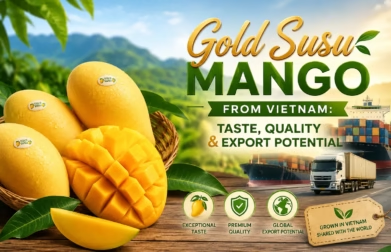
In recent years, the global tropical fruit market has witnessed the strong rise of a special mango variety known as Gold Susu Mango. Although it originally originated in neighboring Southeast Asian countries, Gold Susu Mango from Vietnam (Vietnamese Gold Susu Mango) is increasingly establishing its position on the international agricultural products map thanks to its excellent flavor, consistent quality, and abundant supply capacity.
This article aims to provide importers, distributors, and fruit enthusiasts with an in-depth and comprehensive perspective to address all questions surrounding the topic “Gold Susu Mango from Vietnam: Taste, Quality & Export Potential.” From there, it opens up potential opportunities for trade and cooperation in the future.
1. Overview of Gold Susu Mango in Vietnam
1.1. What Is Gold Susu Mango?
Gold Susu Mango (also known by names such as Susu Mango, Thai Milk Mango, and Mangga Susu) is a premium commercial mango variety. The word “Susu” means “milk” in the languages of several Southeast Asian countries, referring to the mango’s smooth, buttery flesh texture and distinctive sweet aroma.
When ripe, the mango’s thin skin changes from light green to a vibrant golden yellow (Gold), with a slender, elongated shape and a firm feel when held. In demanding markets such as Singapore, Malaysia, and Europe, Gold Susu Mango from Vietnam is gaining strong popularity thanks to its attractive appearance and excellent flesh quality.
1.2. Strategic Growing Regions in Vietnam
Vietnam, with its tropical monsoon climate and fertile alluvial soils in the Mekong Delta and the southeastern provinces (such as Dong Nai, Tien Giang, and Dong Thap), has rapidly mastered the cultivation techniques for this mango variety. The ideal difference between daytime and nighttime temperatures, combined with abundant rainfall, helps Gold Susu Mango grown in Vietnam achieve higher sweetness levels (Brix) and an attractive, slender fruit shape, while being less susceptible to pests and diseases compared with many other growing regions.
2. Taste: An Evaluation of Flavor and Texture (Taste Profile)
The key factor behind the reputation of Gold Susu Mango is the culinary experience (Taste) it offers. It is no coincidence that major supermarkets in Singapore, such as Cold Storage and Grab Mart, consistently prioritize importing this mango variety.
2.1. Honey-Like Sweetness and Tropical Aroma
Gold Susu Mango has an impressive level of sweetness, typically reaching a Brix level of 16–19% when fully ripe. The sweetness of this variety is not overpowering but rather refreshing, with hints of wild honey blended with a touch of tropical floral and herbal aromas. Even when the fruit is not yet completely soft and ripe (still slightly greenish-yellow), the mango begins to release a gentle aroma around the stem, signaling the excellent quality inside.
2.2. Smooth, Fiber-Free Texture
Many traditional mango varieties have the disadvantage of containing a significant amount of fiber, which can get stuck between the teeth and reduce the eating experience. However, Gold Susu Mango from Vietnam is almost fiber-free.
The flesh has a golden-yellow color and a firm structure, yet it melts in the mouth (melt-in-your-mouth) like a layer of buttery cream. This makes Gold Susu Mango a top choice not only for fresh consumption but also for preparing premium desserts.
3. Quality: Export Quality Standards (Quality Standards)
To address the topic “Gold Susu Mango from Vietnam: Taste, Quality & Export Potential,” quality is a criterion that cannot be overlooked. Today, Vietnamese agricultural products compete not only on price but also strengthen their position through stringent international quality certifications.
3.1. GlobalGAP-Compliant Cultivation and Harvesting Process
Gold Susu Mango farms serving export markets in Vietnam currently apply good agricultural practices (VietGAP, GlobalGAP).
- Pest Management: Fruit bagging is applied from an early stage when the fruit is still small to prevent fruit flies and insects, helping keep the fruit skin smooth and blemish-free while significantly minimizing the use of pesticides.
- Harvesting: Mangoes are harvested manually in the early morning to preserve freshness, with the stems carefully cut to prevent sap from flowing and causing skin burn. Harvest maturity is strictly controlled (typically at 75–80%) to ensure that the fruit can withstand long-distance transportation while still ripening naturally and developing a vibrant golden-yellow color when it reaches the final consumer.
3.2. Gold Susu Mango Specifications & Quality Standards (Specifications)
Below is the standard quality specification table for Gold Susu Mango exported from Vietnam, providing B2B trading partners with a clear and accurate overview:
| Evaluation Criteria (Criteria) | Detailed Specifications / Standards (Specifications) |
|---|---|
| Origin | Vietnam (Mekong Delta, Southeast Vietnam) |
| Size/Weight | 350g–420g / fruit (Size classification: 18–24 fruits / 18kg carton) |
| Skin Color | Light green when harvested, changing to a vibrant golden yellow (Golden) when fully ripe |
| Flesh Color | Bright yellow, thick flesh, small seed (very thin seed) |
| Brix Level | 16%–19% (Rich sweetness with a honey-like flavor) |
| Texture | Low-fibre to fibre-free, smooth, juicy |
| Packaging | 18kg carton, with protective foam netting around each fruit |
| Cold Storage Temperature | 10°C–13°C (During transportation in refrigerated containers) |
| Certificates | VietGAP, GlobalGAP, Phytosanitary Certificate |
4. Export Potential: Huge Export Potential (Export Potential)
An analysis of “Gold Susu Mango from Vietnam: Taste, Quality & Export Potential” would be incomplete without mentioning the enormous commercial potential in the international market. Demand for high-quality tropical fruits is growing strongly, and Gold Susu Mango is facing a “golden” opportunity, true to its name.
4.1. Promising Target Markets
Currently, Gold Susu Mango from Vietnam has successfully entered several neighboring markets and is expanding globally:
- Southeast Asian Markets (Singapore, Malaysia): These are two major fruit-importing markets with high-income consumers who are willing to pay for premium mango varieties. On e-commerce platforms such as Lazada Singapore and Grab Mart, or at supermarkets such as Star Grocer (Malaysia), Susu Mango imported from Vietnam is being sold with very stable consumption levels.
- Northeast Asian Markets (China, South Korea, Japan): With geographical proximity and short transportation times, Vietnam has a major advantage. These countries particularly favor mango varieties with an attractive appearance and golden color, which symbolizes prosperity and good fortune, making them suitable as gifts.
- EU and Middle Eastern Markets: Western consumers are increasingly favoring healthy foods rich in Vitamin C and natural fiber. With advanced cold storage technology and Free Trade Agreements (such as the EVFTA), Vietnamese mangoes in general and Gold Susu Mango in particular have significant tariff advantages when entering the European market.
4.2. Competitive Advantages of Gold Susu Mango from Vietnam
Why should importers choose Vietnam as a strategic source of supply instead of other countries?
- Stable Production and Staggered Harvesting: Thanks to advanced off-season flowering techniques, Vietnamese farmers can harvest mangoes at different times throughout the year, helping maintain an uninterrupted supply chain for B2B partners.
- Optimized Logistics Costs: Located at the center of the Asia-Pacific region, Vietnam has a system of deep-water seaports and a diverse range of direct air routes. The transportation of fresh fruit by air freight or refrigerated containers (sea freight) is fast, ensuring that the mangoes retain their best freshness when displayed on supermarket shelves.
- Competitive Pricing: Compared with long-established mango-exporting countries, labor and production costs in Vietnam remain reasonable, creating attractive profit margins (high ROI) for international distributors while still ensuring premium-quality fruit.
5. Commercial Applications and Nutritional Value (Applications & Nutrition)
Not only is Gold Susu Mango a delicious fresh fruit, but it is also an excellent ingredient for the Food & Beverage (F&B) industry.
5.1. Nutritional Value
According to general studies on this mango variety, every 100g of mango flesh provides approximately 60–65 kcal and is rich in Vitamin C and Vitamin A (in the form of Carotenoids), which help support healthy vision and strengthen the immune system. In addition, the potassium and magnesium content in mangoes also provides excellent support for cardiovascular health.
Thanks to its fiber-free characteristics and strong aroma, Gold Susu Mango is a “muse” for culinary and beverage professionals:
- Fresh Eating: Diced and used in fresh fruit salads or served with coconut sticky rice (Mango Sticky Rice).
- Beverage Industry: Used to make smoothies, pure mango juice, mango macchiato tea, and mango milkshakes.
- Food Processing Industry: Susu Mango is highly suitable for producing puree (mango puree), jam, soft-dried mango, or natural flavoring for ice cream (Sorbet, Gelato) and pastries.
6. Frequently Asked Questions (FAQs) About Gold Susu Mango from Vietnam
Q1: How can I tell when Gold Susu Mango has reached perfect ripeness?
Gold Susu Mango tastes best when the entire skin has turned an even yellow color, the fruit feels slightly soft when gently pressed with a finger (but not mushy), and, in particular, the stem releases a distinctive sweet, fruity aroma.
Q2: How long does it take to transport fresh Gold Susu Mango from Vietnam overseas?
Bằng đường hàng không (Air), xoài có thể đến các thị trường Châu Á chỉ trong vòng 24 – 48 giờ. Đối với đường biển (Sea), bằng công nghệ container lạnh (Reefer Container), trái cây có thể được bảo quản tốt trong vòng 15 – 20 ngày, đủ để xuất khẩu sang Trung Đông hoặc Châu Âu.
Q3: I am an importer in Singapore. How can I maintain the quality (Quality) of mangoes during storage?
Upon receiving the shipment, if the fruit is still green or partially ripe, you should keep it at room temperature (approximately 20–25°C), away from direct sunlight, so that the mangoes can ripen naturally. Once the mangoes have turned yellow and are ripe, they should be immediately stored in a cold storage facility at approximately 10–13°C to slow down ripening and extend shelf life. Temperatures below 10°C should be avoided because tropical mangoes are highly susceptible to “chilling injury.”
7. Conclusion
The topic “Gold Susu Mango from Vietnam: Taste, Quality & Export Potential” is not merely a temporary agricultural trend but truly represents a strategic and long-term business opportunity. With the perfect combination of honey-like flavor (Taste), fiber-free flesh texture, and a production process that strictly complies with global standards (Quality), Gold Susu Mango from Vietnam possesses immense export potential (Export Potential).
For international retailers, distributors, and supermarket chains, adding Gold Susu Mango from Vietnam to their product portfolios will certainly provide a significant competitive advantage, satisfying even the most discerning and sophisticated consumers. Vietnam is not simply selling a mango; Vietnam is bringing the essence of a tropical land to the world.
 Blog & News