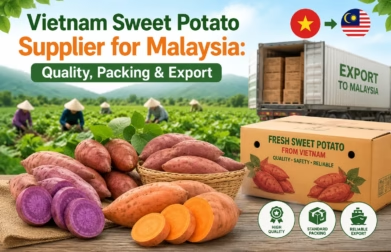
The demand for high-quality fresh produce across Southeast Asia has seen steady growth, with Malaysia standing out as a major importer of premium root vegetables. Among these, the sweet potato (Ipomoea batatas) has transitioned from a traditional staple into a high-value commodity favored by retail supermarkets, food service providers, and food processing industries across Kuala Lumpur, Penang, Johor Bahru, and East Malaysia.
To meet this escalating demand, Malaysian importers consistently turn to Vietnam a global agricultural powerhouse renowned for its fertile Mekong Delta soil, year-round cultivation capability, and superior sweet potato cultivars.
As a leading Vietnam Sweet Potato Supplier, Great Farmer bridges the gap between Vietnam’s richest agricultural zones and Malaysian buyers. By combining sustainable farming practices, rigorous post-harvest management, customized export packaging, and reliable cold-chain logistics, Great Farmer delivers premium sweet potatoes tailored precisely to the quality and regulatory standards of the Malaysian market.
1. The Growing Malaysian Demand for Vietnamese Sweet Potatoes
Malaysia’s culinary landscape and thriving food manufacturing sector drive continuous import demand for fresh sweet potatoes. While local production exists, it is insufficient to satisfy total domestic consumption, creating a reliance on imported produce that offers consistency in appearance, sweetness, and shelf life.
1.1. Key Drivers in the Malaysian Market
-
Health and Wellness Trends: Malaysian consumers are increasingly seeking nutrient-dense, low-GI (glycemic index) carbohydrates. Varieties such as the Japanese Purple Sweet Potato are prized for their high anthocyanin content and antioxidant properties.
-
Food Industry Applications: From commercial bakeries, dim sum manufacturers, and snack food processors to bubble tea chains using purple sweet potato paste (Ube/Taro-style formulations), industrial buyers require stable bulk supplies with precise Brix levels and minimal physical defects.
-
Retail & Supermarket Preferences: Modern retail chains like Jaya Grocer, Lotus’s, and AEON demand defect-free, uniform-sized, clean-skinned tubers with long shelf lives under tropical retail conditions.
1.2. Strategic Advantages of Sourcing from Vietnam
The goods are exported from Vietnam via Cat Lai or Cai Mep Port and then transported by sea for approximately 3–5 days to Port Klang or Penang Port in Malaysia for importation.
-
Geographic Proximity & Lower Freight Costs: Sea transit from Vietnam’s primary export hubs (Cat Lai Port, HCMC) to Malaysia’s major ports (Port Klang, Penang, Pasir Gudang) takes merely 3 to 5 days. This rapid transit minimizes post-harvest deterioration and drastically reduces ocean freight costs compared to suppliers from South America, Japan, or Australia.
-
Trade Agreements (Duty-Free Entry): Both Vietnam and Malaysia are member states of ASEAN. Under the ASEAN Trade in Goods Agreement (ATIGA), qualified agricultural shipments accompanied by a Certificate of Origin Form D enjoy a 0% import tariff, maximizing margin efficiency for Malaysian importers.
-
Year-Round Harvesting: Vietnam’s microclimates spanning the Mekong Delta (Vinh Long, Dong Thap, Ben Tre) to the Central Highlands (Gia Lai, Dak Lak) enable non-stop harvesting schedules, shielding buyers from seasonal supply gaps.
2. Great Farmer: Your Trusted Vietnam Sweet Potato Supplier
Great Farmer has established itself as an integrated grower, processor, and exporter of fresh agricultural products in Vietnam. Specializing in root crops, Great Farmer operates with a direct farm-to-export model that guarantees complete traceability, consistent volume, and strict quality assurance.
The export process consists of the following steps: Product sourcing → Processing, cooling, and grading → Washing and drying → Export packing → Reefer container transportation from Ho Chi Minh City to Port Klang.
2.1. Raw Material Sourcing & International Farming Standards
Great Farmer works directly with agricultural cooperatives in Binh Tan District, Vinh Long Province one of the largest sweet potato-growing areas in the Mekong Delta as well as large-scale farms in the Central Highlands. We strictly follow VietGAP and GlobalGAP standards for pesticide residue management, heavy metal control, and soil improvement.
2.2. Great Farmer’s Core Capabilities
-
Multi-stage quality control: Manual grading combined with automated weight measurement systems to ensure consistent size and uniformity.
-
Modern post-harvest infrastructure: Large-scale facilities equipped with automated washing lines, hot-air drying chambers, and temperature-controlled curing rooms.
-
Flexible OEM packaging: We provide private-label carton boxes, mesh bag packaging, or retail tray packaging according to the exact requirements of Malaysian distributors.
- Professional customs clearance: In-depth knowledge of MAQIS (Malaysian Quarantine and Inspection Services), with a commitment to ensuring 100% accuracy of phytosanitary documentation and C/O Form D.
3. Main Sweet Potato Varieties Exported to Malaysia
Depending on the market segment supermarket retail, industrial processing, or street food Great Farmer supplies three main sweet potato varieties for export:
| Comparison Criteria | Purple Sweet Potato (Lowland) | Yellow Sweet Potato (Lowland) |
|---|---|---|
| Flesh Color | Deep purple to reddish-purple, characteristic of purple sweet potato varieties | Creamy yellow to orange-yellow |
| Skin Color | Dark purple to purplish-brown | Yellow-brown to reddish-brown |
| Sweetness (Brix) | Approximately 10°–14° Brix, depending on variety and growing conditions | Approximately 12°–18° Brix, depending on variety and growing conditions |
| Flesh Texture | Firm, smooth, slightly chewy, and starchy | Softer and more moist, with a naturally sweet and creamy texture when cooked |
| Flavor | Mildly sweet, aromatic, and nutty | Naturally sweet, aromatic, and more pronounced in flavor |
| Applications | Boiling, steaming, baking, frying, bakery products, puree, and food processing | Boiling, steaming, baking, frying, bakery products, and food processing |
| Target Markets | Supermarkets, restaurants, bakeries, food service, and food processing plants | Supermarkets, restaurants, food service, wholesale markets, and food processing plants |
| Shelf Life | Approximately 2–3 months when properly cured, handled, and stored | Approximately 2–3 months when properly cured, handled, and stored |
| Storage Conditions | Store in a dry, well-ventilated environment at a stable temperature; avoid excessive moisture and excessively low temperatures | Store in a dry, well-ventilated environment at a stable temperature; avoid excessive moisture and excessively low temperatures |
3.1. Purple Sweet Potato (Lowland) – Purple Sweet Potato
Grown in Vietnam’s lowland areas, this sweet potato variety is distinguished by its naturally purple flesh and mildly sweet, nutty flavor. When steamed, boiled, or baked, it retains its characteristic purple color and develops a soft, slightly chewy texture. Purple Sweet Potato (Lowland) is suitable for supermarkets, restaurants, bakeries, and food processing businesses in Malaysia.
3.2. Yellow Sweet Potato (Lowland) – Yellow Sweet Potato
Featuring creamy yellow to orange-yellow flesh, this variety offers a naturally sweet flavor and a soft, nutty texture when cooked. Yellow Sweet Potato (Lowland) is suitable for various cooking methods, including steaming, boiling, baking, and frying. The product can meet the needs of supermarkets, restaurants, food service operators, and food processing facilities in Malaysia.
4. Quality Standards, Size Grading & Curing Process
Consistent quality is a key factor that enables Great Farmer to establish its reputation as a reliable Vietnam Sweet Potato Supplier and a long-term partner for businesses in Malaysia.
Export-Grade Sweet Potatoes
- Smooth skin with minimal soil residue
- Uniform shape, typically elongated or spindle-shaped
- Firm flesh with no bruising or physical damage
- Free from signs of pests and diseases
- Free from rot, deterioration, or sprouting
- Compliant with food safety and chemical residue requirements
Rejected Sweet Potatoes (QC Filter)
- Infested with worms, grubs, or other harmful insects
- Severe scratches, abrasions, or skin damage
- Cracked, bruised, or excessively deformed
- Sprouted or showing green shoots
- Internal rot, black rot, or other signs of internal deterioration
- Failing to meet export quality and food safety standards
4.1. Physical QC Grading Standards
Before packing, sweet potatoes undergo a strict quality inspection process:
- Skin Appearance: Tubers must be free from excessive soil residue (washed or dry-brushed according to requirements), with smooth, intact skin and no cracks.
- Defect Tolerance: Natural, healed scars must not exceed 2% of the tuber’s surface area. Tubers affected by sweet potato weevils (Cylas formicarius), black rot (Ceratocystis fimbriata), or bruising and physical damage caused by transportation are strictly rejected.
- Sprouting Condition: 100% free from sprouting and fresh disease symptoms.
4.2. Standard Export Size Grading
| Grade | Tuber Weight (g) | Tuber Diameter (mm) | Applications in the Malaysian Market |
|---|---|---|---|
| Size S | 80g – 150g | 30mm – 45mm | Affordable retail mesh bags, institutional catering |
| Size M | 150g – 300g | 45mm – 65mm | Most popular: Supermarket retail trays, whole-tuber steaming |
| Size L | 300g – 500g | 65mm – 85mm | Supermarket retail sold by weight, roasted sweet potato restaurants |
| Size XL | 500g – 800g+ | > 85mm | Slicing and processing, paste and starch production plants |
4.3. Curing Process (Wound Healing)
Fresh sweet potatoes are highly susceptible to skin peeling and spoilage during sea transportation if they are not properly cured. Great Farmer applies an internationally recognized curing process:
- Curing Conditions: After harvesting, the sweet potatoes are placed in a dedicated curing room at a temperature of 28°C–30°C, with a relative humidity of 85%–90%, for 4–7 days.
- How It Works: The process promotes the formation of a protective suberin layer, allowing the tubers to naturally heal minor scratches and wounds sustained during harvesting while also promoting the conversion of starch into sugars.
- Benefits: Curing improves the tubers’ resistance to fungal diseases, helps retain internal moisture, and can extend storage life by up to twice that of uncured sweet potatoes.
5. Packaging Specifications & OEM Solutions
High-quality packaging helps protect sweet potatoes from mechanical impact, condensation, and moisture accumulation during transportation. Great Farmer offers a wide range of flexible packaging solutions to meet the specific requirements of each customer.
5.1. Export Packaging Options
5-Ply Corrugated Carton (10kg): We use durable 5-ply corrugated cartons designed to withstand mechanical stress during transportation. Ventilation holes help improve air circulation and minimize moisture accumulation. Packaging specifications can be customized according to the customer’s size and requirements.
Breathable PP Mesh Bags (10kg): High-strength PP mesh bags provide excellent ventilation and are well suited for export packaging of sweet potatoes. The mesh design allows good airflow, helps reduce moisture buildup, and makes it convenient for quality inspection.
1. 5-Ply Kraft Corrugated Carton (Most Preferred Option)
- Construction: High-compression-strength 5-ply corrugated cardboard designed to resist deformation when multiple pallet layers are stacked inside the container.
- Ventilation Holes: Optimally positioned on all four sides of the carton to ensure even circulation of cool air around the sweet potatoes.
- Net Weight: 10kg per carton.
- Internal Lining: Food-grade wrapping paper or perforated plastic liners are used to help regulate moisture levels.
2. Polypropylene (PP) Mesh Bags
- Application: Suitable for Malaysian wholesalers at wholesale markets seeking to optimize packaging costs.
- Weight: 10kg per bag.
- Advantages: Excellent breathability, helping effectively prevent moisture accumulation.
5.2. Packaging Specifications Summary
| Packaging Type | Net Weight | Loading Method | Benefits for Importers |
|---|---|---|---|
| 5-Ply Kraft Corrugated Carton | 10 kg / 20 kg | Palletized or Floor Loaded | Excellent product protection, durable packaging, and easy stacking |
| PP Mesh Bag | 10 kg / 20 kg | Floor Loaded | Cost-effective packaging and improved container space utilization |
6. Cold Chain & Sea Freight Logistics to Malaysia
Strict temperature control throughout the entire transportation journey, from the Great Farmer facility to the customer’s warehouse in Malaysia, is essential to keeping sweet potatoes fresh and maintaining their quality.
Packing at the facility → Transportation in a reefer container at 13°C → Customs clearance in Vietnam → Shipment to the port in Malaysia → Delivery to the cold storage warehouse.
6.1. Technical Specifications for Reefer Container Transportation
Sweet potatoes are living, respiring agricultural products and are highly sensitive to extreme temperatures:
-
Set Temperature: 12°C–15°C (53.6°F–59°F).
-
Note: Temperatures below 10°C may cause chilling injury, resulting in internal browning and loss of flavor. Temperatures above 16°C, combined with high humidity, may accelerate sprouting.
-
-
Relative Humidity (RH): 85%–90%.
-
Fresh Air Ventilation Rate: 15–25 CBM/hour to continuously remove CO₂ and excess moisture from the container.
- Container Type: 20ft refrigerated container (RF) or 40ft High Cube Reefer (40ft HC Reefer).
6.2. Shipping Routes & Sea Freight Transit Time
- Ports of Loading in Vietnam: Cat Lai Port (Ho Chi Minh City), SP-ITC Port (Ho Chi Minh City), and Cai Mep Port (Ba Ria–Vung Tau).
- Ports of Discharge in Malaysia:
- Port Klang (Westport / Northport): The main gateway port serving Selangor and the Kuala Lumpur metropolitan area.
- Penang Port: Serving the northern states of Peninsular Malaysia.
- Pasir Gudang / Tanjung Pelepas: Serving Johor and providing connectivity to Singapore.
- Kuching / Kota Kinabalu: Serving East Malaysia, including Sabah and Sarawak.
- Sea Transit Time: 3–5 days for direct services.
- Total Order Fulfillment Time: Approximately 7–10 days from order confirmation to arrival at the Malaysian port, including harvesting, packing, phytosanitary inspection, and transportation.
7. Legal Requirements, Phytosanitary Certification & Customs Duties
The import of fresh agricultural products into Malaysia requires strict compliance with the regulations of MAQIS (Malaysian Quarantine and Inspection Services) under Malaysia’s Ministry of Agriculture and Food Security (KPKM).
Great Farmer provides a complete set of valid export documentation and supports customers in facilitating efficient customs clearance.
To export sweet potatoes from Vietnam to Malaysia, businesses must prepare a complete set of documents as required by the relevant authorities and the importer, including:
- Phytosanitary Certificate: Confirms that the shipment meets Malaysia’s phytosanitary requirements.
- Certificate of Origin (C/O): Certifies the origin of the goods and may be used to qualify for preferential tariff treatment if the applicable trade agreement requirements are met.
- Commercial Invoice: Specifies the value and transaction details of the shipment.
- Packing List: Specifies the packaging details, quantity, net weight, and gross weight.
- Bill of Lading (B/L): A sea transport document confirming the shipment and transportation of the goods.
Once all required documents are completed, the shipment undergoes customs clearance and inspection in accordance with Malaysian regulations before being delivered to the importer’s warehouse.
7.1. Phytosanitary Certificate
Issued by the Plant Quarantine Authority under Vietnam’s Plant Protection and Cultivation Department after direct sampling and inspection of the shipment. The certificate confirms that:
- The shipment is free from Malaysia’s regulated quarantine pests, particularly the sweet potato weevil (Cylas formicarius).
- The products are free from soil contamination, serious fungal diseases, and weed seeds.
- The shipment has undergone post-harvest treatment in accordance with the applicable technical requirements.
7.2. Certificate of Origin – Form D
Issued by the Import-Export Administration under Vietnam’s Ministry of Industry and Trade in accordance with the ASEAN Trade in Goods Agreement (ATIGA). This certificate enables Malaysian importers to benefit from a 0% preferential import tariff, subject to meeting the applicable rules of origin and other requirements.
7.3. Complete Commercial Documentation
- Bill of Lading (B/L): Original B/L or Telex Release/Express Release.
- Commercial Invoice & Packing List: Detailing the quantity, size grades, number of packages, and container information.
- Certificate of Analysis / SGS Inspection Certificate: Provided upon the specific requirements of the buyer.
7.4. Compliance with Malaysian Food Safety Regulations
Products exported by Great Farmer comply with the applicable requirements of Malaysia’s Food Act 1983 and Food Regulations 1985, including:
- Maximum Residue Limits (MRLs): Strict control of pesticide residues to ensure they remain within permitted limits.
- Heavy Metals: Regular testing to ensure that levels of Lead (Pb), Cadmium (Cd), and Arsenic (As) comply with applicable food safety requirements.
- Packaging Labeling: Cartons clearly indicate the product name, country of origin (“Produce of Vietnam”), exporter name (Great Farmer), lot/batch number, and net weight.
8. 5-Step Cooperation Process with Great Farmer
Great Farmer has developed a professional and transparent cooperation process designed to optimize time and costs for Malaysian import partners.
Step 1: Requirement & Product Specifications
The customer provides Great Farmer with detailed requirements, including:
- Sweet potato variety: Purple Sweet Potato (Lowland) or Yellow Sweet Potato (Lowland).
- Size distribution according to requirements, for example: 50% Size M, 50% Size L.
- Packaging specifications: 10kg/20kg cartons, PP mesh bags, or customized OEM packaging.
- Port of destination in Malaysia: Port Klang, Penang, or Pasir Gudang.
Step 2: Quotation & Quality Confirmation
- Great Farmer provides quotations based on FOB Cat Lai or CFR/CIF Malaysian port terms, depending on actual shipping costs.
- Product photos, videos, and QC information are provided for the customer to review and confirm product quality before placing an order.
Step 3: Contract Signing & Payment Terms
- Both parties sign an international sales contract specifying quality standards, packaging specifications, quantity, allowable tolerances, and delivery schedule.
- Flexible payment terms are available, with T/T (Telegraphic Transfer) being the most common method. The deposit and balance payment percentages are agreed upon by both parties.
Step 4: Harvesting, Processing & Packing
- Sweet potatoes are harvested from partner growing areas and transported to the packing facility for curing, cleaning, grading, and packing.
- The QC team conducts a final inspection before container loading, including checks on size, weight, tuber condition, and packaging specifications.
Step 5: Shipping & Document Handover
- The goods are loaded into a reefer container, with temperature checks and container sealing carried out before transportation to the port of export.
- Great Farmer prepares and provides the required export documents, including the Phytosanitary Certificate, C/O (Form D), Commercial Invoice, Packing List, and Bill of Lading (B/L), enabling the importer to complete customs clearance procedures in Malaysia.
9. Frequently Asked Questions (FAQ) for Malaysian Businesses
Q1: What is the Minimum Order Quantity (MOQ) for an Export Order?
Answer: The standard minimum order quantity is 1 x 20ft reefer container, with an estimated capacity of approximately 11–13 metric tons. However, Great Farmer supports new importers through a Mixed Container solution, allowing sweet potatoes to be shipped together with other key agricultural products, such as seedless limes, dragon fruit, or fresh chili.
Q2: How Does Great Farmer Handle Product Damage Upon Arrival at the Malaysian Port?
Answer: We follow a transparent claim-handling procedure:
- Within 24–48 hours after the container is opened at the Malaysian port of discharge, if the damage rate exceeds the tolerance specified in the contract, the customer must provide photos/videos and an inspection report.
- Both parties review the temperature data recorded by the Data Logger inside the container.
- If the issue is attributable to Great Farmer’s initial product quality or packaging, compensation will be provided through a deduction from the invoice of the next shipment or a refund, as mutually agreed.
Q3: Do Fresh Vietnamese Sweet Potatoes Require Halal Certification for Import into Malaysia?
Answer: Fresh, whole sweet potatoes that have not undergone chemical processing are generally considered naturally Halal. Great Farmer’s washing and packing facilities strictly follow food hygiene and safety requirements and do not use harmful preservatives or materials that would introduce non-Halal elements through cross-contamination.
Q4: How Long Can Japanese Purple Sweet Potatoes Be Stored in the Malaysian Market?
Answer: After undergoing Great Farmer’s curing process, Japanese Purple Sweet Potatoes can generally be stored for 10–14 days at room temperature (25°C–28°C) in Malaysian markets or supermarkets. When stored under appropriate refrigerated conditions at 12°C–15°C, their storage life can be extended to approximately 4–6 weeks, helping minimize moisture loss and quality deterioration.
Q5: What Is the Sweet Potato Harvest Season in Vietnam?
Answer: Through coordinated sourcing from growing areas in the Mekong Delta and Central Highlands, Great Farmer can supply sweet potatoes year-round, 365 days a year. Peak harvest volumes generally occur from December to July, helping maintain stable supply and pricing for major festive periods in Malaysia, including Chinese New Year, Hari Raya, and Deepavali.
Partner with Great Farmer – Elevate Your Fresh Produce Supply Chain
Choosing the right Vietnam Sweet Potato Supplier is a key factor in helping Malaysian importers build a sustainable, high-quality, and cost-efficient fresh produce supply chain. Great Farmer is proud to be a trusted partner, providing export-quality fresh sweet potatoes backed by professional logistics and reliable supply solutions.
Malaysian importers, supermarket chains, and food processing companies interested in learning more, receiving CIF/FOB quotations, or requesting product samples are welcome to contact Great Farmer’s export team.
 Blog & News