Today, as consumers increasingly reject products high in sugar, additives, and low nutritional value, Fresh Coconut has emerged as a preferred natural choice. With its refreshing water rich in essential minerals and completely unprocessed, fresh coconut is widely recognized as a “superfood”, well suited for both daily consumption and long-term healthy living trends.
Notably, not all coconuts meet the requirements of international markets. Among global suppliers, Vietnamese Fresh Coconut has been gaining strong recognition for its consistent flavor, uniform quality, and ability to comply with stringent export standards. From the United States and the European Union to China and Japan, Vietnamese coconuts are steadily establishing a distinct position on the global agricultural map.
So, what exactly defines Fresh Coconut, and why does Vietnamese Fresh Coconut offer a clear competitive advantage over coconuts from other producing countries? The following content will clarify these key points in detail.
1. Fresh Coconut – Not All Coconuts Are the Same
Fresh Coconut (also known as Young Coconut or Green Coconut) refers to coconuts harvested at an immature stage, typically between 6–9 months of age. This is the optimal period when the coconut reaches its best condition for harvesting naturally refreshing coconut water and soft, jelly-like coconut meat.
Completely different from Brown Coconut (mature coconut) which is primarily used for oil extraction or coconut milk processing Fresh Coconut is cultivated and harvested specifically for direct consumption. Its value lies in its natural freshness, minimal processing, and the preservation of its full nutritional content within each fruit.
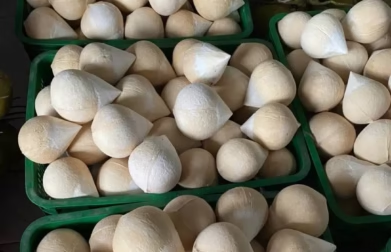
At this young stage, coconut water offers a light, naturally sweet, and easy-to-drink flavor, while the coconut meat is still forming, resulting in a soft, tender texture with a mild creaminess, low oil content, and no heaviness. Externally, fresh coconuts typically retain their natural green color. However, for export markets, they are often husked and shaped into diamond-cut or polished forms to enhance visual appeal, extend shelf life, and meet international market preferences.
Characteristic Structure of Fresh Coconut:
-
Outer Layers (Exocarp & Mesocarp): Thick and fibrous, these layers function as a natural thermal barrier, protecting the coconut water inside from external impacts while maintaining a stable, cool internal temperature.
-
Coconut Water: Crystal clear with a mild natural sweetness, coconut water remains completely sterile while sealed inside the fruit, which is a key reason Fresh Coconut is highly valued for its food safety and purity.
-
Young Coconut Meat (Endosperm): Thin, soft, and jelly-like in texture, easy to consume, and offering a light, natural creaminess. This is distinctly different from the firm, oil-rich meat of mature coconuts, making Fresh Coconut especially appealing for fresh consumption.
2. Nutritional Value: Why Is Fresh Coconut Globally Preferred?
The global rise of Fresh Coconut is not driven by a passing trend. Often referred to as “nature’s sports drink” or “Nature’s Gatorade,” fresh coconut is valued for its ability to rehydrate and replenish energy in a safe, natural, and additive-free way.
For this reason, the nutritional benefits of Fresh Coconut have become a key focus for modern consumers who prioritize health, wellness, and clean-label products.
2.1. Natural Electrolytes in Fresh Coconut
Each Fresh Coconut contains a naturally balanced electrolyte system, making it an ideal choice for post-activity hydration or consumption in hot climates:
-
Potassium: High in content often exceeding that of bananas potassium helps regulate blood pressure, reduce fatigue, and support faster muscle recovery. (1)(2)
-
Magnesium, Calcium, Sodium: These essential minerals help maintain stable nervous system function, muscle performance, and bone health. (3)
This natural balance makes fresh coconut water a healthy alternative to commercial sports drinks.
2.2. Low-Calorie – Cholesterol-Free
For those following Eat Clean, Detox, or dieting plans, Fresh Coconut perfectly meets the criterion of “guilt-free hydration.” On average, a glass of fresh coconut water contains only 45–60 calories, is cholesterol-free, and contains no harmful fats, making it ideal for both athletes and individuals who are conscious of their physique. (4)
2.3. Cytokinins – Yếu tố làm nên giá trị khác biệt
A lesser-known but highly significant feature of Fresh Coconut is the presence of cytokinins a group of plant hormones scientifically recognized for their potential to combat aging, inhibit abnormal cell growth, and support skin health. As a result, fresh coconut water is not only a refreshing beverage but is also regarded as a natural wellness and beauty solution from within. (5)
Lưu ý khi sử dụng Fresh Coconut:
Despite its many benefits, experts recommend that individuals with cold body constitution or low blood pressure should moderate their intake of Fresh Coconut, especially in the evening, to maintain overall body balance.
3. Why Is Vietnamese Fresh Coconut Highly Regarded in Global Markets?
When it comes to Fresh Coconut, international buyers often make careful comparisons among major suppliers such as the Philippines, Indonesia, Thailand, and Vietnam. What makes Vietnamese Coconut increasingly stand out is not mass production, but its consistent quality, distinctive flavor, and ability to meet premium export standards. Among them, Ben Tre coconuts are widely recognized as the most representative and high-quality example.
3.1. Natural Advantages from Specialized Growing Regions
Most Vietnamese Fresh Coconuts are cultivated in the Mekong Delta, an area continuously enriched by alluvial deposits from the Mekong River. In particular, Ben Tre province benefits from very unique soil conditions: naturally slightly saline alluvial soil, creating an ideal environment for coconuts to grow slowly and accumulate higher sugar content.
The combination of fertile alluvial soil, the interplay of fresh and slightly brackish water, and a stable tropical monsoon climate year-round gives Vietnamese Fresh Coconut its rich sweetness, lingering aftertaste, and distinctive refreshing sensation qualities difficult to achieve in coconuts grown on upland areas or coastal sandy soils.
3.2. Siam Coconut Variety – The Key to Its Reputation
One of the greatest advantages of Vietnamese Fresh Coconut is the Green Siam Coconut (Dừa Xiêm Xanh), highly valued by importers for its flavor and consistent quality.
-
Sweetness (Brix): Vietnamese Siam coconuts typically reach 7–9% Brix, higher than the global average of many other coconut varieties (around 5–6%).
-
Flavor: The coconut water has a natural fragrance with subtle pandan notes, a mild, smooth sweetness, and an easy-to-drink taste from the first sip.
Thanks to these characteristics, Vietnamese Coconut is especially suitable for the premium Fresh Coconut segment in the U.S., EU, Japan, and other markets that demand a refined taste experience.
3.3. Post-Harvest Technology & Export-Ready Preservation
Beyond natural advantages, the Vietnamese Fresh Coconut industry has invested heavily in post-harvest technologies to meet long-distance export requirements:
-
Shrink Wrap: Protects against bacterial contamination, reduces water loss, and keeps the coconut surface clean and visually appealing.
-
Deep Chilling: Allows Fresh Coconut to maintain freshness, flavor, and nutritional value for up to 60–70 days, suitable for sea container transport to the U.S. and Europe.
Through the combination of ideal growing regions, high-quality coconut varieties, and advanced preservation technologies, Vietnamese Fresh Coconut is steadily establishing its distinct position in the global Fresh Coconut market, competing not on price but on real value.
4. Practical Comparison: Where Does Vietnamese Fresh Coconut Stand in the Global Market?
For Fresh Coconut importers, the choice of supplier depends not only on price but also on flavor, consistency, intended use, and the ability to meet target market requirements.
To provide a clearer perspective, the table below compares Vietnamese Fresh Coconut with other major Asian suppliers.
Comparison Table of Fresh Coconut by Growing Region
| Criteria | Vietnamese Fresh Coconut | Thai Coconut | Indonesian / Philippine Coconut |
|---|---|---|---|
| Main Variety | Green Siam Coconut, Pandan Coconut | Nam Hom Coconut | Hybrid varieties, industrial coconuts |
| Coconut Water Flavor | Lightly sweet, rich flavor, long-lasting aftertaste | Clear sweetness, strong pandan aroma | Mild, slightly tangy |
| Young Coconut Meat | Moderately thin, soft, tender, easy to eat | Very thin, soft | Thicker, sometimes slightly firm |
| Sweetness (Brix) | 7.0 – 9.0% (high) | 6.5 – 8.5% | 5.0 – 6.0% |
| Water Volume | 250 – 350 ml | 200 – 300 ml | 300 – 400 ml |
| Primary Use | Fresh beverage | Fresh drinking & processing | Coconut oil & industrial processing |
| Export Price | Competitive, stable | High (premium segment) | Low |
Quick Buyer Insights – Fresh Coconut
-
Vietnamese Fresh Coconut is ideal for markets that prioritize natural flavor, fresh consumption, balanced sweetness, and stable pricing.
-
Thai Coconut stands out for its distinct aroma, but comes at a higher price, making it suitable for premium segments or domestic consumption.
-
Indonesian / Philippine Coconut excels in volume and industrial processing, but is less optimized for direct fresh consumption.
The comparison table is for reference only, based on the typical characteristics of exported Fresh Coconut varieties. Actual experience may vary depending on the growing region, season, and post-harvest handling technology.
5. Popular Fresh Coconut Product Types in International Markets
In the export market, Fresh Coconut is classified not only by origin or variety but also by processing and shaping methods. Each product type caters to different consumer needs and distribution channels. Below are the three most popular Vietnamese Fresh Coconut formats currently on the market.
5.1. Diamond Cut Fresh Coconut
This is the most common format found in premium supermarket chains in the U.S. and Europe.
-
Description: The entire green husk is removed, the base is beveled, and the top is shaped into a sharp point, resembling a white diamond.
-
Commercial Value: Highly aesthetic with uniform shape, easy to display and stack in containers, making it ideal for modern retail and premium customers.
5.2. Bald / Polished Fresh Coconut
This type emphasizes compactness and convenience.
-
Description: The entire fibrous husk is removed, leaving only the coconut shell with a thin protective fiber layer around the eyes. The surface is polished smooth, clean, and visually appealing.
-
Advantages: Small, lightweight, easy to store, and particularly suitable for retail consumers on-the-go.
5.3. Easy Open Fresh Coconut
This format combines natural coconut with modern convenience features.
-
Description: On the coconut body (typically diamond-cut or bald), a pre-installed twist-off cap or pre-drilled opening is added, often accompanied by a straw.
-
Benefits: Completely removes the hassle of opening the coconut users simply twist off the cap like opening a soft drink can. Perfect for convenience stores, airports, and takeaway channels.
6. Guide to Selecting and Storing Fresh Coconut
To fully enjoy the flavor of Fresh Coconut, consumers should follow these tips:
How to Choose the Best Coconut:
-
Check the husk: For whole coconuts, select fruits with a vibrant green husk. Avoid coconuts with dark spots, mold, or discoloration around the stem.
-
Tap test: Gently tap the coconut. A clear, ringing sound (similar to tapping a watermelon) indicates sweet water and tender meat. A dull, muffled sound suggests the coconut is too young and the water may taste sour.
-
Size: Avoid selecting overly large coconuts. Premium Vietnamese Siam Coconuts are usually medium-sized slightly larger than a rice bowl but rich in sweet water. Oversized coconuts are often hybrids and may have diluted water.
How to Store Fresh Coconut:
Fresh coconut is highly sensitive to temperature:
-
Room Temperature: Store for 5–7 days.
-
Refrigerator (2–5°C): Ideal for preservation. Husked coconuts (Diamond Cut) can last 30–45 days if the protective wrap remains intact.
-
After Opening: Drink immediately or refrigerate for up to 24 hours. Coconut water left at room temperature will naturally ferment and turn sour.
7. Commercial Potential and Future Trends
The global Fresh Coconut market is expected to continue its strong growth, with a CAGR of over 10% in the coming years.
Organic Trend:
Consumers are becoming increasingly demanding. Vietnamese coconuts are shifting strongly toward organic cultivation, achieving international certifications such as USDA Organic, EU Organic, and JAS. This presents a golden opportunity for exporters.
Rise of Derived Products:
In addition to whole fresh coconuts, products such as canned coconut water that preserves natural flavor (NFC – Not From Concentrate) are rapidly gaining market share.
Looking for a stable supply of high-quality Fresh Coconut from Vietnam?
We provide Vietnamese Fresh Coconut carefully selected from certified growing regions, processed and preserved using modern export-grade technology, suitable for markets in the U.S., EU, China, and Japan.
👉 Contact Great Farmer now for a quote, sample, and tailored Fresh Coconut solutions for your market.
Contact us:
📞 Phone / WhatsApp: +84 785 017 575 | +84 778 078 134 | +84 033 531 3567
📧 Email: mia@greatfarmer.com.vn | clay@greatfarmer.com.vn | loan@greatfarmer.com.vn
🌐 Website: www.greatfarmer.com.vn
 Blog & News