1. General Introduction to White Guava – A Symbol of Vietnam’s Tropical Agricultural Excellence
Vietnam has long been recognized by culinary experts and international food suppliers as a true “paradise of tropical fruits.” Blessed with a characteristic tropical monsoon climate and fertile alluvial soil, the country’s agricultural sector consistently produces premium-quality fruits for export. Among Vietnam’s leading agricultural products, White Guava the international term used for white-fleshed guava varieties is steadily strengthening its position in the global marketplace.
More than just a familiar local delicacy, this guava variety has evolved into a high-value commercial commodity with significant economic potential. As global consumers increasingly shift toward low-sugar, vitamin-rich foods that deliver tangible health benefits, White Guava has emerged as an ideal choice. With its refreshing flavor, signature crisp texture, and exceptional nutritional profile, it successfully meets the strict quality standards of demanding import markets such as Europe (EU), the Middle East, Russia, and neighboring Asian countries.
2. Biological Characteristics and Distinctive Flavor Profile
From a botanical perspective, White Guava belongs to the Myrtaceae family and bears the scientific name Psidium guajava. Unlike its close relative, Pink Guava which is typically known for its softer flesh and richer sweetness. White Guava possesses entirely distinct ecological and sensory characteristics, giving it a unique appeal in the global market. (1)
-
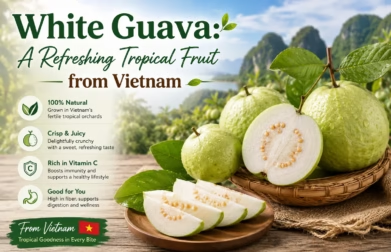
Appearance and Texture: White Guava fruits come in various shapes, ranging from perfectly round to the characteristic pear-like form. The outer skin is thin and features shades of jade green or light green, with surfaces that may appear either smooth or slightly rough depending on the cultivated variety. Once cut open, the inner pulp reveals an attractive creamy white or ivory-white color. The flesh is notably firm and crispy, containing few seeds or seeds that are exceptionally soft and easy to consume.
-
Flavor Profile: One of the key factors behind the commercial value of White Guava is its remarkable balance between natural sweetness and mild acidity. The fruit is highly juicy, delivering an instantly refreshing sensation when eaten. Culinary experts often describe its flavor as a delicate fusion of crisp pear, fresh strawberry, and subtle citrus undertones, creating a sophisticated and highly enjoyable tropical taste experience.
-
Aroma: White Guava is also distinguished by its characteristic tropical musky aroma. Rather than being overpowering, the fragrance is light, delicate, and naturally appealing, providing a pleasant sensory experience that enhances the fruit’s overall freshness and premium quality.
3. Key Cultivation Regions of White Guava in Vietnam
The quality of White Guava is heavily influenced by the soil composition and climatic conditions of the cultivation area. In Vietnam, guava is grown throughout the country from north to south. However, when it comes to large-scale production and export-quality standards, two major cultivation regions consistently stand out and attract strong interest from international buyers and sourcing companies.
3.1. Mekong Delta
The Mekong Delta is recognized as Vietnam’s largest fruit-producing region, contributing more than 2,000 hectares of specialized and intercropped guava cultivation. Benefiting from fertile alluvial soil continuously enriched by the Mekong River and an abundant irrigation system, White Guava grown in provinces such as Tien Giang, Dong Thap, and Vinh Long achieves exceptionally high productivity.
One of the greatest advantages of the southern climate is the absence of harsh winters, allowing guava trees to bear fruit year-round. This continuous production cycle ensures a stable and uninterrupted supply for supermarket chains and international importers. Farmers in the region commonly adopt intercropping models, combining guava cultivation with citrus fruits such as oranges and pomelos to maximize land efficiency and improve soil ecosystem sustainability.
3.2. Red River Delta (Northern Vietnam)
Northern provinces such as Hai Duong and Hung Yen are well known for producing smaller-sized guavas with remarkably crisp texture and more concentrated aroma. The significant temperature variation between day and night, together with the presence of a distinct winter season, allows the fruit to accumulate higher levels of natural sugars. As a result, White Guava from this region typically develops a glossy green skin and a sharper, more pronounced sweetness.
However, compared to the southern region, guava production in Northern Vietnam tends to be more seasonal, with harvest volumes fluctuating according to climatic conditions throughout the year.
4. Classification of Popular Commercial White Guava Varieties
Within both the export and domestic markets, several White Guava varieties have been commercially standardized for quality, consistency, and consumer preference. Among them, three major cultivars stand out as the most widely recognized and commercially valuable.
-
Taiwanese Pear Guava: The Taiwanese Pear Guava is currently considered the most commercially valuable White Guava variety. The fruit features a pear-like shape and a relatively large size, typically ranging from 250g to 500g per fruit. Its skin is light green, while the flesh is thick, translucent white, and contains very few seeds concentrated in a small central core. The greatest advantage of this variety lies in its exceptionally crisp texture and excellent resistance to long-distance transportation, making it highly suitable for export markets where shelf life and product appearance are critical factors.
-
Queen Guava: Often referred to as the “queen” of guava varieties, Queen Guava is highly appreciated for its premium eating quality. The fruit has a rounded shape with subtle longitudinal ridges on the skin. One of its defining characteristics is its very small seed core, resulting in an exceptionally thick and dense flesh ratio. Compared to Taiwanese Pear Guava, Queen Guava generally has a higher Brix level (natural sugar content), offering a richer and sweeter flavor profile that is especially favored by consumers who enjoy naturally sweet tropical fruits.
-
Dong Du Guava (Gang Guava): Although relatively small in size usually only about the size of a hand Dong Du Guava is considered a treasured specialty of Northern Vietnam. The fruit has a rustic appearance with rough skin and slightly greenish-white flesh. When bitten, it produces a distinctive crunchy sound that reflects its remarkable crispness. Among all White Guava varieties, Dong Du Guava is known for having the most intense and aromatic fragrance. Its bold tropical aroma makes it particularly sought after by fruit enthusiasts during the peak harvest season.
5. Accurate Nutrition Facts Analysis
It is no coincidence that White Guava is frequently classified by nutrition experts as a “superfood.” Its exceptional combination of low calories and high micronutrient density makes it an ideal addition to a healthy diet and modern wellness-focused lifestyles.
Below is the standard nutritional composition of 100 grams of edible White Guava flesh, based on reference data from the USDA FoodData Central database: (2)
| Nutrient | Amount per 100g | Health Benefits |
|---|---|---|
| Energy | 68 kcal | Low in calories, suitable for weight-management diets |
| Water | 80.8 g | Supports hydration and cellular function |
| Carbohydrates | 14.32 g | Provides natural energy for daily activities |
| Natural Sugars | 8.92 g | Offers mild natural sweetness without excessive sugar content |
| Dietary Fiber | 5.4 g | Supports digestive health and promotes satiety |
| Protein | 2.55 g | Higher protein content than many common fruits |
| Total Fat | 0.95 g | Naturally low-fat food |
| Potassium | 417 mg | Helps regulate blood pressure and cardiovascular health |
| Vitamin C | 228.3 mg | Extremely powerful antioxidant that supports immunity and collagen synthesis |
| Calcium | 18 mg | Contributes to bone and dental health |
| Magnesium | 22 mg | Supports muscle and nerve function |
| Phosphorus | 40 mg | Essential for energy metabolism and bone structure |
| Iron | 0.26 mg | Supports oxygen transport in the bloodstream |
| Sodium | 2 mg | Very low sodium content, beneficial for heart health |
(Note: The Percentage Daily Values (%DV) are calculated based on a standard 2,000-calorie daily diet for adults.)
Professional Insight: The most remarkable highlight in the nutritional profile of White Guava is its exceptionally high Vitamin C content, reaching up to 228.3 mg per 100 grams approximately 4 to 5 times higher than that of a fresh orange. By consuming just half of a medium-sized guava, you can already exceed the minimum daily Vitamin C requirement recommended for the human body. (3)
6. Comprehensive Health Benefits of Consuming White Guava
Thanks to its rich composition of phytochemicals and essential nutrients, incorporating White Guava into a daily diet can provide a wide range of significant physiological and health benefits. Its unique nutritional profile supports not only general wellness but also various critical functions within the human body.
6.1. Maximizing Immune System Support
The exceptionally high concentration of Vitamin C found in White Guava acts as a powerful biological catalyst that stimulates both the production and activity of white blood cells, which are essential components of the immune system.
Vitamin C also functions as a water-soluble antioxidant, helping neutralize harmful free radicals and protect cells from oxidative stress. As a result, regular consumption of White Guava may help strengthen the body’s natural defense mechanisms and reduce the risk of common infections such as colds and seasonal flu. (4)
6.2. Optimizing Digestive Health and Supporting Weight Management
Containing approximately 5.4 grams of dietary fiber per 100 grams of fruit, White Guava is considered an excellent natural ally for digestive health and gut microbiota balance. Soluble fiber helps form a protective gel-like layer along the stomach lining, while insoluble fiber increases stool bulk, stimulates intestinal movement, and helps prevent constipation.
In addition, despite containing only 68 calories, White Guava is rich in both water and fiber, allowing it to promote a long-lasting feeling of fullness. This natural satiety effect helps suppress sudden food cravings, making it an extremely effective dietary support option for individuals pursuing weight management or calorie-controlled nutrition plans. (5) (6)
6.3. Diabetes-Friendly for Individuals with Diabetes
White Guava has a low Glycemic Index (GI), ranging from 29 to 54. The fruit’s high fiber content acts as a natural barrier, slowing the absorption of glucose into the bloodstream and helping prevent sudden spikes in blood sugar levels after meals (8). Guava leaf decoctions have also been used in traditional medicine for decades as a natural remedy to support blood sugar management. (9)
6.4. Protecting Cardiovascular Health and Regulating Blood Pressure
The potassium content of up to 417 mg per 100g helps balance sodium levels in the body. Potassium acts as a vasodilator, helping reduce pressure on blood vessel walls and thereby regulate blood pressure more effectively. The combination of abundant dietary fiber and antioxidants also helps reduce the oxidation of LDL cholesterol (bad cholesterol) one of the main causes of arterial plaque buildup and atherosclerosis. (10) (11)
6.5. Improving Skin Health and Combating Cellular Aging
Vitamin C is an essential precursor for collagen synthesis the most important structural protein responsible for maintaining skin elasticity and youthful appearance. Together with polyphenols such as leucocyanidin, White Guava helps slow down intrinsic aging processes and protect the skin’s structure from damage caused by UV radiation. (12) (13)
7. Export-Standard Cultivation and Quality Management Process
For a White Guava grown in Vietnam to proudly appear on supermarket shelves in markets such as Dubai or the Netherlands, it must undergo an exceptionally strict quality control process that complies with internationally recognized Good Agricultural Practices standards such as VietGAP and GlobalGAP.
-
Propagation and Cultivation Management: Guava trees are commonly propagated through air layering in order to preserve 100% of the valuable genetic characteristics of the mother plant. This method ensures a high survival rate and allows the trees to bear fruit more quickly. Farmers also apply Integrated Pest Management (IPM) systems, prioritizing the use of organic and biological fertilizers to improve soil health and sustainability.
-
Fruit Bagging Technique: Fruit bagging is one of the most essential practices that has become a signature feature of Vietnamese White Guava production. When the fruits reach approximately the size of a thumb, farmers carefully cover each guava individually using specialized perforated plastic bags to allow moisture ventilation, followed by an additional protective foam mesh layer. This technique isolates the fruit from pests such as fruit flies (A. suspensa) and mealybugs while significantly reducing the need for chemical pesticides. As a result, harvested guavas develop a smooth, evenly colored skin free from scars, insect damage, or surface blemishes.
-
Harvesting at the Proper Maturity Stage: The harvesting index is strictly controlled according to export requirements. For sea freight shipments, which typically require one to two weeks of transportation, the fruit is harvested at approximately 75–80% maturity, when the skin changes from dark green to light green. For air freight exports, the maturity level may reach 85–90% to maximize flavor quality upon arrival. Farmers are also required to harvest during the early morning hours to minimize heat stress and preserve the fruit’s freshness and post-harvest quality.
8. Packaging Standards and Commercial Logistics Supply Chain
Post-harvest processing plays a decisive role in determining the commercial viability of exported White Guava shipments. One of the biological characteristics of guava is that the fruit continues its respiration and ripening process even after being harvested. Therefore, rapid cooling and strict cold chain management are considered critical factors throughout the export supply chain.
-
Sorting and Cleaning: Immediately after being transported to the packing house, White Guava is washed through a clean water system, air-dried, and sorted using both visual inspection and electronic weighing systems. The fruit is classified into standard size categories: small size (200–250g per fruit), medium size (250–350g per fruit), and large size (over 350g per fruit).
-
Specialized Packaging: Each guava fruit is carefully wrapped with a protective foam net to minimize impact damage during handling and transportation. The fruits are then arranged in a single layer inside high-strength corrugated carton boxes, commonly packed in 5kg, 10kg, or 15kg cartons. The cartons are designed with ventilation holes to prevent moisture condensation, thereby reducing the risk of fungal decay and spoilage.
-
Transportation and Logistics:
-
Sea Freight: Sea freight is commonly used for exports to regional Asian markets such as Singapore, Malaysia, and Hong Kong, as well as Middle Eastern destinations including the UAE. Refrigerated containers are strictly maintained at temperatures between 5°C and 7°C with proper ventilation systems. Under these controlled conditions, White Guava can maintain its freshness and quality for more than two weeks.
-
Air Freight: Air freight is reserved for premium and high-value markets that require rapid delivery and superior product quality, such as Europe and Russia. Through air transportation, the fruit can reach consumers within 24 to 48 hours after leaving the farm, preserving its original crisp texture and natural aroma at the highest possible standard.
-
9. Applications of White Guava in the F&B and Culinary Industry
The appeal of White Guava extends far beyond fresh consumption alone. Its versatility has made it a highly valued ingredient within the Food & Beverage (F&B) industry and modern culinary applications.
-
Fresh Consumption: The most traditional and popular way to enjoy White Guava is by eating it fresh in sliced portions. In Vietnam, white guava is commonly served with chili salt or shrimp salt, creating a vibrant combination of flavors the crisp sweetness of the fruit blending perfectly with the salty and spicy seasoning. In international HORECA sectors (Hotels, Restaurants, and Cafés), freshly diced White Guava is often featured as a premium ingredient in tropical fruit salads and healthy appetizer platters.
-
Juices and Smoothies: Pure White Guava juice, or blends combined with ingredients such as apple or carrot, creates a refreshing and naturally cleansing beverage. Compared to Pink Guava, White Guava juice offers a lighter appearance and a more delicate sweet-tart flavor profile, making it particularly popular in detox and wellness-oriented drink menus.
-
Industrial Food Processing: Food processing manufacturers frequently concentrate White Guava pulp for the production of jams, jellies, and pastry fillings. In addition, guava seed oil naturally rich in linoleic acid is increasingly being researched for applications within the skincare and cosmetic industry.
-
Herbal Tea Production: Another valuable application comes from guava leaves. Dried White Guava leaves are processed into premium herbal teas and exported to markets such as Japan and South Korea. These herbal products are especially appreciated for their traditional use in supporting natural blood sugar management and body detoxification.
10. Importer’s Guide: How to Select Reliable White Guava Suppliers from Vietnam
For B2B (Business-to-Business) companies seeking to source White Guava from Vietnam, understanding the market standards and supply chain requirements is essential to ensure both product quality and profit margins.
-
Verify Certifications: Importers should always request suppliers to provide GlobalGAP certification, or at minimum VietGAP certification. In addition, the cultivation area should possess a valid Planting Area Code issued by the Ministry of Agriculture to guarantee full traceability and transparent product origin.
-
Control Maximum Residue Limits (MRLs): European and U.S. markets enforce extremely strict regulations regarding Maximum Residue Limits (MRLs). Importers are strongly advised to request laboratory test reports from reputable independent testing organizations such as SGS or Eurofins to verify that the products are free from prohibited chemical residues.
-
Clearly Define Packaging Specifications and Tolerance Rates: Detailed discussions with the packing house regarding foam net quality, carton thickness, and moisture control are essential. In the fresh fruit trade, agreeing in advance on acceptable tolerance or damage rates commonly around 2–3% is a crucial commercial practice that helps prevent disputes during international transactions.
-
Leverage Vietnam’s Year-Round Supply Capacity: Thanks to the year-round production capability of Southern Vietnam, importers can negotiate long-term supply contracts instead of relying solely on seasonal purchasing. This allows businesses to secure more stable pricing and maintain a consistent product supply throughout the year.
11. Tips for Selecting and Storing White Guava at Home (For Consumers)
For consumers who want to personally experience the premium quality of White Guava available in supermarkets, understanding how to select and store the fruit properly is essential:
-
How to Choose High-Quality White Guava: When holding a guava, a high-quality fruit should feel heavy and firm for its size, indicating a high water content and fresh texture inside. The skin color should appear light green or slightly yellowish, which is typically a sign of natural ripeness and sweetness. Avoid fruits with deep scratches, bruises, or excessively dark green skin, as these are often harvested too early and may taste astringent. Consumers should also observe the blossom end of the fruit (the bottom part of the guava). If the blossom end appears more open or expanded, it usually indicates a riper fruit with sweeter flesh.
-
Proper Storage Methods: For the best crisp texture, White Guava should be wrapped with plastic film or stored in an airtight food container immediately after purchase and kept refrigerated at temperatures between 4°C and 8°C. Under proper storage conditions, the fruit can maintain its freshness and crispness for approximately 5 to 7 days. It is not recommended to wash guavas before refrigeration, as excess moisture can encourage fungal growth around the stem area. The fruit should only be rinsed under running water immediately before consumption.
12. The Promising Future of the White Guava Industry
The global fruit market is experiencing a significant shift in consumer behavior, with buyers increasingly willing to pay premium prices for products that are clean, nutrient-rich, and produced through transparent and sustainable farming practices.
Vietnam’s agricultural sector is responding proactively to this trend by encouraging farmers to adopt circular agriculture models. White Guava growers are increasingly utilizing bio-organic fertilizers, reducing carbon footprints throughout the production process, and transitioning toward biodegradable packaging materials for export and commercial distribution.
Supported by international Free Trade Agreements (FTAs) and the growing professionalization of logistics infrastructure, the distance between fruit farms in the Mekong Delta and dining tables around the world is becoming shorter than ever before. This transformation is opening substantial opportunities for Vietnamese White Guava to further strengthen its position in the global fresh produce industry.
13. Frequently Asked Questions (FAQs) About White Guava
Q: Does White Guava really help with weight loss?
A: Yes, it can support weight management. With an extremely low calorie content (68 kcal per 100g) and up to 5.4g of dietary fiber, consuming guava before meals helps increase satiety by filling the stomach with fiber-rich bulk. This can reduce cravings for more energy-dense foods and support a safe calorie deficit when combined with a balanced diet.
Q: Should I eat the seeds or remove them?
A: The seed-containing core of White Guava is generally sweet and rich in Vitamin C, but the seeds themselves can be quite hard. Individuals with a healthy digestive system may chew and swallow them safely. However, those with digestive issues, stomach sensitivity, or young children are advised to reduce or avoid the harder seeds to prevent irritation.
Q: What is the main difference between White Guava and Pink Guava?
A: The key differences lie in texture and phytochemical composition. Pink Guava is softer, sweeter, and contains higher levels of lycopene, a red antioxidant pigment. In contrast, White Guava is crispier, offers a more balanced sweet–tart flavor profile, and contains significantly higher levels of Vitamin C.
Q: Is White Guava safe for pregnant women?
A: Yes, it is considered a highly beneficial fruit during pregnancy. Its folate (Vitamin B9) content, approximately 49 µg per 100g, plays an essential role in supporting fetal neural development and helping prevent neural tube defects. Additionally, its high fiber content helps alleviate constipation, a common issue during pregnancy.
Q: Why does guava sometimes taste slightly astringent?
A: The mild astringent taste in unripe guava comes from tannins, which are naturally occurring plant compounds found in the skin and outer flesh. As the fruit ripens, these tannins gradually break down into sugars, eliminating the bitterness and enhancing the fruit’s natural sweetness.
14. Conclusion
It can be affirmed that White Guava is not merely a refreshing summer fruit, but a true nutritional treasure from Vietnam’s tropical lands. From its outstanding Vitamin C content and abundant dietary fiber that supports overall health, to its crisp, delicate, and irresistibly sweet-tart flavor, this fruit has clearly demonstrated its intrinsic value across multiple dimensions.
For consumers, it serves as an ideal companion for a healthy and balanced lifestyle. For investors and agricultural import-export businesses, Vietnamese White Guava opens up a highly promising commercial opportunity, offering long-term and sustainable economic value. Expanding supply chains for this exceptional fruit represents a strategic step toward successfully penetrating and conquering the global food market.
Introduction to Great Farmer – Export-Quality Fresh Produce Supplier
Great Farmer is a professional agricultural brand specializing in the cultivation, sourcing, and export of high-quality tropical fruits and fresh produce from Vietnam. With a strong focus on large-scale supply, competitive pricing, and consistent quality standards, Great Farmer serves international markets including China, Russia, the Middle East, and other emerging global regions.
The brand is committed to delivering safe, traceable, and export-compliant agricultural products that meet international requirements such as VietGAP and GlobalGAP. By integrating modern farming practices, strict post-harvest control, and efficient cold-chain logistics, Great Farmer ensures stable year-round supply for wholesale distributors, importers, supermarkets, and food service partners worldwide.
With a mission to connect Vietnamese agricultural excellence to the global marketplace, Great Farmer positions itself as a reliable long-term partner for businesses seeking scalable sourcing solutions and sustainable growth in the fresh produce industry.
🌐 Website: www.greatfarmer.com.vn
📞 Phone/WhatsApp: +84 836314437
📧 Email: hoang.nguyen@greatfarmer.com.vn
 Blog & News