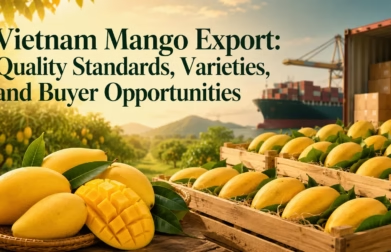
The global demand for tropical fruits has undergone an unprecedented transformation, with mangoes emerging as a highly profitable commodity for international distributors, wholesalers, and retail chains. At the center of this transformation is the Vietnam mango export sector. Driven by ideal tropical microclimates, a rapid shift toward international agricultural standards, and highly competitive logistics networks, Vietnam has established itself as a premier global hub for premium mango cultivation and export.
As a global procurement specialist, distributor, or agricultural importer, understanding the underlying mechanisms of the Vietnam mango export landscape is critical to securing a reliable, high-yield, and compliant supply chain. This comprehensive B2B guide delivers data-driven insights into Vietnam’s key export mango varieties, rigorous phytosanitary and quality frameworks, advanced cold chain logistics, and the strategic commercial opportunities available to international buyers.
1. Executive Overview of the Vietnam Mango Export Industry
Vietnam is currently one of the notable mango-producing countries in Asia, with a total cultivation area exceeding 115,000 hectares and annual output ranging from approximately 893,000 tonnes to 1 million tonnes in recent years. According to the Department of Crop Production, Vietnam’s mango cultivation area currently reaches around 115,000 hectares, with an annual production volume of approximately 1 million tonnes. (1)
1.1. Strategic Geographic and Climatic Core Advantages
The geographic distribution of mango cultivation across Vietnam creates a uniquely extended supply window. Unlike competitors constrained by a single narrow harvest season, Vietnamese producers leverage distinct regional ecosystems:
-
The Mekong Delta (Southern Region): Encompassing provinces such as Dong Thap, Tien Giang, An Giang, and Vinh Long, this alluvial basin contains over 46% of the national mango footprint and yields more than 64% of total output. The region enjoys consistent tropical sunlight and abundant water, facilitating advanced technical interventions for year-round production.
-
The Central Coast (Khanh Hoa Province): Focused extensively around the Cam Lam district, this region features sandy, well-drained soil conditions perfectly suited for hardier, large-fruited cultivars like the Australian-derived R2E2 variety.
-
The Northern Highlands (Son La Province): Districts such as Mai Son and Yen Chau provide a microclimate characterized by high daytime temperatures and low ambient humidity during pollination, giving rise to distinct late-season varieties that bridge global market shortages.
1.2. Market Dynamics and Peak Off-Season Window
A primary driver behind the explosive growth of the Vietnam mango export industry is the mastery of off-season production. By applying advanced horticultural techniques such as selective pruning, controlled irrigation, and targeted nutrition Vietnamese agronomists successfully shift major harvests to run from September through March.
During this exact window, domestic production in massive importing countries like China drops dramatically, and traditional equatorial suppliers experience seasonal gaps. For instance, in the opening quarter of 2025, Vietnam capitalized heavily on this seasonal advantage, capturing a dominant share of the Chinese import market by delivering over 40,700 tonnes of fresh mangoes. This off-season capability ensures international enterprise buyers can lock in stable, high-volume supply contracts when global prices peak elsewhere.
1.3. Legal and Tariff Framework
From an administrative and fiscal standpoint, the Vietnamese government heavily incentivizes agricultural trade. Under current regulatory frameworks (including Appendix II of Decree No. 69/2018/ND-CP), mangoes are categorized as completely free-export commodities:
-
-
Export Duty: 0%
-
Export Value-Added Tax (VAT): 0%
-
HS Codes: Fresh Mangoes are categorized under HS Code 0804.50.21; Dried Mangoes are registered under HS Code 0804.50.22.
-
2. Elite Vietnamese Export Mango Varieties: Botanical and Commercial Profiles
The diversity of Vietnamese cultivars allows procurement managers to segment their sourcing based on regional consumer preferences, ranging from ultra-premium dessert markets to heavy industrial processing sectors.
2.1. Cat Hoa Loc Mango
-
Primary Cultivation Zone: Cai Be District (Tien Giang Province) and Cao Lanh (Dong Thap Province).
-
B2B Target Segment: Luxury supermarkets, premium retail, and high-end fresh fruit boutiques.
Cat Hoa Loc is widely recognized as the crowning achievement of the Vietnam mango export sector. This variety features an elongated, elegant silhouette with a distinct, tapering beak. Upon reaching full maturity, the tough, fine skin transforms into a vivid, uniform lemon-yellow hue.
The inner flesh is dense, rich orange-yellow, completely devoid of stringy fibers, and exhibits a remarkably high sugar content, yielding a Brix rating of 18° to 22°. Its signature attribute is an intense, intoxicating floral aroma that remains uncompromised through the packing process. The natural durability of its skin allows it to withstand long-distance transport, provided strict temperature management is maintained.
2.2. Cat Chu Mango
-
Primary Cultivation Zone: Cao Lanh District (Dong Thap Province).
-
B2B Target Segment: Mass-market retail chains, fresh food service, and industrial IQF (Individual Quick Freezing) dicing operations.
Cat Chu represents the true high-volume workhorse of international trade. While slightly smaller and more rounded than the Cat Hoa Loc, it provides exceptional yield predictability. The flesh is smooth, buttery, and melts easily upon consumption, with a balanced, pleasant sweet-tart flavor profile (Brix 14° to 17°).
A major commercial benefit of Cat Chu is its highly responsive ripening curve, allowing exporters to pick the fruit at an optimal green mature stage and utilize controlled atmosphere shipping to time its ripening perfectly with store arrival dates.
2.3. Green-Skinned Tuong Mango
-
Primary Cultivation Zone: Mekong Delta and parts of Central Vietnam.
-
B2B Target Segment: East Asian fresh markets (China, Hong Kong, Taiwan) specializing in crisp, raw, or semi-ripe culinary applications.
Commonly referred to as the “Elephant Mango” due to its impressive physical proportions, the Tuong variety routinely produces individual fruits weighing between 500 to 800 grams. Unlike the dessert mangoes mentioned above, this variety is extensively exported and consumed in its raw, firm green state.
The flesh is exceptionally crisp, mildly tart, and completely free of astringency when green. It represents a highly stable, low-spoilage export item because the firm, thick green skin provides excellent natural defense against mechanical bruising and pressure marks during maritime transport.
2.4. Keo Mango
-
Primary Cultivation Zone: Border regions and specialized cultivation tracts in Southern Vietnam.
-
B2B Target Segment: Value-tier retail, processed food manufacturing (dried slices, purees, juices).
Keo mangoes are characterized by a distinct oblong shape that tapers subtly at both ends, featuring a hardy, thick rind. This structural resilience translates into an exceptionally long shelf-life and low rejection rates at destination ports.
The fruit is versatile: when green, it lacks sour harshness, making it popular for immediate fresh consumption; when fully ripe, it transitions to a rich yellow shade with a mild, steady sweetness. This adaptability makes it an excellent, cost-efficient option for producing high-quality dehydrated and freeze-dried mango snacks.
3. Strict International Quality Standards and Compliance Frameworks
Penetrating highly regulated global markets requires complete alignment with rigorous agricultural and food safety protocols. The modern Vietnam mango export network achieves this through a multi-tiered certification system backed by government enforcement.
Agricultural Input Control (VietGAP/GlobalGAP)
  └── Mandatory Traceability (PUC - Planting Area Code)
        └── Advanced Post-Harvest Phytosanitary Treatment (VHT / Irradiation)
3.1. GlobalGAP and VietGAP Integration
To guarantee food safety and chemical compliance, Vietnam’s agricultural sector has transitioned vast cultivation zones over to certified VietGAP (Vietnamese Good Agricultural Practices) and GlobalGAP standards. These frameworks strictly govern agricultural inputs, enforcing meticulous records of biological pest management, water purity, and targeted fertilization.
A primary practice in premium fields (especially for Cat Hoa Loc and Cat Chu) is mandatory fruit bagging. When the fruit reaches the size of a golf ball, it is enclosed in specialized protective double-layered bags. This physical barrier eliminates the need for late-stage chemical pesticide applications, shields the skin from bird and insect punctures, prevents wind scarring, and ensures a clean, spot-free outer skin.
3.2. The Planting Area Code (PUC) and Packhouse Registration
Traceability is non-negotiable for modern imports. Every single orchard dedicated to the Vietnam mango export supply line must be formally audited and issued a unique Planting Area Code (also known as a PUC – Production Unit Code) by the Plant Protection Department (PPD) of Vietnam.
-
The PUC tracks the exact geographic coordinates, farm size, variety, and farmer identity.
-
Similarly, all downstream sorting, washing, and packaging facilities must possess an officially approved, sanitary-compliant packhouse code.
-
During customs declarations, any mismatch between the field PUC and the packing facility code results in an immediate freeze on export clearance, ensuring that unverified or non-compliant fruits can never slip into the official supply chain.
3.3. Market-Specific Phytosanitary Entry Protocols
Different global jurisdictions impose distinct biological barriers to protect their native ecosystems from tropical pests—most notably the Bactrocera fruit fly family. Vietnam has successfully resolved these hurdles by building specialized, internationally audited treatment facilities:
| Target Import Market | Primary Quality Standard Required | Mandatory Phytosanitary Technical Treatment |
| United States (USDA) | GlobalGAP / Strict USDA-APHIS audits | Gamma Irradiation Processing: Shipments must undergo a precisely measured dosage of ionizing radiation at certified facilities (such as Son Son or An Phu) under direct supervision of a resident USDA inspector. |
| Japan & South Korea | MAFF (Japan) / APQA (Korea) standards | Vapor Heat Treatment (VHT): Fresh mangoes must undergo a chemical-free thermal treatment process where the fruit core temperature is held steadily at 47°C (or greater) for a continuous 20 to 30 minutes using saturated water vapor to neutralize latent insect larvae without damaging tissue integrity. |
| European Union (EU) | GlobalGAP / BRC / IFS certifications | Rigid MRL Compliance & Full Traceability: The EU relies on ultra-low Maximum Residue Limits (MRLs) for synthetic agricultural chemicals. Shipments must bypass zero-tolerance pest screenings and carry clean chemical screening sheets. |
| China (GACC) | Decrees 248 & 249 compliance | Official Channel Inspections: Strict adherence to registered PUCs, verified hot-water surface wash, clean phytosanitary certification, and robust insect-exclusion netting inside the packaging boxes. |
4. Advanced Post-Harvest Infrastructure and Cold Chain Logistics
Maintaining product integrity over transit distances stretching from 5 to 30 days requires sophisticated post-harvest handling and a seamless, unbroken cold chain.
4.1. The Standardized Packing Process
From the moment a mango is harvested to its final placement within a sea container, the processing steps follow a rigorous protocol:
-
Harvest Handling: Mangoes are manually clipped using long poles equipped with soft catching nets. A stem length of 1.0 cm is strictly preserved to prevent internal pressure loss. The fruits are placed upside down in well-ventilated field crates to ensure the natural latex sap drains away from the body, preventing unsightly sap-burn blemishes on the skin.
-
Sanitary Washing and Thermal Bath: At the packing plant, mangoes are washed in clean, chlorinated water to eliminate field debris. They are then run through a warm antifungal bath (typically water containing food-grade organic acids or approved fungicides held at 50°C for 3 to 5 minutes) to eradicate latent anthracnose spores (Colletotrichum gloeosporioides), which is the leading cause of post-harvest black spotting.
-
Optical Sorting and Sizing: Fruits are automatically weight-sorted and inspected for skin uniformity, color expression, and structural density. Any fruit displaying skin punctures, soft spots, deep wind-rub marks, or irregular shapes is immediately diverted into local processing channels.
-
Bespoke Packaging: For the premium fresh trade, mangoes are individually wrapped in protective expanded polyethylene (EPE) foam sleeves. They are then packed horizontally into sturdy, corrugated fiberboard cartons—typically in net weight configurations of 5.0 kg or 10.0 kg. These boxes are engineered with precision air vents to facilitate uniform airflow and feature built-in fine mesh anti-insect netting over all openings to eliminate re-contamination risks post-treatment.
4.2. Technical Cold Chain Parameters
To slow down respiration, inhibit natural ethylene production, and prevent premature softening, fresh mango shipments must be transferred into automated cold storage within hours of packaging. For international maritime freight, logistics operators utilize advanced 40-foot Refrigerated Containers (Reefers) calibrated to the following technical settings:
Critical Refrigeration Parameters for Fresh Mango Transport :
-
Temperature Range: Set continuously between 3.0°C to 6.0°C (subject to variety; Cat Hoa Loc is sensitive to chilling injuries if dropped below 3°C, while firmer varieties tolerate lower baselines).
-
Relative Humidity (RH): Maintained precisely between 50% to 60%. High humidity prevents moisture loss and skin shriveling, while staying below the condensation threshold that triggers fungal growth.
-
Ventilation Configuration: Fresh air exchange must be open and configured at approximately 15 to 25 CBM/hour to continuously exhaust accumulated carbon dioxide and trace ethylene gases generated by the fruit during transit.
5. Strategic Buyer Opportunities and Sourcing Roadmap
For international agrifood buyers, distributors, and large-scale supermarket procurement executives, entering into a strategic partnership with the Vietnam mango export network offers compelling commercial and financial advantages.
5.1. Leveraging Global Free Trade Agreements (FTAs)
Vietnam is a signatory to over 50 bilateral and multilateral Free Trade Agreements, providing direct tax advantages to international buyers. Importers can request valid Certificates of Origin (C/O) from Vietnamese suppliers to secure drastically reduced or entirely waived import tariffs in destination countries:
-
EVFTA (EU-Vietnam FTA): Provides preferential tariff treatment across European ports.
-
CPTPP: Grants duty-free access to major Pacific markets including Canada, Australia, Japan, and New Zealand.
-
RCEP & ASEAN-China FTA: Ensures highly streamlined customs processing and zero-tariff lanes into China, South Korea, and Japan.
5.2. Comparative Reference Matrix for Procurement Teams
The following reference table outlines the physical and commercial metrics of the primary export varieties from Vietnam, allowing procurement managers to align their sourcing with regional consumer market demands:
| Variety Name | Average Fruit Mass (Grams) | Soluble Solids Profile (Brix Value) | Optimal Sea Freight Window | Primary Global Target Consumer Market |
| Cat Hoa Loc | 350g – 450g | 18° – 22° (Ultra Sweet) | 10 – 14 Days max | Premium retail, gift markets, and high-end dessert boutiques in Japan, South Korea, and the EU. |
| Cat Chu | 280g – 350g | 14° – 17° (Balanced) | 14 – 21 Days (Excellent) | Mass supermarkets, institutional food services, and high-volume IQF processing facilities worldwide. |
| Tuong Da Xanh | 500g – 800g | 10° – 12° (Crisp / Tart) | 21 – 28 Days (Highly Durable) | Specialized East Asian culinary fresh markets (China, Hong Kong) favoring crisp, savory green fruit preparations. |
| Keo Mango | 250g – 350g | 12° – 15° (Mild Sweet) | 20 – 25 Days (Thick Skin) | Regional cross-border trade, value supermarkets, and industrial dehydration or fruit snack operations. |
6. Sourcing Strategy and Risk Mitigation for Buyers
To establish a successful, long-term procurement channel within the Vietnam mango export ecosystem, international buyers should follow a structured sourcing strategy:
6.1. Verifying Supplier Infrastructure
When auditing potential export partners or OEM manufacturers in Vietnam, ensure they can provide documented proof of registration for both planting areas and packhouses. A reliable exporter should readily share their PUC registry numbers and demonstrate direct control over automated VHT or irradiation logistics pipelines.
6.2. Developing Risk-Mitigated Contracts
-
Quality Allocation Clauses: Contracts should explicitly define acceptable tolerances for fruit size variation, skin characteristics, and minimum Brix parameters upon port arrival.
-
Incoterms Selection: For buyers new to the region, utilizing CIF (Cost, Insurance, and Freight) or CFR terms leverages the exporter’s established domestic relationships with ocean carriers. For experienced firms with dedicated freight arrangements, FOB (Free on Board) terms provide maximum control over shipping costs.
-
Phytosanitary Contingencies: Ensure agreements outline liability allocations if a shipment faces delays or rejection due to sudden changes in plant quarantine inspections at the destination port.
7. Conclusion: The Strategic Value of Vietnamese Mango Sourcing
The Vietnam mango export industry has successfully evolved from a traditional seasonal trade into a highly sophisticated, quality-driven global supply chain. By pairing unique botanical varieties such as the exquisite Cat Hoa Loc and the versatile Cat Chu with rigorous food safety frameworks like GlobalGAP and advanced cold chain logistics, Vietnam provides international buyers with an optimized balance of premium quality, reliable volume, and competitive pricing.
As international consumer interest in premium tropical fruits continues to rise, establishing direct ties with certified Vietnamese agricultural exporters provides global distributors with a distinct competitive edge. By leveraging extensive Free Trade Agreements, utilizing off-season windows, and selecting varieties tailored to specific market demands, enterprise buyers can build a highly profitable, secure, and resilient agricultural trade pipeline.
 Blog & News