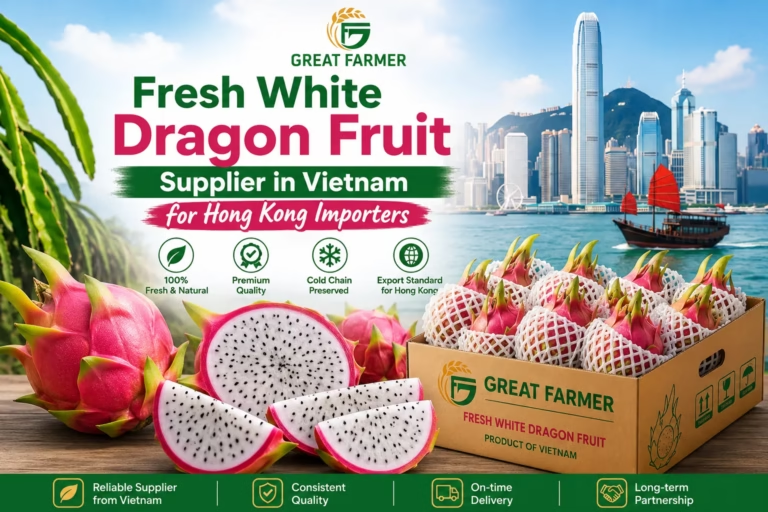

Vietnam is globally recognized as the leading producer and exporter of dragon fruit (also known as pitaya). With highly favorable climatic conditions in regions like Binh Thuan, Long An, and Tien Giang, Vietnam Dragon Fruit stands out in the international market for its vibrant appearance, high nutritional value, and consistent sweetness.
For international importers, understanding the precise specifications ranging from varieties and brix levels to packing and cold chain requirements is crucial for successful procurement. Great Farmer, a premier agricultural export company in Vietnam, adheres to the strictest global standards to ensure that every shipment arrives farm-fresh.
This comprehensive guide breaks down everything B2B buyers need to know about Vietnam Dragon Fruit export specifications.
1. The Global Appeal of Vietnam Dragon Fruit
Dragon fruit has transitioned from an exotic niche product to a mainstream global commodity. According to the Vietnam Ministry of Agriculture and Rural Development (MARD), dragon fruit accounts for a significant portion of Vietnam’s fresh fruit export revenue.
But why is the Vietnamese variety preferred globally?
-
-
Optimal Climate: The coastal and delta regions of Vietnam provide the perfect balance of sunlight, soil drainage, and humidity.
-
Year-Round Harvesting: Advanced agricultural techniques, including nighttime LED light stimulation, allow Vietnamese farmers to produce fruit off-season, ensuring a continuous year-round supply.
-
Strict Quality Control: Leading exporters like Great Farmer implement GlobalGAP and VietGAP farming practices, ensuring minimal pesticide residue and maximum food safety.
-
2. Key Vietnam Dragon Fruit Varieties for Export
There are three primary commercial varieties of dragon fruit cultivated in Vietnam. While the white and red flesh varieties dominate the export volume, the yellow variety is emerging as a premium niche product.
2.1. White Flesh Dragon Fruit (Hylocereus undatus)
This is the most traditional and widely exported variety, primarily grown in Binh Thuan province. It features a bright pink/red skin with prominent green scales (bracts). The flesh is translucent white, dotted with tiny, edible black seeds.
-
Taste Profile: Mildly sweet, refreshing, with a slight tanginess.
-
Export Strength: Exceptional shelf life and robust skin, making it highly resilient during long-haul ocean freight.
2.2. Red Flesh Dragon Fruit (Hylocereus polyrhizus)
Grown predominantly in Long An and Tien Giang provinces, this variety has a slightly darker red skin and shorter green scales. Inside, the flesh is a striking, deep magenta.
-
Taste Profile: Noticeably sweeter and more aromatic than the white variety, with a higher Brix (sugar content) level.
-
Export Strength: Highly sought after in markets like China, the Middle East, and Europe due to its vibrant color, which is popular in the culinary and beverage industries.
2.3. Yellow Dragon Fruit (Hylocereus megalanthus)
Though cultivated in smaller quantities in Vietnam, this variety features yellow skin with white flesh. It is generally smaller but boasts the highest sweetness level among all varieties.
Varieties Comparison Chart
| Feature | White Flesh | Red Flesh | Yellow Flesh |
| Skin Color | Bright Pink/Red | Deep Red/Magenta | Yellow |
| Flesh Color | White | Deep Magenta/Red | White |
| Brix Level (Sweetness) | 11% – 14% | 13% – 16% | 15% – 19% |
| Main Growing Region | Binh Thuan | Long An, Tien Giang | Various |
| Shelf Life (Cold Storage) | 30 – 40 Days | 25 – 35 Days | 20 – 30 Days |
3. Standard Sizes and Weight Specifications
To maintain consistency and meet buyer expectations, Vietnam Dragon Fruit is graded meticulously by weight. Size grading dictates how many fruits are packed into a standard export carton (usually 4.5 kg, 9 kg, or 10 kg).
Great Farmer utilizes optical and weight-sorting technology to ensure uniform sizing across all shipments.
Weight-to-Size Chart (Based on a standard 9kg Carton)
| Size Category | Weight per Fruit (Grams) | Pieces per 9kg Carton | Target Market Preference |
| Jumbo (Extra Large) | 600g – 850g+ | 10 – 14 pieces | USA, Japan, Premium Retail |
| Large | 460g – 590g | 16 – 18 pieces | Europe, Middle East |
| Medium | 350g – 450g | 20 – 24 pieces | China, India, Southeast Asia |
| Small | 250g – 340g | 26 – 32 pieces | Processing / Supermarket promos |
Pro Tip for Importers: Larger fruits (600g+) command a premium price and are excellent for visual merchandising in high-end supermarkets. Medium sizes (350g-450g) are often preferred for standard retail due to their accessible price point per piece.
4. Quality Grades of Vietnam Dragon Fruit
Not all dragon fruits are created equal. Export markets require strict grading to ensure visual appeal and structural integrity. Great Farmer categorizes its export fruit into two primary commercial grades based on international Codex Alimentarius standards for fresh fruits.
Class I (Premium Export Grade)
-
Appearance: Skin is bright, vibrant, and free of blemishes, sunburn, or fungal spots.
-
Scales (Bracts): Must be firm, thick, and retain a vivid green or yellowish-green color. No wilting.
-
Shape: Symmetrical, well-rounded, typical of the variety.
-
Defect Tolerance: Less than 5% of the surface area may have minor, superficial defects that do not affect the flesh.
Class II (Standard Export Grade)
-
Appearance: Good overall quality but may exhibit slight skin discoloration or minor healed scars.
-
Scales (Bracts): May show slight signs of dehydration or color fading at the tips.
-
Defect Tolerance: Up to 10% of the surface area may have superficial defects.
-
Use Case: Often imported for immediate retail discounting, catering, or processing into purees and juices.
5. Professional Packing Solutions by Great Farmer
Packaging is the final line of defense in the agricultural cold chain. Proper packing prevents bruising, restricts moisture loss, and inhibits fungal growth during transit.
5.1. The Great Farmer Packing Process
-
Post-Harvest Cleaning: Fruits are washed using a specialized ozone water system to remove dust, insects, and potential fungal spores.
-
Drying & Sorting: Fruits are air-dried completely. Any residual moisture on the skin can lead to rot during shipping.
-
Protective Sleeving: Each individual fruit is wrapped in a protective foam net (EPE foam) to prevent physical impact and bruising during transport.
-
Carton Placement: Fruits are placed meticulously into ventilated, heavy-duty corrugated cardboard boxes.
5.2. Standard Export Box Specifications
| Packaging Type | Net Weight | Gross Weight | Dimensions (L x W x H) | Ventilation |
| Small Carton (Air Freight) | 4.5 kg | ~5.0 kg | 35cm x 25cm x 15cm | 5% – 8% side venting |
| Standard Carton (Sea Freight) | 9.0 kg | ~9.8 kg | 45cm x 30cm x 18cm | 5% – 8% side venting |
| Large Carton (Bulk Sea) | 10.0 kg | ~10.9 kg | 45cm x 30cm x 20cm | 5% – 8% side venting |
Note: Great Farmer also offers customized box printing with the importer’s OEM branding and specific barcode requirements.
6. Cold Chain and Ocean Freight Specifications
Maintaining the structural integrity and Brix level of Vietnam Dragon Fruit over a 15 to 35-day ocean voyage requires flawless cold chain management. Dragon fruit is a non-climacteric fruit, meaning it will not continue to ripen or get sweeter after it is harvested. Therefore, it must be picked at peak maturity and immediately temperature-controlled.
6.1. Reefer Container Settings
To suppress respiration and delay senescence (aging), Great Farmer mandates the following shipping specifications for full container loads (FCL):
-
Temperature: +3°C to +5°C (37.4°F to 41°F). Dropping below 3°C can cause chill damage, resulting in translucent, watery flesh and blackened skin.
-
Relative Humidity (RH): 85% – 90%. High humidity prevents the fruit and the green scales from dehydrating and turning brown.
-
Ventilation: 15 – 20 CBM/hour. Proper air exchange prevents the buildup of ethylene gas and carbon dioxide.
7. Phytosanitary & Export Certification Requirements
International borders have strict agricultural import laws to prevent the spread of pests. Great Farmer ensures that every shipment of Vietnam Dragon Fruit is fully compliant with the destination country’s regulations.
-
Phytosanitary Certificate: Issued by Vietnam’s Plant Protection Department (PPD) for every shipment, certifying the fruit is free from quarantine pests (like fruit flies).
-
Vapor Heat Treatment (VHT): Mandatory for highly regulated markets such as Japan, South Korea, Australia, and New Zealand. VHT uses hot steam to eliminate pest eggs without using chemicals.
-
Irradiation: Required for the United States market. The fruit is treated at approved irradiation facilities in Vietnam under USDA supervision.
-
Certifications: Farms and packing houses are certified with GlobalGAP, VietGAP, HACCP, and SMETA/GRASP (for social compliance), ensuring that buyers in the EU and UK can confidently clear customs.
8. Why Partner with Great Farmer for Your Dragon Fruit Imports?
Procuring fresh produce internationally comes with inherent risks. By choosing Great Farmer, you are partnering with an enterprise that prioritizes transparency, quality, and reliability.
Our Promise to Importers:
-
Unmatched Consistency: Our optical grading lines ensure that if you order Grade A fruits, every single box matches that exact specification.
-
Dedicated Logistics Support: We handle all customs clearance, phytosanitary treatments (VHT/Irradiation), and freight booking, delivering a seamless CIF or FOB experience.
If your company is looking to import premium Vietnam Dragon Fruit that looks beautiful on the shelves and delights consumers with its taste, Great Farmer is ready to supply.
Contact us:
🌐 Website: www.greatfarmer.com.vn
📞 Phone/WhatsApp: +84 836314437
📧 Email: hoang.nguyen@greatfarmer.com.vn
 Blog & News