In the context of globalized trade and profound shifts in consumer eating habits, demand for fresh, nutritious fruits is growing exponentially. Among these, high-quality fresh fruits have emerged as the fastest-growing product category within the global food industry. Tropical fruits export has moved far beyond the definition of a niche market, evolving into a multi-billion-dollar global industry and becoming a strategic pillar in the world’s agricultural supply chains.
For international importers, the challenge is no longer simply sourcing products, but rather building stable, sustainable, and internationally compliant supply chains covering product quality, food safety, regulatory compliance, and cold-chain logistics. The following content is designed as a comprehensive strategic framework for the Tropical Fruits Export sector, encompassing market analysis, core fruit portfolios, quality control standards, and integrated logistics and cold-chain systems supporting global importers in making accurate, long-term, and high-impact investment and partnership decisions.
1. Why “Tropical Fruits Export” Has Become a Global F&B Industry Focal Point
The tropical fruit market is experiencing unprecedented growth across temperate regions such as the United States, Europe (EU), Japan, and South Korea. This acceleration is driven by a convergence of multiple reinforcing factors.
1.1. Health & Wellness Consumer Trend
In the aftermath of global health disruptions, consumers are increasingly prioritizing immune system support and overall well-being. Tropical fruits such as pomelo, passion fruit, mango, and papaya are naturally rich in vitamin C, antioxidants, and essential minerals, making them highly attractive in health-focused diets.
Major distributors and supermarket chains are therefore actively seeking strong tropical fruits export partners to supply and expand their “natural functional food” categories—where fresh fruit is positioned not just as food, but as a core component of preventive healthcare and wellness lifestyles.
1.2. Demand for Unique Culinary Experiences
Consumers in Europe and North America are no longer satisfied with traditional fruits such as apples, pears, or oranges. They are increasingly drawn to bold, exotic flavors and sensory-rich experiences offered by fruits like durian, mangosteen, rambutan, and dragon fruit.
The exceptional biodiversity of tropical climate regions provides an absolute competitive advantage, enabling tropical fruits to deliver not only distinctive taste profiles, but also cultural authenticity and premium experiential value key drivers of differentiation in modern global food markets.
1.3. Breakthroughs in Preservation Technology and Logistics
In the past, transporting fresh fruit from Asia or South America to Europe posed major challenges due to high spoilage and loss rates. Today, with the advancement of Controlled Atmosphere (CA) preservation technologies, nano-coating packaging, and fully optimized cold-chain logistics systems, tropical fruit exporters can confidently deliver products across half the globe while maintaining freshness, quality, and post-harvest integrity as if they were just harvested.
These technological breakthroughs have transformed Tropical Fruits Export from a high-risk trade activity into a scalable, reliable, and globally viable supply chain model.
2. Key Categories of Export-Standard Tropical Fruits
For international importers, understanding the specific characteristics of each fruit category is the first strategic step in building effective business planning, marketing strategies, and inventory risk management. Below are the “star performers” of the Tropical Fruits Export industry—products that consistently meet international export standards and drive global demand.
2.1. Mango – The King of Tropical Fruits
Mango is one of the largest-volume export commodities in the tropical fruit sector. Premium varieties such as Cat Chu and Hoa Loc (Vietnam), Alphonso (India), and Kent (South America) are highly valued for their thick flesh, high Brix levels (natural sweetness), and distinctive aroma.
For high-standard markets such as Japan, South Korea, and Australia, mango exports require strict Vapor Heat Treatment (VHT) protocols prior to shipment to eliminate fruit flies and meet phytosanitary regulations. This makes mango not only a high-demand product, but also a fruit that exemplifies the importance of technical compliance, post-harvest processing, and export-standard quality control in the Tropical Fruits Export industry.
2.2. Dragon Fruit – The Icon of Superfoods
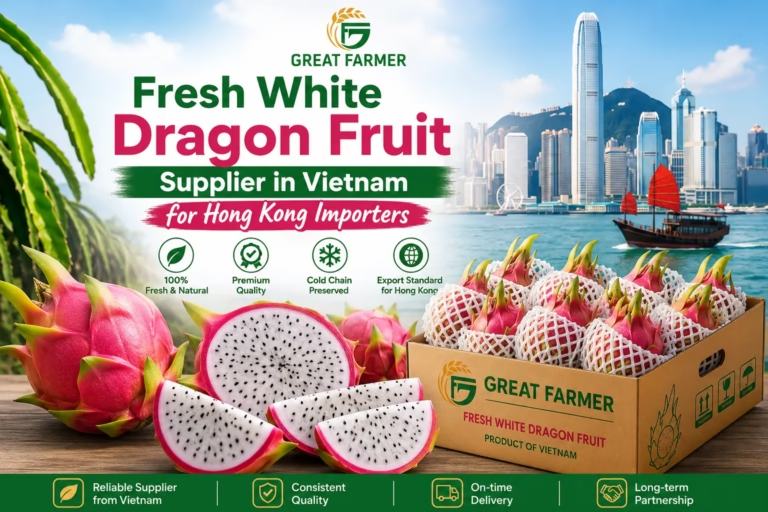
Dragon fruit (both white-flesh and red-flesh varieties) is not only visually striking, but also exceptionally rich in dietary fiber and antioxidants, positioning it strongly within the global superfood segment.
Its thick protective peel provides a significant logistical advantage, enabling long-distance sea freight transportation with reduced spoilage risks. This durability substantially lowers logistics costs for importers, making dragon fruit one of the most economically efficient and supply-chain-friendly tropical fruits in international trade.
2.3. Durian – Asia’s “Golden Commodity”
Durian has become a central driver of the Tropical Fruits Export industry, particularly targeting the massive Chinese market. Despite its polarizing aroma, the economic value of durian is extraordinary, especially for premium varieties such as Musang King, Monthong, and Ri6.
Modern durian exports increasingly rely on deep freezing technologies (cryogenic freezing) and segmented/frozen durian pulp processing to extend shelf life, optimize logistics efficiency, and enable long-distance distribution. These processing models transform durian from a highly perishable fruit into a high-value, scalable global commodity, unlocking exceptional profit potential across international supply chains.
2.4. Passion Fruit
Passion fruit is receiving growing attention from the European Union (EU) market. Beyond fresh-fruit exports, passion fruit is also a strategic raw material for the juice processing, confectionery, and cosmetics industries, making it a highly versatile commercial crop.
Due to its tendency to wrinkle and dehydrate easily, export-grade passion fruit requires strict packaging standards and rigorous cold-storage protocols. Proper cold-chain management is therefore essential to maintain visual quality, shelf life, and commercial value throughout international distribution.
COMPREHENSIVE SUMMARY TABLE OF FRUITS IN THE “TROPICAL FRUITS EXPORT” INDUSTRY
| Fruit Name | Key Characteristics | Brix Level (Sweetness) | Cold Storage Shelf Life | Recommended Transport Method | Main Import Markets |
|---|---|---|---|---|---|
| Fresh Mango | Strong aroma, smooth flesh, rich in vitamins | 15% – 19% | 15–21 days (at 10–12°C) | Sea freight / Air freight | USA, EU, Japan, South Korea |
| Dragon Fruit | Durable peel, attractive appearance, high fiber content | 11% – 14% | 25–30 days (at 5–7°C) | Sea freight | China, EU, USA, Middle East |
| Fresh Durian | Unique flavor, extremely high economic value | 25% – 35% | 15–20 days (at 13–15°C) | Sea freight (Reefer containers) | China, USA, Canada |
| Passion Fruit | Refreshing acidity, intense aroma | 14% – 16% | 20–25 days (at 5–7°C) | Sea freight / Air freight | EU, North America |
| Pomelo (Grapefruit) | Oil-rich peel, juicy segments, long storage life | 10% – 12% | 60–90 days (at 10–12°C) | Sea freight | EU, Middle East, Russia |
| Fresh Coconut | Naturally sweet water, 100% natural hydration | 6% – 8% | 45–60 days (at 2–4°C) | Sea freight | USA, EU, South Korea, Japan |
Note: Storage duration and temperature conditions may vary depending on fruit variety, maturity at harvest, and the specific post-harvest treatment and preservation technologies applied by each exporter.
3. Quality Standards System: Barriers and Global Market Passports
One of the greatest concerns for importers working with Tropical Fruits Export partners is the risk related to quality control and chemical residues. Non-compliant shipments can be destroyed at the port of destination, resulting in losses of millions of dollars. Therefore, a deep understanding of global quality and compliance standards is not optional it is mandatory.
3.1. Global Good Agricultural Practices (GlobalGAP)
GlobalGAP is the minimum entry standard for tropical fruits to access major supermarket systems in Europe and the United States.
This certification requires full transparency across the entire production chain, including:
-
Water sources and irrigation systems
-
Fertilizer management
-
Pesticide and plant protection products
-
Worker health, safety, and labor conditions
A shipment certified under GlobalGAP is not merely a technical requirement it is a symbol of commitment to quality, food safety, sustainability, and international trust. For global buyers, GlobalGAP certification represents a risk-mitigation instrument and a passport to long-term, scalable partnerships within international supply chains.
3.2. Phytosanitary Standards
Each importing country enforces its own SPS framework (Sanitary and Phytosanitary Measures) to protect domestic agriculture and ecosystems from invasive pests and diseases. Compliance with these regulations is a non-negotiable requirement in global tropical fruit trade.
-
United States & Australia Markets: Fresh fruit imports are required to undergo irradiation treatment to completely eliminate pests, fruit flies, and harmful organisms. In addition:
-
Plantation Codes and Packing House Codes must be officially registered
-
Growing areas and packing facilities must be approved, monitored, and audited by competent authorities
-
Shipments are subject to regulatory supervision by agencies such as APHIS (United States Department of Agriculture – Animal and Plant Health Inspection Service)
-
-
Japan & South Korea Markets: These markets require Vapor Heat Treatment (VHT) as a phytosanitary processing method. VHT uses saturated steam to raise the core temperature of the fruit to a regulated threshold, effectively destroying larvae and pests without accelerating ripening or damaging fruit quality.
This process is considered one of the most technically precise phytosanitary treatments, balancing biosecurity compliance with commercial quality preservation.
Overall, phytosanitary compliance is not merely a regulatory procedure it is a strategic gatekeeper determining market access, trade scalability, and long-term supply chain credibility in the Tropical Fruits Export industry.
3.3. MRLs Management (Maximum Residue Limits)
Especially in the European Union (EU) market, Maximum Residue Limits (MRLs) for pesticides and plant protection chemicals are frequently updated and extremely stringent. Non-compliance can result in shipment rejection, destruction at port, and long-term blacklisting of exporters.
Reputable Tropical Fruits Export companies must therefore operate in-house laboratory systems or maintain strategic partnerships with internationally accredited testing and certification organizations such as SGS, Eurofins, and Intertek to conduct pre-shipment residue testing before container loading.
This proactive testing model transforms MRL compliance from a regulatory risk into a quality assurance asset, protecting importers from financial loss, legal exposure, and reputational damage while strengthening trust, transparency, and long-term trade partnerships across the global supply chain.
4. Decoding the Professional-Standard Tropical Fruit Supply Chain
For a perfect mango or dragon fruit to appear on a supermarket shelf in New York or London, it must go through a scientific, highly structured, and time-critical process, where every stage is managed with precision down to the minute.
This is not simply logistics it is a synchronized supply chain system integrating agronomy, post-harvest handling, quality control, cold-chain management, regulatory compliance, and international distribution into a single, professional export operation.
Step 1: Harvesting at Optimal Maturity
Unlike fruits for domestic consumption, export-grade fruits are not harvested when fully ripe and soft. Agricultural engineers must scientifically assess dry matter content, sugar levels (Brix), and peel coloration to determine the optimal harvest timing.
Harvesting is carried out during cool periods of the day, using specialized cutting tools, with strict zero-drop handling protocols ensuring fruits never fall to the ground in order to prevent internal cellular damage and micro-bruising that would compromise shelf life and export quality.
Step 2: Washing and Preliminary Sorting
After being transported to the packing house, fruits are washed in ozone-aerated water tanks to remove dirt, sap/latex residues, and surface microorganisms.
They are then preliminarily sorted by:
-
Size (grading stsandards)
-
Color uniformity
-
Visual quality
Fruits showing scars, blemishes, discoloration, fungal infection, or disease symptoms are systematically removed, ensuring that only export-grade produce proceeds to the next stage of the supply chain.
Step 3: Post-Harvest Treatments
Depending on importer requirements and target market regulations, fruits may be coated with natural waxes (such as carnauba wax) to minimize moisture loss and enhance peel gloss and visual quality.
This is followed by mandatory post-harvest treatments, which may include:
-
VHT (Vapor Heat Treatment)
-
Irradiation
-
Immersion in food-safe antifungal solutions
These processes are essential to extend shelf life, preserve freshness, prevent fungal development, and ensure full phytosanitary and food safety compliance preparing the fruit for long-distance international distribution.
Step 4: Packaging
In Tropical Fruits Export, packaging is not merely aesthetic it is a core preservation tool and a critical component of shelf-life management.
Key packaging systems include:
-
Cold-resistant corrugated cartons with waterproof wax coating, designed to withstand high humidity and cold-chain conditions
-
Foam net sleeves to protect individual fruits from mechanical impact and friction damage
-
Ethylene absorber sachets placed inside cartons to inhibit ethylene gas accumulation (the natural ripening hormone), thereby slowing the ripening process during long-distance sea transportation
This integrated packaging system transforms packaging into a functional preservation technology, ensuring product integrity, visual quality, and commercial value throughout extended international transit.
Step 5: Cold Chain Logistics
After packaging, the produce is transferred into cold storage facilities for pre-cooling, where the core temperature of the fruit is carefully reduced to export-standard levels.
This process is critical loading warm fruit directly into refrigerated containers can cause thermal shock, condensation, and fungal development, leading to rapid quality degradation.
The cargo is then loaded into reefer containers, with precisely controlled settings for:
-
Temperature
-
Humidity
-
Ventilation (air circulation)
All parameters are tailored to each fruit type, ensuring cold-chain continuity, physiological stability, and quality preservation throughout long-distance international transportation.
5. Core Value for Importers Partnering with Professional Exporters
Trong thế giới kinh doanh B2B nông sản, tìm kiếm một nhà cung cấp không khó, nhưng tìm được một đối tác chiến lược trong lĩnh vực Tropical Fruits export lại là một bài toán hóc búa. Khi làm việc với các đơn vị uy tín, nhà nhập khẩu toàn cầu nhận được những giá trị vô hình và hữu hình to lớn:
5.1. Transparent Traceability Systems
In the era of information transparency, consumers want to know where their bananas and mangoes come from, and who grows them.
Professional export partners provide advanced traceability systems such as:
-
QR code tracking
-
Blockchain-based traceability platforms
These systems enable importers and end consumers to trace the entire journey—from growing regions, farming logs, and cultivation practices to packing dates and processing history.
Traceability is no longer a luxury it is a trust mechanism, brand asset, and compliance requirement in modern food supply chains.
5.2. Stable, Large-Scale Supply Capacity
Supermarket and retail trade depends on continuity of supply.
Any supply chain disruption directly results in loss of shelf space to competitors.
Professional Tropical Fruits Export groups typically:
-
Develop large-scale linked farming zones spanning thousands of hectares
-
Apply staggered cultivation and harvesting models
-
Build multi-region production networks
This ensures year-round supply stability, even in the face of minor climate fluctuations transforming supply reliability into a competitive advantage for importers.
5.3. Professional Handling of Customs & International Payments
Agricultural import-export documentation is highly complex, including:
-
Bill of Lading (B/L)
-
Certificate of Origin (C/O)
-
Phytosanitary Certificate
-
Health Certificate
-
And multiple regulatory and compliance documents
Even a minor typographical error can cause containers to be held at port, leading to massive demurrage and detention costs, operational delays, and product spoilage.
Professional partners ensure:
-
Flawless documentation accuracy
-
Regulatory compliance
-
Flexible international payment solutions, including:
-
L/C (Letter of Credit)
-
T/T (Telegraphic Transfer)
-
D/P (Documents Against Payment)
-
This transforms trade operations from a high-risk process into a secure, scalable, and financially optimized global business model.
6. Future Challenges and Strategic Solutions for the Tropical Fruits Export Industry
Despite its enormous potential, the Tropical Fruits Export industry faces structural, long-term challenges shaped by global transformation trends. Importers must clearly understand these risks in order to work strategically with suppliers toward sustainable, long-term solutions.
6.1. Climate Change
Droughts, salinity intrusion, irregular rainfall, and extreme weather events directly impact crop yields, fruit quality, and Brix levels in tropical production regions.
Solution:
Importers should prioritize partnerships with exporters that apply high-tech agricultural systems, including:
-
Precision drip irrigation technologies (e.g. advanced water-saving systems)
-
Greenhouse and net-house cultivation models
-
Climate-resilient crop varieties
-
Smart farming and data-driven cultivation
These models reduce dependence on extreme weather conditions and transform climate risk into operational resilience.
6.2. International Sustainability & ESG Requirements
In Europe, new regulatory frameworks such as the European Green Deal and the CBAM (Carbon Border Adjustment Mechanism) are creating significant pressure on international agricultural trade. At the same time, plastic packaging is gradually being restricted and phased out across European markets.
Solution:
The Tropical Fruits Export industry is actively transforming toward sustainable development by:
-
Adopting biodegradable and eco-friendly packaging (e.g. sugarcane bagasse materials, recycled paper, compostable packaging)
-
Optimizing logistics routes and transport systems to reduce carbon emissions
-
Implementing low-carbon supply chain strategies
-
Applying Fairtrade principles to protect farmer livelihoods and ensure ethical sourcing
This transition allows sustainability and ESG compliance to evolve from regulatory pressure into a long-term competitive advantage, helping exporters and importers build future-proof, responsible, and g📞 Phone / WhatsApp: +84 785 017 575 | +84 778 078 134 | +84 033 531 3567
📧 Email: mia@greatfarmer.com.vn | clay@greatfarmer.com.vn | loan@greatfarmer.com.vn
🌐 Website: www.greatfarmer.com.vn
 Blog & News