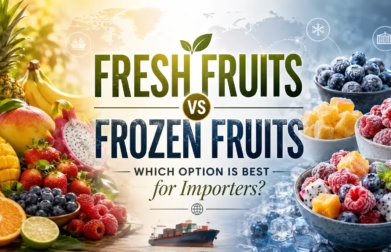
In the rapidly growing global food and beverage (F&B) industry, selecting the right source of raw materials plays a critical role in the success or failure of distributors and wholesalers. One of the most important strategic questions businesses frequently face is: Fresh Fruits vs Frozen Fruits – Which option delivers greater economic value and a stronger competitive advantage?
The consumer market is becoming increasingly segmented. On one side, there is a group of customers willing to pay premium prices for high-quality imported fresh fruits, prioritizing authenticity, freshness, and the original eating experience. On the other side, the rapid expansion of F&B chains, food processing manufacturers, and busy consumers is driving strong demand for frozen fruits, where convenience, longer shelf life, and product consistency are key priorities.
This article provides an in-depth, comprehensive, and commercially accurate analysis to help importers thoroughly address a critical business question: should they invest in fresh fruits, frozen fruits, or a strategic combination of both?
1. A Comprehensive Overview of the Global Fruit Import Industry
Before diving deeper into the comparison of Fresh Fruits vs Frozen Fruits, importers need to clearly understand the broader market context. The global supply chain has experienced significant disruptions in recent years. Ocean freight costs, climate change impacts on harvest seasons, and increasingly strict phytosanitary requirements are reshaping the global fruit trade landscape.
Fresh fruits continue to hold a strong position as a symbol of premium quality, nutrition, and a healthy lifestyle. However, frozen fruits, supported by IQF technology (Individually Quick Frozen), are rapidly gaining momentum. This technology helps preserve the cellular structure, flavor, and vitamin content of fruits, gradually eliminating the outdated perception that “frozen means lower quality.”
The choice between these two product categories is not simply a matter of preference. It is a strategic decision involving supply chain risk management, cold storage infrastructure, and a clear understanding of the company’s target customer profile.
2. Fresh Fruits: High Profit Potential with Significant Business Risks
Importing fresh fruits has always been an attractive business sector. Products such as U.S. cherries, New Zealand apples, Australian seedless grapes, and Musang King durian consistently generate strong demand across supermarket chains and premium fresh food stores.
2.1. Key Commercial Advantages of Fresh Fruits
-
Premium market positioning: Fresh fruits can effectively target high-income consumers who value freshness and are willing to pay a premium price for directly imported products.
-
Superior sensory experience: Attractive appearance, natural aroma, crisp texture, and original fruit structure are key touchpoints that frozen fruits cannot fully replace.
-
Fast capital turnover: Due to their short shelf life, fresh fruits must be distributed and consumed quickly. If a business has stable and reliable sales channels, the capital turnover rate can be highly impressive.
2.2. Challenges and Risks (Pain Points)
-
High shrinkage rate: This is the biggest “enemy” of fresh fruit importers. Fruits are living products, and the ripening and deterioration process continues throughout storage and distribution. Shrinkage caused by bruising, damage, and over-ripening can reach 10–20%, depending on transportation conditions.
-
Shelf life pressure: A shipment of fresh fruits has a limited commercial lifespan, both during transit and after arrival at the destination port. Delays in customs clearance can quickly erode profit margins and reduce the overall quality of the shipment.
-
Price volatility and seasonality: Fresh fruit imports are heavily dependent on the harvest seasons of exporting countries. Once the season ends, import prices may rise sharply or supply may disappear completely, creating potential disruptions for the business.
3. Frozen Fruits: A Breakthrough Solution for B2B Customers
When comparing Fresh Fruits vs Frozen Fruits, the frozen option is increasingly proving its superior value in serving business-to-business (B2B) customers.
3.1. Commercial Advantages of Frozen Fruits
-
Impressive shelf life: IQF technology allows fruits to be stored for 12 to 24 months at -18°C. This gives importers far greater control over time management and significantly reduces the pressure of selling products quickly before spoilage occurs.
-
Year-round availability: F&B chains require consistent flavor and quality throughout the year, regardless of seasonal changes. Importing frozen fruits allows businesses to supply ingredients such as strawberries, blueberries, and mangoes all year round at more stable prices.
-
Optimized operating costs for customers: Frozen fruits are often pre-processed, such as peeled, deseeded, diced, or sliced. This helps restaurants, cafés, and food service operators save labor costs in preparation while significantly reducing food waste.
-
Lower phytosanitary risk: The freezing process can eliminate or inactivate many insects, pests, and pathogens. As a result, frozen fruit imports often face a lower risk of rejection at the port compared with fresh produce.
3.2. Challenges to Consider
-
Cold storage costs: While fresh fruits create pressure in terms of time, frozen fruits create pressure in terms of energy costs. Importers must maintain cold storage facilities and refrigerated trucks at a continuous temperature of -18°C, 24/7.
-
Limited applications: Once thawed, frozen fruits may experience partial cellular structure damage caused by ice crystals, resulting in a softer or mushier texture. They are excellent for smoothies, jams, bakery products, desserts, and food processing, but they cannot fully replace fresh fruits for direct fresh consumption.
4. The Truth About Nutrition: Breaking the Myths Between Fresh and Frozen Fruits
One of the key barriers that makes retailers hesitant when approaching the topic of Fresh Fruits vs Frozen Fruits is the common consumer perception that frozen products are less nutritious than fresh ones. As a professional importer, you need to be equipped with accurate knowledge to persuade your business partners.
-
Fresh fruits: Fresh fruits are often harvested before reaching full ripeness in order to withstand long-distance sea transportation, which may take 2 to 4 weeks. During this period, vitamin levels, especially Vitamin C, begin to decline from the moment the fruit is picked. By the time the product reaches consumers, its nutritional value may no longer be fully preserved.
-
Frozen fruits: Frozen fruits are typically harvested at peak ripeness, when their nutritional content is at its highest. Immediately after harvesting, they are transferred into an IQF system and rapidly deep-frozen within minutes. This process acts like a “pause button,” helping lock in vitamins, minerals, and antioxidants.
Many medical studies from reputable organizations have shown that frozen fruits can contain nutritional values comparable to fresh fruits. In some cases, such as Vitamin C content in blueberries, frozen fruits may even retain higher levels than fresh fruits that have been stored on supermarket shelves for an extended period. This creates a powerful USP (Unique Selling Proposition) that importers can use when marketing frozen fruit products.
5. Fresh Fruits vs Frozen Fruits: A Detailed Comparison Table
To gain a clearer and more practical perspective for making import decisions, let’s review the comparison table below, which analyzes the key criteria between the two product categories:
| Criteria | Fresh Fruits | Frozen Fruits |
|---|---|---|
| Shelf Life | Very short, usually 15–45 days | Very long, usually 12–24 months |
| Storage Temperature | 2°C to 15°C, depending on the fruit type | Continuously maintained at -18°C |
| Shrinkage Rate | High, around 5%–10%–20% depending on handling and transportation | Nearly 0% |
| Target Customers | Supermarkets, fresh fruit stores, retailers, and premium grocery channels | F&B chains, bakeries, confectionery manufacturers, and food processing factories |
| Seasonality | Fully dependent on harvest seasons | Available year-round |
| Customs Procedures | Strict phytosanitary inspection requirements | Generally easier customs clearance |
| Transportation Costs | Depends on whether the shipment is transported by sea freight or air freight | Depends on whether the shipment is transported by sea freight or air freight |
| Processing Level | Whole fruits, unpeeled and unprocessed | Peeled, cut, sliced, or diced for greater convenience |
6. Cost and ROI Analysis
The difference between Fresh Fruits vs Frozen Fruits becomes most evident in the financial performance of an importing business. Let’s break down the key cost factors to understand where your cash flow is going and how each product category affects profitability.
6.1. Cost Structure of Fresh Fruits
-
Logistics freight: To maintain freshness and minimize damage as much as possible, many premium fresh fruits must be transported by air freight, which is significantly more expensive than sea freight. Even when shipped by sea freight, fresh fruits often require Controlled Atmosphere (CA) refrigerated containers, which also involve relatively high rental and operating costs. In addition, sea freight carries greater risks than air freight due to longer transit times, possible vessel delays, and other logistics disruptions.
-
Risk cost: If a shipment faces phytosanitary issues, port congestion, or customs delays, and the goods remain in storage for an additional week, the shipment value may decline significantly. Importers must factor this depreciation risk into the final selling price.
-
Profit margin: Fresh fruits can generate very high margins per successfully sold unit. However, the net profit margin may be heavily eroded by spoilage, shrinkage, and product loss during transportation and distribution.
6.2. Cost Structure of Frozen Fruits
-
Logistics freight: Importing frozen fruits can optimize transportation costs because products can be shipped by sea using standard reefer containers from almost any country in the world, without the same level of concern over spoilage caused by long transit times.
-
Cold storage and warehousing costs: This is the largest cost component for frozen fruit importers. Businesses need to work with qualified industrial cold storage facilities that meet proper temperature standards. The longer the products remain in storage, the more cold storage fees, energy costs, and capital costs accumulate.
-
Profit margin: Frozen fruits offer a more stable and predictable profit margin. While the margin per kilogram may not be as high as premium fresh fruits, importers can generate profit through larger sales volumes and significantly lower product disposal risk.
7. Cold Chain Logistics: The Key to Survival
Whether importers choose fresh or frozen fruits, the real battle lies in cold chain logistics. Any break in the cold chain, even for just a few hours, can lead to serious consequences.
7.1. For Fresh Fruits
Each type of fruit requires a different storage environment. For example, bananas need to be kept at around 13–15°C; if stored at temperatures that are too low, their peel may turn dark. Apples and pears, on the other hand, require temperatures close to 0°C.
Fresh fruits also release ethylene gas, a natural plant hormone that accelerates the ripening process. If fruits that produce high levels of ethylene, such as apples and avocados, are stored in the same container with ethylene-sensitive fruits, the entire shipment may ripen too quickly before reaching the destination port. Therefore, precise warehouse and container management is an essential requirement.
7.2. For Frozen Fruits
The principle for frozen fruits is simple but extremely strict: the temperature must never exceed the -18°C threshold. From the export processing facility to the sea freight container, port cold storage, delivery truck, and the customer’s warehouse, the temperature must remain consistently stable.
If frozen fruits are partially thawed during transit and then refrozen, large ice crystals may form. This can damage the IQF structure and seriously reduce product quality. Installing data loggers in containers to continuously record temperature is a necessary standard, allowing importers to file claims with shipping lines in case of temperature-related incidents.
8. Fresh or Frozen Fruits: Which Option Is Best for Your Business?
There is no absolute right or wrong answer to the Fresh Fruits vs Frozen Fruits debate. The best choice depends on the business strategy, operating model, and target market of each company. Below is a practical decision-making framework to help importers choose the most suitable option.
8.1. You SHOULD import Fresh Fruits if:
-
Your business already has a strong retail distribution network and the ability to move products quickly, such as supermarkets, premium fruit stores, or fresh produce chains.
-
Your target customers are end consumers in the B2C segment, especially middle- to high-income buyers who value gifting, premium presentation, and direct fresh consumption.
-
Your company has strong working capital and is willing to accept shrinkage risk in exchange for higher profit margins, particularly during festive seasons and peak-demand periods.
8.2. You SHOULD import Frozen Fruits if:
-
Your business model is B2B, supplying ingredients to bubble tea brands, cafés, restaurants, hotels, HoReCa channels, and food processing factories.
-
You want to build a more stable, sustainable, and predictable business model without constant pressure from expired inventory or short product shelf life.
-
You aim to enter the market with a volume-driven strategy, optimize sea freight costs, and reduce customs clearance and spoilage risks.
9. Future Trend: Integrating Both Options to Maximize Competitive Advantage
Many smart importers are gradually shifting toward a hybrid strategy instead of choosing only one product category. A clear understanding of the strengths of Fresh Fruits vs Frozen Fruits allows them to cover a broader market.
They supply premium fresh fruits to supermarket and retail channels to strengthen brand positioning and generate fast cash flow. At the same time, they import frozen fruits in large volumes to secure long-term contract sales with F&B chains, creating a stable and sustainable revenue stream regardless of seasonality.
In addition, the growing trend toward sustainable consumption and food waste reduction is accelerating the development of the frozen fruit market. With an estimated CAGR of more than 6% over the next decade, building a frozen fruit product portfolio is not only a commercial solution but also a strategic move to stay ahead of global market trends.
Conclusion
The comparison between Fresh Fruits vs Frozen Fruits is not about determining which option is the winner or loser. Instead, it helps importers clearly identify the core capabilities of their own businesses. Fresh fruits offer authentic value, premium positioning, and attractive profit margins per unit, but they also come with significant shrinkage risks. Frozen fruits, especially IQF products, provide convenience, consistency, long shelf life, and a powerful opportunity to tap into the B2B customer segment.
To succeed in the import and export industry, the key requirement is to master cold chain logistics and accurately understand the needs of your target customers. By building a well-structured import strategy and selecting the right product category, businesses can develop a strong food trading operation with sustainable profitability.
 Blog & News