Driven by the global “superfood” consumption wave, international markets are witnessing the strong rise of a nutritionally rich tropical fruit: Dragon fruit (Pitaya). For global importers, distributors, and retailers, dragon fruit is no longer simply an agricultural commodity it has evolved into a strategic product category with high growth potential and long-term commercial value.
However, the core challenge does not lie in supply volume, but in the quality value chain: from cultivation zones and farming standards to harvesting practices, post-harvest handling, and cross-border logistics capabilities. Only products that meet the highest quality benchmarks can successfully enter demanding markets and preserve the sensory experience expected by sophisticated global consumers.
This in-depth analysis provides a comprehensive view of the export dragon fruit ecosystem from defining what true export-grade quality means under the Great Farmer Standard, to navigating international regulations, quality control systems, and the logistics infrastructure required to bring Vietnamese dragon fruit to global markets in a sustainable and scalable way.
1. The Global Rise of Dragon Fruit: Beyond the Niche
Once considered a rare novelty in Western markets, dragon fruit has transitioned into a mainstream staple. Driven by its stunning visual appeal, high antioxidant content, and versatile culinary uses (from smoothie bowls to high-end gastronomy), demand currently outstrips supply in many regions, particularly outside of the peak Asian seasons.
Vietnam remains the undisputed heavyweight champion of dragon fruit production and export, accounting for a significant majority of global trade. The country’s unique topography and specialized farming communities have created the perfect ecosystem for cultivating pitaya with superior sweetness, size, and appearance compared to emerging competitors.
For buyers, understanding export dragon fruit means recognizing that not all fruit is created equal. Success in this sector hinges on partnering with suppliers capable of bridging the gap between traditional farming excellence the “Great Farmer” concept and modern international trade requirements.
1.1. Key Commercial Varieties for Export
While many varieties exist, international trade is dominated by two main types, each with distinct market demographics:
-
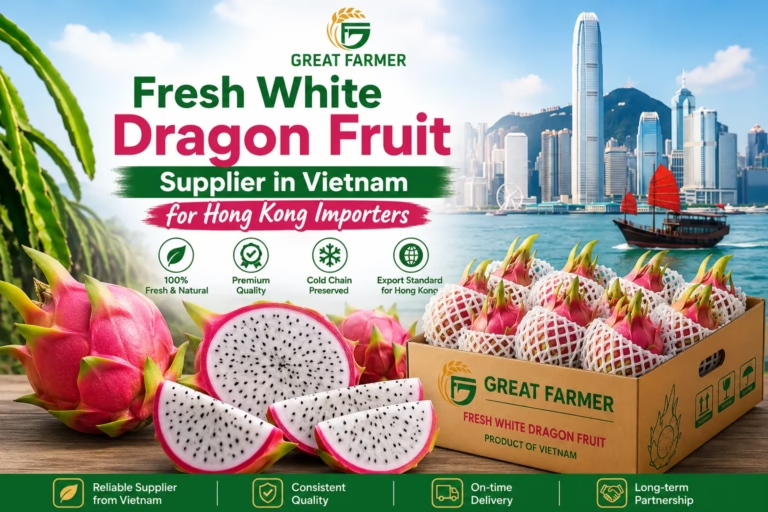
White-Fleshed Dragon Fruit (Hylocereus undatus): The most common variety globally. Known for its larger size, robust skin (making it excellent for shipping), and a subtle, refreshing sweetness with a crisp texture similar to a kiwi. It is often the entry-point for consumers new to the fruit.
-
Red/Purple-Fleshed Dragon Fruit (Hylocereus polyrhizus/costaricensis): Commands a premium price. It is prized for its vibrant internal color (a natural food coloring), higher Brix (sweetness) levels, and richer antioxidant profile. The flavor is more intense and berry-like.
2. Defining “Great Farmer Quality Standards” for Export
The term “export quality” is often tossed around loosely. At the professional level, specifically under the “Great Farmer Quality Standards” framework, it refers to a rigorous set of measurable criteria that guarantees consistency, safety, and shelf-life.
A “Great Farmer” isn’t just someone who grows fruit; they are stewards of the land who adopt modern agricultural practices to meet global demands without compromising environmental integrity.
2.1. External Aesthetics: The First Impression
In the premium market, visual appeal is paramount. Export-grade dragon fruit must meet strict physical parameters:
-
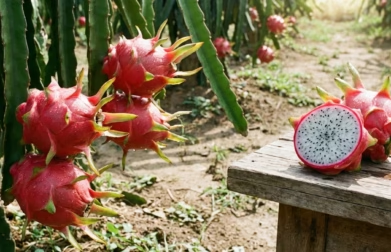
Skin Condition & Color: The skin must be vibrant pink/red with no signs of dullness. Crucially, the scales (bracts) must be green, turgid, and upright. Wilted or yellowing scales are the first sign of age and poor post-harvest handling.
-
Blemish-Free: The fruit must be free from mechanical damage (cuts, bruises during transit), insect damage, fungal spots (like anthracnose), or sunburn.
-
Sizing Consistency: Export markets require precise calibration. Fruit is sorted by weight, typically ranging from small (350g-450g) to extra-large (650g+). Consistent sizing is crucial for retail packaging and pricing strategies.
2.2. Internal Quality: The Taste Experience
Looks get the initial purchase; taste ensures repeat business.
-
Brix Levels (Sweetness): This is critical. While local market fruit might be accepted at lower sweetness levels, premium export dragon fruit should ideally have a Brix level of 14% or higher for white flesh, and often 16%+ for red flesh varieties. Great farmers achieve this through balanced nutrition and optimized harvest timing.
-
Texture: The flesh must be firm but yielding, not mushy or glassy (an indicator of chilling injury or over-ripeness).
2.3. The Foundation of Trust: Food Safety Certifications
Today’s international buyers cannot afford regulatory risks. “Great Farmer Quality” means verifiable safety. Compliance with standards such as GlobalGAP (Good Agricultural Practices) is no longer optional; it is the baseline requirement for entry into major markets like the EU and North America.
These certifications ensure:
-
Judicious and traced use of pesticides and fertilizers (adhering to Maximum Residue Limits – MRLs).
-
Hygienic handling during harvest to prevent microbial contamination.
-
Worker welfare and environmental sustainability standards at the farm level.
3. The Logistics Journey: From Farm Gate to Global Port
The biggest challenge in the export dragon fruit business is maintaining freshness over long ocean voyages. Dragon fruit is highly perishable and sensitive to temperature fluctuations and ethylene gas. A robust cold chain is the lifeline of this trade.
3.1. Precision Harvesting and Post-Harvest Treatment
The “Great Farmer” process begins before sunrise. Fruit must be harvested during the coolest part of the day to reduce “field heat.” Once picked, the clock starts ticking.
At the packing house, the fruit undergoes rigorous steps:
-
Cleaning and Washing: Removal of field debris and potential pests using sanitized water systems.
-
Vapor Heat Treatment (VHT) or Irradiation (If required): Certain high-value markets, notably Japan, South Korea, Australia, and the USA, require specific quarantine treatments to eliminate potential fruit fly risks. VHT involves heating the fruit to a specific core temperature for a set duration without damaging the fruit quality a delicate balancing act requiring advanced technology.
-
Pre-cooling: Rapidly bringing the fruit’s core temperature down to optimal storage levels (typically around 5°C – 7°C depending on variety and destination) to slow down respiration and ripening.
3.2. Advanced Export Packaging
Packaging is not just a container; it is an active component in preservation.
-
Ventilation: Export cartons must have precisely engineered ventilation holes to allow cold air circulation and prevent heat buildup inside the pallet.
-
Protection: Individual fruit socking (foam nets) or tray inserts are used to prevent fruit-to-fruit abrasion during transit vibration.
-
Modified Atmosphere Packaging (MAP): For very long transits, specialized carton liners that regulate oxygen and carbon dioxide levels can be used to further slow down the ripening process, extending shelf life by weeks.
4. Navigating International Market Requirements
Successfully executing an export dragon fruit strategy requires detailed knowledge of destination-specific regulations. A shipment perfectly acceptable for China might be instantly rejected at a port in Rotterdam or Los Angeles due to MRL discrepancies or missing phytosanitary documentation.
The table below outlines key requirements for major import regions.
Table 1: Key Market Requirements for Export Dragon Fruit
| Target Market | Key Certifications Required / Preferred | Phytosanitary & Quarantine Protocols (Crucial) | MRL (Maximum Residue Limits) Stringency | Market Preferences |
| European Union (EU) | GlobalGAP (Mandatory), BRC, IFS, SMETA (Social) | Standard Phytosanitary Certificate. High scrutiny on pests. | Very High. Extremely low tolerance for pesticide residues. | High demand for organic. Preference for medium sizes. Both white & red flesh popular. |
| United States (USA) | FDA Registration, FSMA compliance. GlobalGAP preferred. | Mandatory Irradiation (for Vietnamese origin) to control fruit fly. | High. Must comply with EPA tolerances. | Strong demand for red flesh due to antioxidant marketing. Large sizes preferred by retailers. |
| China | GACC Registration (General Administration of Customs China). | Specific bilateral protocols. Strict inspection for quarantine pests at entry ports. | Moderate to High. Growing emphasis on food safety and traceability. | The largest volume market. Preference for large, visually impressive fruit. Red flesh is highly valued for cultural reasons. |
| Japan & South Korea | GlobalGAP. Specific retailer standards often exceed national regulations. | Mandatory Vapor Heat Treatment (VHT). Very strict protocols and facility audits required. | Extremely High. Often stricter than EU standards for certain compounds. | Perfectionists. Absolute premium quality required. Zero tolerance for visual blemishes. High willingness to pay for top tier. |
| Australia | GlobalGAP. Freshcare. | Mandatory VHT or approved systems approach. Very strict biosecurity. | High. | Counter-seasonal demand is strong. High focus on quality over quantity. |
5. Sourcing Strategy: How to Identify Reliable “Great Farmer” Suppliers
For international buyers, the risk isn’t just receiving bad fruit; it’s reputational damage and significant financial loss from rejected containers. Finding a reliable partner for export dragon fruit is a strategic imperative.
How do you distinguish a trader capitalizing on a trend from a genuine “Great Farmer” integrated supplier?
5.1. Look for Vertical Integration
The best suppliers control the process from seed to container. They either own their farms or have tight, long-term contract farming agreements where they provide technical oversight, inputs (fertilizers/pesticides), and harvest protocols to farmers. This vertical integration is the only way to guarantee consistent adherence to GlobalGAP standards and manage MRLs effectively. If a supplier is just buying directly from wholesale markets right before packing, traceability is impossible.
5.2. Audit the Cold Chain Infrastructure
A supplier might have great fruit on the farm, but if their packing house lacks adequate pre-cooling facilities or their loading docks aren’t temperature-controlled, the cold chain is broken before the container door is even sealed. Serious exporters invest heavily in post-harvest technology.
5.3. Demand Full Traceability
Modern sourcing demands transparency. A “Great Farmer” standard supplier should be able to trace a specific carton of fruit back to the exact farm plot and harvest date. This traceability is essential for rapid recall capabilities and provides assurance of origin to the end consumer.
6. The Future of Dragon Fruit Export: Sustainability and Innovation
The future of the export dragon fruit industry is moving toward greater sustainability and technical sophistication.
-
Sustainable Farming Practices: Pressure is mounting to reduce water usage and chemical inputs. “Great Farmers” are adopting drip irrigation, organic fertilizers, and integrated pest management (IPM) to meet the growing demand for eco-conscious products.
-
Extended Shelf-Life Technologies: Research continues into natural edible coatings and advanced MAP technologies that could allow ocean freight to replace expensive air freight for distant markets, lowering carbon footprints and making the fruit more accessible.
-
Varietal Development: Breeding programs are focused on developing new varieties designed specifically for export varieties with thicker skins, longer shelf lives, and unique flavor profiles to differentiate in a crowded market.
Conclusion: Partnering for Success in the Dragon Fruit Trade
The business of export dragon fruit is lucrative but complex. It requires a delicate synchronization of agriculture, science, logistics, and regulatory compliance.
By adhering to “Great Farmer Quality Standards,” stakeholders in the supply chain ensure that the fruit arriving on supermarket shelves in Berlin, New York, or Tokyo delivers the exceptional experience consumers expect. For global buyers, success lies not just in securing supply, but in securing a partnership with suppliers committed to integrity, quality, and the relentless pursuit of excellence from the Vietnamese soil to the global table.
Embrace the standard. Elevate your sourcing. Deliver the best.
Contact us:
📞 Phone / WhatsApp: +84 785 017 575 | +84 778 078 134 | +84 033 531 3567
📧 Email: mia@greatfarmer.com.vn | clay@greatfarmer.com.vn | loan@greatfarmer.com.vn
🌐 Website: www.greatfarmer.com.vn
 Blog & News