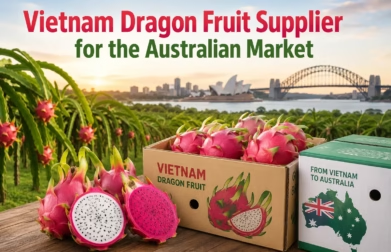
Australia is one of the world’s most stringent markets in terms of quarantine regulations and food safety standards. The approval for fresh Vietnamese dragon fruit to enter Australia marked a significant milestone, making Vietnam the first and only country authorized to export fresh dragon fruit to this market.
For importers in Australia, selecting a reputable dragon fruit supplier is not solely about price but also about the ability to fully comply with the requirements of the BICON system, ensuring quality, traceability, and a stable supply chain.
Demand for nutrient-rich tropical fruits such as dragon fruit is growing rapidly in Australia’s major cities. To meet this market demand, businesses must ensure that their cultivation practices, post-harvest handling processes, and logistics operations comply with international standards.
This article will help buyers in Australia evaluate and select the leading dragon fruit suppliers in Vietnam, ensuring regulatory compliance, a stable supply, and superior quality.
1. Strategic Advantages of Partnering with a Dragon Fruit Supplier in Vietnam
Vietnam is currently the global leader in dragon fruit cultivation and production, outperforming competing countries in terms of output, varietal diversity, and year-round supply capability. Understanding the key growing regions and the technical infrastructure behind this production capacity is a fundamental factor for Australian businesses when planning long-term supply agreements.
1.1. Key Cultivation Regions: Soil Conditions and Scale
Commercial-grade dragon fruit production serving demanding markets such as Australia is concentrated in three major regions, each possessing unique microclimatic and soil characteristics that determine the Brix level (sugar content) and skin thickness of the fruit:
-
Binh Thuan Province: Known as the “dragon fruit capital” of Vietnam. Its sandy soil, abundant sunshine, and semi-arid coastal climate enable dragon fruit from this region to develop exceptionally firm skin, flexible green bracts, and an ideal flesh firmness characteristics that are perfectly suited to withstand the pressures of long-distance transportation.
-
Long An Province (particularly Chau Thanh District): Renowned for its fertile alluvial plains. Suppliers in Long An specialize in high-Brix red-fleshed dragon fruit varieties. The nutrient-rich soil contributes to deeper coloration and a rich, naturally sweet flavor profile.
-
Tien Giang Province: Located in the heart of the Mekong Delta, the province leverages advanced irrigation systems and waterways to optimize fruit development, achieving exceptional consistency in the size grading of export-quality fruit.
1.2. Year-Round Supply Capability Through Supplemental Lighting Techniques
Unlike many other exporting countries that are heavily restricted by seasonality, a professional Dragon Fruit Supplier in Vietnam can commit to continuous supply programs throughout all 12 months of the year. Dragon fruit is naturally a long-day plant that requires extended periods of light exposure to stimulate flowering. Vietnamese growers have mastered off-season cultivation techniques through the use of supplemental LED lighting systems to regulate light exposure.
During the off-season period (typically from October to April of the following year), farmers provide supplemental lighting to the orchards for approximately 10 to 15 consecutive nights using energy-efficient LED bulbs ranging from 9W to 12W, strategically installed between the concrete trellis posts. This extension of artificial lighting hours stimulates off-season flowering and generates an additional 3 to 4 harvest cycles per year. For Australian importers, this capability completely eliminates the risk of supply chain disruptions and supports a stable and predictable retail pricing model throughout each quarter.
2. Detailed Classification of Export-Standard Dragon Fruit Varieties
A capable Dragon Fruit Supplier always maintains a clearly defined product portfolio, consisting of carefully selected dragon fruit varieties that can withstand phytosanitary treatment procedures while still meeting the preferences of Australian consumers.
2.1. White-Fleshed Dragon Fruit (Hylocereus undatus)
White-fleshed dragon fruit remains the foundational product in international trade. Characterized by its vibrant pink-red outer skin, contrasting with pure white flesh speckled with tiny black seeds, this variety is highly favored for its refreshing flavor and naturally mild sweetness.
-
Sugar Content (Brix Level): From 11% to 14%
-
Physical Characteristics: A thicker skin structure provides a natural protective barrier against external pressure and micro-scratches during mechanical sorting processes.
-
Positioning in the Australian Market: Suitable for high-volume retail channels, the food service industry (HoReCa), fresh-cut fruit platters, and catering companies specializing in weddings and events.
2.2. Red-Fleshed Dragon Fruit (Hylocereus costaricensis)
Red-fleshed dragon fruit represents the premium segment in the Australian market. The flesh contains high concentrations of betalains natural pigments responsible for its visually striking magenta-red coloration.
-
Sugar Content (Brix Level): From 13% to 17% (significantly sweeter and less acidic than white-fleshed dragon fruit).
-
Physical Characteristics: The thinner skin requires specialized packaging and transportation procedures and is more sensitive to overripening if the cold chain is interrupted.
-
Positioning in the Australian Market: Distributed through premium independent produce stores, organic supermarket chains, high-end restaurants, and juice and health smoothie processing lines.
2.3. Pink-Fleshed / Purple-Fleshed Dragon Fruit
This hybrid variety combines the superior durability of the white-fleshed dragon fruit skin with the enhanced sweetness and distinctive coloration characteristics of red-fleshed varieties. It is an excellent choice for long-duration sea freight shipments due to its impressive storage life and supermarket shelf-life performance.
3. Understanding Australia’s Stringent Import Regulations (DAFF & BICON)
Exporting fresh produce to Australia is a process that demands absolute precision in both legal compliance and technical execution. The Australian Department of Agriculture, Fisheries and Forestry applies extremely strict biosecurity measures to protect the domestic ecosystem from invasive pests and exotic diseases. Even the smallest error at the point of entry can result in the mandatory destruction of the entire shipment or its compulsory re-export at an extremely high cost.
3.1. Essential Legal Requirements in the Procurement Process
Before a carton of fresh dragon fruit can leave a Vietnamese port for Australia, the following two legal requirements must be fully aligned:
-
Valid Australian Import Permit: The importer in Australia must apply for and obtain an official Import Permit through the online BICON system. This document clearly specifies the biosecurity conditions that the Dragon Fruit Supplier in the exporting country is required to fulfill.
-
Phytosanitary Certification Issued by the Plant Protection Department: Every shipment must be accompanied by a Phytosanitary Certificate issued by the Plant Protection Department (PPD) of Vietnam. This certificate must include the required additional declarations confirming that the fruit has been inspected and found free from Australia’s quarantine pests.
3.2. Quarantine Pests of Major Concern to Australia
Australia’s pest risk analysis has identified several specific insect species associated with Vietnam’s dragon fruit export supply chain that must be completely eliminated before the shipment is loaded onto vessels or aircraft. A reputable supplier must implement an Integrated Pest Management (IPM) system directly at the farm level to control:
-
Fruit Flies: Particularly the Oriental fruit fly (Bactrocera dorsalis) and the guava fruit fly (Bactrocera correcta). These are the primary reasons Australia requires mandatory heat treatment measures.
-
Mealybugs: Including the pineapple mealybug (Dysmicoccus neobrevipes), the jackfruit mealybug (Pseudococcus jackbeardsleyi), and the Pacific mealybug (Planococcus minor).
-
Important Biosecurity Notice: If Australian quarantine authorities detect even a single live specimen of any of these pest species during visual inspection at the border, the entire container shipment will be immediately held for chemical treatment, fumigation, destruction, or refused entry without delay.
4. The Core Element of Compliance: Vapor Heat Treatment (VHT) Technology
To completely eliminate the potential risk posed by fruit fly larvae without relying on Methyl Bromide fumigation (which reduces fruit quality and leaves harmful chemical residues), the Australian government requires that all fresh dragon fruit imported from Vietnam undergo the Vapor Heat Treatment (VHT) process.
4.1. The Strict Scientific Parameters of the VHT Process
VHT is a heat disinfestation process that is entirely chemical-free. This technology utilizes highly humidified air under extremely precise control to raise the core temperature of the dragon fruit to a level capable of completely eliminating fruit fly eggs and larvae, while preserving the fruit’s natural physiological structure without causing damage.
The entire treatment process must be conducted in a heat treatment facility that has been audited, verified, and assigned an identification code by the Plant Protection Department of Vietnam and Australian biosecurity specialists. The following operational parameters are mandatory and non-negotiable:
Phase 1: Preliminary Sorting and Cleaning
- Sort the fruit according to size and quality standards.
- Use dust extraction systems and high-pressure water sprays to remove dirt, impurities, and mealybugs attached to the fruit surface.
- Insert temperature probes into the core of the largest fruits to accurately monitor the internal temperature throughout the entire treatment process.
Phase 2: Heating Inside the VHT Chamber
- Introduce saturated steam into the treatment chamber to increase the internal environmental temperature.
- Maintain air humidity at a minimum level of 90% to minimize moisture loss, preserve freshness, and prevent bract wilting or skin shriveling.
Phase 3: Maintaining Core Fruit Temperature (The Most Critical Stage)
- Continue heating until the core temperature of the fruit reaches a minimum of 46.5°C.
- Once the required threshold has been achieved, maintain this temperature continuously for at least 40 minutes to effectively eliminate quarantine pests such as insect eggs and larvae present inside the fruit.
Phase 4: Cooling and Temperature Stabilization
- Gradually reduce the chamber temperature using a cold-air ventilation system or fine water mist spraying.
- Bring the fruit core temperature back to a level close to ambient conditions.
- The controlled cooling process helps minimize thermal shock, skin cracking, and preserves the commercial quality of the product after treatment.
By strictly adhering to this temperature profile, the Dragon Fruit Supplier ensures a 100% elimination rate of fruit fly larvae while preserving flesh firmness, vibrant coloration, and natural sugar content, thereby extending the product’s shelf display period within Australian supermarket systems.
5. Quality Control, Size Grading, and Packaging Requirements for the Australian Market
Meeting biosecurity regulations is only the minimum requirement. To achieve strong profit margins in the Australian market, dragon fruit products must also satisfy the stringent commercial and aesthetic standards of the premium segment.
5.1. Size and Weight Grading Standards
The Australian market particularly favors shipments with uniform sizing, creating a consistent visual presentation on retail shelves. Export shipments are typically classified according to highly detailed weight ranges:
| Fruit Grade | Weight Range per Fruit | Ideal Number of Fruits (Per 5kg Net Carton) |
|---|---|---|
| Premium Small | 320g – 450g | 11 – 14 fruits |
| Standard Medium | 460g – 600g | 8 – 10 fruits |
| Jumbo Large | 601g – 900g | 5 – 7 fruits |
5.2. Structural Packaging Standards for Preventing Reinfestation
Immediately after exiting the VHT chamber, dragon fruit is transferred directly into a completely isolated “sterile zone” within the packing facility. Packaging materials must comply with strict standards designed to prevent reinfestation by insects throughout storage and transportation:
-
Strict Prohibition of Untreated Plant Materials: DAFF strictly prohibits the use of straw, coconut fiber, bamboo strips, or raw banana leaves as cushioning or protective lining materials. Packing facilities are only permitted to use clean synthetic food-grade plastic trays or protective foam wraps in combination with treated corrugated cardboard cartons.
-
Insect-Proof Mesh Covering Ventilation Openings: All ventilation holes on export cartons must be fully covered with specialized insect-proof mesh (with a maximum aperture size of no more than 1.6 mm) to ensure that no insects can enter the carton after heat treatment has been completed.
-
No Metal Staple Policy: Cartons must be sealed using high-strength food-safe adhesive or secured with plastic strapping bands. The use of metal staples is heavily restricted or completely prohibited by modern buyers to eliminate the risk of hazardous physical contaminants when supermarkets perform in-store fruit slicing operations.
5.3. Traceability Capability and Identification Codes
Every carton leaving a certified Vietnamese facility for export to Australia must carry clear, permanent, and tamper-proof labeling, enabling authorities to trace the product back from the retail outlet to the originating orchard. The labels must include:
-
Orchard Registration Number: Verification that the fruit originates from a growing area approved by the Plant Protection Department and operating under an Integrated Pest Management (IPM) program.
-
Packinghouse/VHT Facility Code: Accurately identifies the specific treatment batch and the facility where the process was conducted.
-
Unique Consignment Identifier: Enables Australian quarantine officers at the point of entry to quickly match data recorded in the BICON system with the physical shipment pallet.
6. Comprehensive Cold Chain Logistics and Supply Chain Security
Dragon fruit is a living commodity that continues to respire after harvest. To maintain product quality, the fruit’s respiration rate must be immediately suppressed through effective temperature management. For the Australian market, transportation methods are generally divided into two primary channels depending on market urgency and budget considerations.
6.1. The Dynamics Between Air Freight and Sea Freight
-
Air Freight: This option is typically selected during periods of product shortages in the Australian market that drive retail prices upward, or for red-fleshed dragon fruit varieties that are particularly sensitive to transit time. After packaging and VHT treatment, the fruit is transported immediately to Tan Son Nhat International Airport (SGN) for direct flights to Sydney (SYD) or Melbourne (MEL). Total transit time is typically between 24 and 48 hours. This method maximizes the remaining shelf-life available at retail level, although logistics costs per kilogram are considerably higher.
-
Sea Freight Using Refrigerated Containers (Reefer Containers): This is the standard transportation method for large-scale distribution programs operated by mainstream supermarket chains. Products are loaded into specialized refrigerated containers (20-foot or 40-foot reefer containers). Ocean transit time from Cat Lai Port (Ho Chi Minh City) to the Port of Melbourne or the Port of Brisbane typically ranges from 12 to 16 days.
6.2. Core Environmental Specifications Inside Refrigerated Containers
Throughout the ocean voyage, the microclimate environment inside the refrigerated container must be continuously monitored using automatic data logging devices (data loggers). The following parameters are mandatory standards for a successful shipment:
-
Temperature Set-Point: Must be maintained consistently between 2.0°C and 5.0°C. If temperatures fall below 2°C, dragon fruit may suffer from chilling injury, resulting in water-soaked flesh and skin discoloration.
-
Relative Humidity: Strictly controlled between 85% and 90% to keep the dragon fruit bracts green and flexible, preventing dehydration and shriveling while maintaining a fresh appearance upon container opening.
-
Ventilation Rate: Set between 15 and 25 cbm/hour to continuously remove accumulated carbon dioxide (CO₂) and ethylene gas generated through fruit respiration, thereby effectively slowing the ripening and aging processes of the fruit.
7. Audit Criteria: Evaluating the Capability of a Dragon Fruit Supplier in Vietnam
For an international procurement specialist in Australia, selecting an export partner is a comprehensive risk management process. Businesses should assess potential suppliers based on a technical audit matrix rather than focusing solely on the FOB (Free On Board) price.
7.1. Mandatory International Certifications
A leading exporter in Vietnam should be able to provide valid and verifiable copies of the following certifications:
-
GlobalGAP (Good Agricultural Practices): Ensures that affiliated farms strictly comply with requirements relating to land management, pesticide application records, environmental sustainability, and worker welfare.
-
HACCP and ISO 22000: Demonstrate that the packing facility operates under hazard analysis and critical control point systems designed to prevent physical, chemical, and biological contamination risks throughout the packing process.
-
BRCGS (Brand Reputation through Compliance Global Standards for Food Safety): A premium-level certification indicating that the supplier’s food safety management system possesses the capability required to supply leading multinational supermarket chains in Australia (such as Woolworths, Coles, and ALDI).
7.2. Compliance with Maximum Residue Limits (MRLs)
Australia operates under an independent food standards framework that imposes extremely strict Maximum Residue Limits (MRLs) for agricultural chemicals. A professional Dragon Fruit Supplier must be able to provide independent third-party laboratory testing reports (issued by reputable accredited organizations such as Eurofins or SGS) for each harvested lot code. These certificates provide definitive evidence that the concentrations of fungicides, pesticides, and other agricultural chemicals (if used) remain below the parts-per-million (ppm) thresholds established by Food Standards Australia New Zealand (FSANZ).
8. Summary Table: Supply Profile and Technical Specifications
To assist procurement teams in rapidly developing import strategies, the tables below consolidate all key technical and operational variables involved in importing dragon fruit from Vietnam to Australia.
Table A: Comparison Matrix of Dragon Fruit Varieties for the Australian Market
| Evaluation Criteria | White-Fleshed Dragon Fruit (H. undatus) | Red-Fleshed Dragon Fruit (H. costaricensis) | Hybrid Pink-Fleshed / Purple-Fleshed Variety |
|---|---|---|---|
| Average Brix Level | 11% – 14% | 13% – 17% | 12% – 15% |
| Flavor Characteristics | Refreshing, mildly sweet, and delicate | Rich sweetness, full-bodied flavor, with earthy aromatic notes | Balanced sweetness with a subtle acidic finish |
| Fruit Skin Durability | High (Thick and firm epidermal layer) | Medium (Softer cellular structure) | High (Inherited resilient genetic traits) |
| Optimal Transportation Method | Sea Freight (Highly stable) | Air Freight preferred | Highly compatible with sea freight |
| Shelf-Life After VHT Treatment | 21 – 28 days (Stored at 4°C) | 14 – 18 days (Stored at 4°C) | 18 – 24 days (Stored at 4°C) |
Table B: Logistics Technical Specifications and Mandatory Regulatory Requirements
| Parameter / Process | Mandatory Australian Requirement | Method for Verifying Supplier Capability |
|---|---|---|
| Quarantine Treatment Method | Vapor Heat Treatment (VHT) | Request machine operation logs stamped and certified by the PPD confirming achievement of 46.5°C for 40 minutes. |
| Legal Status | Registered within the BICON system | Verify that the legal entity information matches the details stated on the issued Import Permit. |
| Mesh Protection | Ventilation mesh aperture size not exceeding 1.6 mm | Conduct a visual inspection of the packing facility’s material technical specification sheet. |
| Traceability Capability | Barcode identification for both the orchard and packing facility | Test-scan the barcode to ensure accurate linkage with the Plant Protection Department database. |
| Chemical Testing | Full compliance with FSANZ Maximum Residue Limits (MRLs) | Review and cross-check Gas Chromatography–Mass Spectrometry (GC-MS) analytical reports issued by SGS or Eurofins. |
9. Building B2B Sales Contracts: Minimizing Financial Risks
When progressing toward the execution of a formal commercial agreement with a Dragon Fruit Supplier in Vietnam, the structure of the B2B contract must be carefully designed to clearly define responsibilities for the unique risks associated with the cross-border trade of highly perishable fresh produce subject to quarantine regulations.
9.1. Trade Terms (Incoterms) and Payment Structure
-
Recommended Incoterms: For initial trial shipments, terms such as FOB (Free On Board) Cat Lai Port or CFR (Cost and Freight) destination port in Australia are standard options. However, experienced importers often negotiate FOB terms inclusive of VHT costs, meaning that the Vietnamese exporter assumes full responsibility and costs until the fruit has successfully completed the heat treatment process domestically and has been safely handed over to the shipping line.
-
Payment Methods: The most common arrangement is a 30% advance deposit via T/T (Telegraphic Transfer), with the remaining 70% payable immediately upon the exporter’s presentation of a complete set of Clean Shipping Documents including the Original Bill of Lading (Original B/L), the Phytosanitary Certificate issued by the PPD, and the VHT Treatment Certificate. For large-scale supply programs involving regular weekly deliveries to supermarkets, the use of an Irrevocable Letter of Credit at Sight (Irrevocable L/C at Sight) provides the highest level of security for both parties.
9.2. Detailed Quality Claim Provisions
A professional international trade contract must include clearly defined Quality Claim Provisions. Since fruit quality can deteriorate significantly if the refrigeration equipment of the container fails during ocean transit, the contract should clearly distinguish between supplier liability and carrier liability:
-
Supplier Responsibility: If an independent inspection report at the destination port demonstrates that the fruit suffered from internal decay, hollow cavities, or latent diseases that existed prior to harvest, the supplier shall be responsible for issuing the corresponding Credit Notes to compensate the buyer accordingly.
-
Logistics Provider Responsibility: If data extracted from the container temperature recording devices indicate a temperature excursion exceeding 8°C for a continuous period of more than 24 hours during the ocean voyage, liability for damages shall rest with the shipping line or marine cargo insurer. Importers should require the Dragon Fruit Supplier to install additional independent USB temperature data loggers concealed within the center of the pallet loads to serve as legal evidence capable of resolving insurance disputes in the event of a claim.
Conclusion: Building a Sustainable Supply Chain for the Next Season
Successfully importing fresh dragon fruit into the Australian market requires collaboration with some of Vietnam’s most elite agricultural enterprises. By prioritizing a Dragon Fruit Supplier that controls GlobalGAP-certified growing areas, owns or maintains direct partnerships with modern Vapor Heat Treatment (VHT) facilities, and possesses a deep understanding of DAFF’s stringent packaging standards, Australian importers can confidently establish a tropical fruit supply program that delivers strong profit margins and operates reliably throughout the year.
As consumption of this product across Australian fresh produce counters continues to accelerate, proactively establishing partnerships at an early stage is the key to securing access to the highest-quality shipments from leading orchards during peak harvest periods. Let your next supply chain be built upon a solid foundation of technical compliance, transparency, and absolute professionalism.
 Blog & News