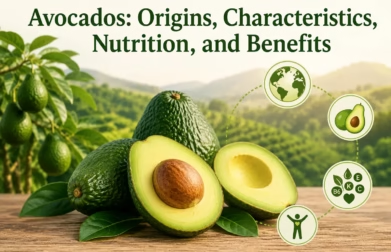
Avocados are among the most nutritious fruits and are widely consumed around the world. Renowned not only for their distinctive rich and creamy flavor, avocados are also recognized as one of the most nutrient-dense fruits available today. Thanks to their high content of unsaturated fats, dietary fiber, vitamins, and minerals, avocados are highly valued not only in the field of nutrition but also play an important role in the food and agricultural industries.
In this article, we will explore an overview of avocados, including their origin, characteristics, nutritional composition, health benefits, and the most common applications in everyday life.
1. Origins – A Thousand-Year Journey from Ancient Mesoamerica
To understand why avocados possess their distinctive rich, buttery flesh completely different from the sweet, sugar-rich flesh of most other fruits we need to travel back thousands of years to the ancient region of Mesoamerica.
1.1. Geographic Origins and Early Domestication
Archaeological evidence from Puebla, Mexico, indicates that humans began consuming wild avocados as early as 10,000 BCE. The domestication of avocado trees is believed to have started around 5,000 BCE in Mesoamerica. By the time of the Maya civilization, and later the Aztec civilization, avocados had become an important cultivated crop and were grown extensively. (1)
1.2. A Journey to Global Recognition
When Spanish explorers arrived in the Americas during the 16th century, they were captivated by the fruit’s rich, creamy texture, which resembled butter. Martín Fernández de Enciso was the first to describe the avocado in written records in 1519. The Spanish named it aguacate and were responsible for introducing the crop to other parts of the world, including their colonies in Asia (such as the Philippines), Africa, and various European countries.
By the 20th century, commercial avocado cultivation had expanded rapidly, particularly in California (United States) and other tropical and subtropical regions. The successful discovery and propagation of the Hass avocado cultivar during the 1920s and 1930s marked the beginning of a new era, transforming avocados into a billion-dollar agricultural export commodity worldwide. (2)
2. Characteristics – Biological Structure and Major Commercial Varieties
From a botanical perspective, the avocado (Persea americana) belongs to the Lauraceae (laurel) family, the same family as cinnamon and camphor trees. Interestingly, despite being commonly regarded as a fruit, the avocado is botanically classified as a single-seeded berry. Its structure consists of an outer skin, a thick fleshy pulp, and a large central seed. (3)
2.1. Morphological Characteristics and Growth
The avocado tree is a medium- to large-sized evergreen tree that can reach heights of 10 to 20 meters under natural growing conditions. It produces pale greenish-yellow flowers that exhibit a unique flowering behavior known as dichogamy, in which the female and male reproductive phases occur at different times.
Avocado flowers are classified into Type A and Type B cultivars. In Type A cultivars, the flowers first open as female in the morning and reopen as male the following afternoon. Type B cultivars exhibit the opposite flowering pattern. This pollination mechanism often requires the interplanting of compatible cultivars to maximize fruit set.
Avocado fruits vary considerably in shape depending on the cultivar, ranging from pear-shaped and oval to nearly spherical. Fruit weight can range from approximately 100 grams to more than 1 kilogram. One of the avocado’s most distinctive characteristics is its smooth, creamy texture, resulting from its exceptionally high lipid content rather than the carbohydrates and organic acids that predominate in most other berry fruits.
2.2. Major Commercial Avocado Varieties
Today, hundreds of avocado cultivars are grown worldwide. However, from a commercial and consumer perspective, they are generally classified into three major horticultural races based on their ecological origins: the Mexican, Guatemalan, and West Indian races.
-
Hass Avocado: Accounting for more than 80% of global avocado production, the Hass avocado is the world’s dominant commercial cultivar. It is characterized by its rough, pebbly skin, which changes from green to a deep purplish-black as the fruit ripens. Its thick skin provides excellent protection during long-distance transportation. Hass avocados contain an exceptionally high oil content (approximately 18–22%), giving them their signature rich, buttery flavor and creamy texture.
-
Fuerte Avocado: Before the rise of Hass, the Fuerte avocado was considered the industry standard. The fruit has a distinctive pear shape with thin, smooth green skin that remains green even when fully ripe. It offers a milder, lighter buttery flavor than Hass.
-
Reed Avocado: Reed avocados are large and nearly round, with thick, dark green skin that is slightly pebbled. They are favored for their generous amount of flesh and consistently rich, nutty flavor.
-
Tropical Avocado Varieties (such as Booth 7 and 034 in Vietnam): These cultivars typically belong to the West Indian race or are Guatemalan-West Indian hybrids. They produce large fruits with smooth green skin and golden-yellow flesh. Compared with Hass avocados, they generally have a slightly higher water content, resulting in a milder sweetness and a lighter, more refreshing flavor profile that is particularly well suited to Southeast Asian consumer preferences.
3. Nutrition – Decoding the Unique Nutritional Profile of a Superfood
If there is one reason why avocados are classified as a superfood, it is undoubtedly their exceptionally nutrient-dense composition. While most fruits derive their primary energy from simple sugars (fructose), avocados provide energy mainly from healthy fats.
Below is the detailed nutritional composition of 100 grams of fresh avocado, based on data from the United States Department of Agriculture (USDA): (3)
Đây là bản dịch không thêm, không bớt, chỉ chuyển ngữ chính xác sang tiếng Anh:
| Nutrient | Amount per 100 g of Edible Flesh | % Daily Value (DV) |
|---|---|---|
| Energy (Calories) | 160 kcal | 8% |
| Protein | 2.0 g | 4% |
| Dietary Fiber | 6.7 g | 27% |
| Total Fat | 14.7 g | 23% |
| – Saturated Fat | 2.1 g | 10% |
| – Monounsaturated Fat (MUFA) | 9.8 g | – |
| – Polyunsaturated Fat (PUFA) | 1.8 g | – |
| Total Carbohydrates | 8.53 g | 3% |
| Total Sugars | 0.66 g | 0% |
| Potassium | 485 mg | 14% |
| Vitamin K | 21 mcg | 26% |
| Vitamin B9 (Folate) | 81 mcg | 20% |
| Vitamin C | 10 mg | 17% |
| Vitamin E (Alpha-tocopherol) | 2.07 mg | 10% |
| Vitamin B6 (Pyridoxine) | 0.257 mg | 13% |
| Magnesium | 29 mg | 7% |
Key Nutritional Highlights of Avocados:
-
Monounsaturated Fat (MUFA): Oleic acid is the predominant fatty acid, accounting for approximately 59–60% of the total fat content, depending on the cultivar and growing conditions. It is the same fatty acid found in premium olive oil and is well known for its potent anti-inflammatory properties and its ability to help protect cells. (4)
-
An Excellent Source of Dietary Fiber: With 6.7 g of dietary fiber per 100 g, a medium-sized avocado can provide up to one-third of an adult’s recommended daily fiber intake. Notably, the fiber in avocados consists of approximately 70% insoluble fiber and 30% soluble fiber, helping to optimize gut microbiota.
-
Higher Potassium Content Than Bananas: Many people believe that bananas are the best source of potassium. In fact, avocados contain 30–40% more potassium than bananas on an equivalent weight basis.
-
A Glycemic Index (GI) Close to Zero: Thanks to their very low sugar content and high levels of dietary fiber and healthy fats, avocados do not cause significant spikes in blood glucose levels after consumption, making them an ideal food for people with diabetes and those following ketogenic or low-carbohydrate diets.
4. Benefits – Scientifically Supported Health Benefits
The unique combination of natural fatty acids, dietary fiber, and antioxidant compounds such as phytosterols and lutein gives avocados a wide range of valuable biological properties that may benefit human health.
4.1. May Help Protect Cardiovascular Health and Improve Cholesterol Levels
Cardiovascular disease remains the leading cause of death worldwide. Including avocados in the daily diet may be a natural and effective way to support cardiovascular health.
The oleic acid (MUFA) in avocados can significantly reduce levels of low-density lipoprotein (LDL) cholesterol and triglycerides while maintaining or even increasing high-density lipoprotein (HDL) cholesterol. A clinical study published in the Journal of the American Heart Association found that consuming one avocado per day as part of a moderate-fat diet helped overweight and obese individuals achieve greater reductions in LDL cholesterol than a comparable diet without avocado. In addition, the high potassium content of avocados helps regulate blood pressure by relaxing blood vessel walls and promoting the excretion of excess sodium from the body. (5) (6)
4.2. May Support Sustainable Weight Management and Increase Satiety
Many people mistakenly believe that foods rich in fat inevitably lead to weight gain. However, the monounsaturated fats and dietary fiber in avocados work through an entirely different mechanism.
When consumed, the combination of healthy fats and dietary fiber slows gastric emptying. This promotes stronger satiety signals to the brain through hormones such as peptide YY and leptin. People who consume avocados may feel full for longer and experience reduced hunger between meals for up to five hours. The unsaturated fats and dietary fiber in avocados also help increase satiety, improve postprandial blood glucose control, and may support weight management when they replace refined foods in the diet. (7) (8)
4.3. May Support Digestive Health and Nourish Beneficial Gut Bacteria
A healthy digestive system is the foundation of a strong immune system. Avocados serve as an excellent food source for beneficial gut bacteria.
The dietary fiber in avocados, particularly soluble fiber, acts as a prebiotic by providing a substrate for gut microorganisms to ferment and produce short-chain fatty acids (SCFAs), such as butyrate. Butyrate is an important energy source for colon epithelial cells, helping maintain the intestinal mucosal barrier, support immune regulation, and reduce inflammatory responses. Thanks to their high fiber content, avocados also help improve bowel regularity and reduce the risk of constipation when consumed as part of a balanced diet. (9) (10)
4.4. May Support Eye Health and Protect the Retina
Avocados are rich in carotenoid antioxidants, particularly lutein and zeaxanthin.
These compounds are highly concentrated in the macula of the retina, where they function as natural blue-light filters, protecting retinal cells from damage caused by free radicals and light emitted by electronic devices. Regular avocado consumption may significantly reduce the risk of age-related macular degeneration (AMD) and cataracts in older adults. (11)
4.5. May Help Reduce Inflammation and Support Joint Health
Chronic inflammation is an underlying factor in many serious diseases, including arthritis, diabetes, and cancer. Unsaponifiable compounds derived from avocado and soybean oils (ASU – Avocado Soy Unsaponifiables) have been extensively studied in medical research.
Avocado Soybean Unsaponifiables (ASU) are a mixture of unsaponifiable compounds extracted from avocado oil and soybean oil. Laboratory studies have shown that ASU can inhibit certain inflammatory mediators, such as IL-1, TNF-α, and prostaglandins, while stimulating chondrocytes to increase the synthesis of collagen and proteoglycans. As a result, ASU may help protect cartilage and slow the progression of joint degeneration. Numerous randomized controlled clinical trials have reported that ASU can reduce pain, improve physical function in patients with knee and hip osteoarthritis, and decrease the need for nonsteroidal anti-inflammatory drugs (NSAIDs), thereby reducing the adverse effects associated with long-term NSAID use. (12)
4.6. May Support Healthy Skin and Hair from Within
It is no coincidence that avocados have become a key ingredient in premium organic cosmetic products.
The combination of vitamin E, vitamin C, and fatty acids helps strengthen the skin’s protective lipid barrier, provide deep hydration, and reduce transepidermal water loss. Lutein in avocados helps protect the skin from ultraviolet (UV) radiation, helping prevent premature skin aging and wrinkle formation. At the same time, these nutrients stimulate collagen synthesis, helping the skin maintain its natural elasticity and firmness. (13) (14)
5. Commercial and Culinary Guide – Selection, Storage, and Preparation
Understanding the value of avocados is one thing, but knowing how to select, store, and prepare them properly is another. These skills are essential for both professional chefs and informed consumers.
5.1. How to Choose Avocados and Ripen Them Properly
One of the most distinctive characteristics of avocados is that they do not ripen on the tree. The ripening process begins only after the fruit has been harvested.
-
How to check ripeness: Gently squeeze the avocado with the palm of your hand (avoid using your fingertips, as they can bruise the flesh). If the fruit feels very firm, it will typically require 3–5 days to ripen. If it yields slightly to gentle pressure, it is perfectly ripe and ideal for slicing or adding to salads. If it feels overly soft, it is overripe, and the flesh may have developed brown discoloration and fibrous texture.
-
How to speed up ripening: Place the avocado in a paper bag together with a ripe banana or apple. Bananas and apples naturally release ethylene gas, a plant hormone that stimulates the ripening process and helps avocados ripen much faster.
5.2. How to Prevent Cut Avocados from Browning
When avocado flesh is exposed to oxygen, the enzyme polyphenol oxidase reacts to form brown pigments through the oxidation process. To slow this reaction:
-
Squeeze a small amount of lemon juice over the cut surface or lightly brush it with olive oil. The citric acid in lemon juice helps slow the activity of the enzyme.
-
Cover the exposed flesh tightly with plastic wrap so that it is in direct contact with the surface, minimizing exposure to air, and store the avocado in the refrigerator.
5.3. Versatile Culinary Applications
Thanks to their rich, creamy texture and mild flavor, avocados are equally suitable for both savory and sweet dishes:
-
Guacamole (Mexican Avocado Dip): A classic dish made by mashing avocado with onion, tomato, cilantro, lime juice, and chili peppers. It is traditionally served with tortilla chips.
-
Avocado Toast: A modern healthy breakfast favorite consisting of mashed avocado spread over toasted whole-grain bread, commonly topped with poached eggs, smoked salmon, and freshly ground black pepper.
-
Southeast Asian Avocado Smoothie: A refreshing drink made with creamy avocado flesh, sweetened condensed milk, and crushed ice. It is one of Vietnam’s most popular summer beverages.
-
Baking Substitute: In vegan and healthy baking recipes, avocado can be substituted for butter at a 1:1 ratio, helping reduce saturated fat while maintaining the moisture and soft texture of baked goods.
6. Important Considerations for the Scientific Use of Avocados
Although avocados are an excellent superfood, consuming them wisely and in moderation is the key to maximizing their health benefits while minimizing the risk of unwanted side effects.
6.1. Monitor Total Caloric Intake
Avocados are relatively high in calories because of their concentrated fat content (a medium-sized avocado contains approximately 250–320 kcal). If you are following a strict weight-loss diet, consuming excessive amounts of avocado (more than 1–2 avocados per day) without reducing calories from other food sources may result in a caloric surplus and unintended weight gain. An ideal serving size for most adults is one-third to one-half of an avocado per day.
6.2. Latex–Fruit Syndrome
Some individuals who are allergic to natural latex may experience cross-reactivity with avocados because certain proteins in avocados are similar to those found in natural latex. Symptoms may include itching or tingling of the mouth, hives, abdominal pain, or, in more severe cases, difficulty breathing. If you have a history of latex allergy, exercise caution when consuming avocados for the first time.
6.3. Interaction with Anticoagulant Medications
Avocados are a good source of vitamin K, providing approximately 26% of the Daily Value per 100 g. Vitamin K plays an essential role in the body’s blood-clotting process. If you are taking anticoagulant medications such as Warfarin (Coumadin), a sudden change in your vitamin K intake from avocados may reduce the effectiveness of the medication. Consult your healthcare provider to maintain a consistent and appropriate avocado intake as part of your diet.
Conclusion: Avocados – A Valuable Investment in Long-Term Health
In summary, avocados are far more than a passing food trend. They deserve a place in the modern diet because of their rich history, unique biological characteristics, exceptional nutritional profile, and wide range of potential health benefits, from supporting cardiovascular and digestive health to promoting healthy skin.
Start incorporating avocados into your family’s weekly diet in a balanced and informed way, and experience the positive changes they can bring to your overall well-being. Lasting health begins with making informed food choices.
 Blog & News