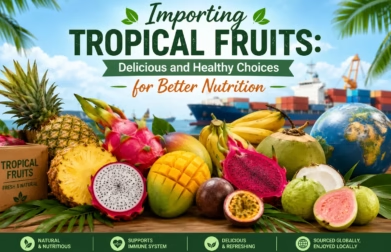
Against the backdrop of increasingly developing international trade, the food market is witnessing a clear shift in consumer behavior. Buyers are now concerned not only with taste but also with origin, safety, nutritional value, and the health benefits that food provides. This shift has driven growing demand for tropical fruits across many international markets.
With their distinctive flavors, diverse colors, and rich nutritional content, tropical fruits are increasingly common in supermarkets, food stores, the foodservice industry, and modern distribution channels worldwide. Therefore, “Importing Tropical Fruits” is not merely a commercial activity but also presents significant potential for businesses seeking to tap into the natural and nutrient-rich food segment.
In this article, we will analyze the key factors that importers need to consider when sourcing and bringing tropical fruits into international markets, from consumer trends, nutritional value, and supplier selection to quality, food safety, and logistics requirements. In addition, the article introduces Great Farmer – a Vietnamese agricultural exporter that connects quality fruit sources from a network of farms and growing areas, aiming to provide fresh, safe, and highly nutritious products to customers worldwide.
1. Global Overview of the “Importing Tropical Fruits” Market
1.1. Remarkable Growth in Consumer Demand
According to the FAO, global production and trade of fresh tropical fruits are projected to continue expanding. Developing countries account for approximately 98% of total global tropical fruit production. The four major tropical fruits mangoes, pineapples, papayas, and avocados account for approximately 75% of global fresh tropical fruit production. Among them, mangoes are the most widely produced, followed by pineapples, papayas, and avocados. (1)
1.2. Key Drivers Behind the “Importing Tropical Fruits” Trend
Importing Tropical Fruits is no longer simply a matter of diversifying food supplies; it directly addresses consumers’ demand for “Delicious and Healthy Choices.” Specifically:
- Seasonality is being overcome: Thanks to the development of cold chain logistics, consumers in temperate regions can enjoy fresh durian, dragon fruit, or Hoa Loc mangoes at any time of the year.
- The processing industry is booming: Tropical fruits are not only imported as fresh produce but are also widely used in the juice, dried fruit, jam, and even cosmetics and pharmaceutical industries.
- The appeal of distinctive flavors: There is no denying that the sweetness (Brix), aroma, and texture of tropical fruits such as dragon fruit, mangoes, and guavas offer an intense and distinctive taste experience, completely different from traditional temperate fruits such as apples and pears.
2. “Delicious and Healthy Choices for Better Nutrition”: Decoding the Nutritional Benefits of Selected Tropical Fruits
Tropical fruits are often referred to by nutrition experts as “superfoods” thanks to their high density of micronutrients and relatively low calorie content, while still providing a clean and abundant source of energy.
2.1. Mango – The “King” of Tropical Fruits
Mangoes are among the most widely traded fruits in the Importing Tropical Fruits market. Not only do they have a sweet and appealing flavor, but mangoes are also a natural “medicine cabinet.”
-
Boosting the immune system: One cup of fresh mango (approximately 165g) provides nearly 60% of the daily recommended amount of Vitamin C, helping stimulate white blood cell production and protect the body from free radicals. (2)
-
Protecting eyesight: Mangoes are exceptionally rich in Vitamin A (in the form of beta-carotene), which plays an essential role in preventing macular degeneration and maintaining healthy vision.
-
Improving digestion: Mangoes contain a group of digestive enzymes called amylases, which help break down complex carbohydrates into simple sugars that are easier to absorb. Combined with their high fiber content, this helps prevent constipation.
2.2. Banana – A Natural Source of Energy
Bananas are among the most popular and nutritionally valuable tropical fruits, playing an important role in global fruit production and consumption.
-
A natural source of energy: Bananas are rich in carbohydrates, particularly natural sugars and starch, providing the body with quick energy and making them suitable as a pre- or post-workout food.
-
Rich in potassium: Bananas are a significant source of potassium, an essential mineral for normal muscle and nervous system function and for maintaining fluid balance in the body.(3)
-
Good nutrient density: Bananas provide vitamin B6, vitamin C, and fiber, contributing to energy metabolism, digestive health, and a balanced diet.
2.3. Guava – The Vitamin C Champion
If you think oranges are the fruit with the highest Vitamin C content, guava may surprise you.
-
Guava provides three to four times more Vitamin C than a typical orange.
-
Guava is also one of the fruits richest in dietary fiber (approximately 5.4g/100g), helping stabilize blood sugar, support weight management, and reduce levels of bad cholesterol (LDL) in the blood. Its abundant Folate (Vitamin B9) content is particularly beneficial for pregnant women, helping support the development of the fetus’s nervous system.
2.4. Passion Fruit – A Source of Minerals and Antioxidants
Passion fruit is becoming a hot product in the Importing Tropical Fruits category due to its high versatility in the F&B (food and beverage) industry.
-
Supporting cardiovascular health: Passion fruit is very rich in potassium (approximately 348mg/100g). Potassium is an important mineral that helps dilate blood vessels, regulate blood pressure, and maintain fluid balance in the body.
-
Rich in Piceatannol: Scientific research has shown that passion fruit seeds contain piceatannol, a polyphenol that may improve insulin sensitivity and support skin health.
2.5. Dragon Fruit – A Superfood for Gut Health
Dragon fruit, with its vibrant outer skin and distinctive white or red flesh, is rapidly gaining popularity in Western supermarkets.
-
A natural prebiotic: Dragon fruit contains carbohydrates called oligosaccharides, which act as prebiotics and help nourish beneficial bacteria (bifidobacteria and lactobacilli) in the stomach and small intestine.
-
A valuable source of Iron and Magnesium: Very few fresh fruits provide as good a natural source of iron as dragon fruit. The combination of iron and Vitamin C in dragon fruit helps the body absorb iron more effectively, helping prevent iron deficiency.
3. Strict Procedures for “Importing Tropical Fruits” into International Markets
Behind the juicy mangoes and fresh dragon fruits displayed on supermarket shelves in the United States, Europe, or Japan lies a rigorous and complex quality control process. For a business to carry out export operations and for its partners to successfully engage in Importing Tropical Fruits, they must overcome a series of technical barriers.
3.1. Good Agricultural Practice (GAP) Standards
International markets are not only concerned with fruit quality at harvest; they also require the entire farming process to be safe, sustainable, and humane.
-
GlobalGAP (Global Good Agricultural Practice): This is a mandatory passport for bringing agricultural products into the European retail system. The standard requires strict control from seed selection, fertilizer and pesticide use, and irrigation water sources to farmers’ working conditions.
-
Traceability: All export shipments today must incorporate QR codes or Blockchain technology so that consumers and customs authorities can trace products back from the farm to the fork.
3.2. Food Safety and Maximum Residue Limits (MRL)
Each importing market has its own regulatory authority and set of standards:
-
In the United States: The Food Safety Modernization Act (FSMA), issued by the Food and Drug Administration (FDA), requires foreign suppliers to have specific preventive plans for biological and chemical hazards.
-
In the EU: The European Food Safety Authority (EFSA) applies Maximum Residue Limits (MRL) for pesticides at extremely low levels, almost requiring farming methods that approach organic standards.
3.3. Phytosanitary Inspection and Treatment Technologies
The biggest barrier to Importing Tropical Fruits is preventing the spread of invasive pests and diseases, particularly fruit flies.
-
Before export, fruits are required to undergo irradiation treatment for shipment to the United States, or Vapor Heat Treatment (VHT) for shipment to Japan, South Korea, and New Zealand. VHT helps eliminate larvae inside the fruit using hot steam without the use of chemicals, preserving the fruit’s natural flavor and freshness.
-
A Phytosanitary Certificate issued by the competent authority of the exporting country is a mandatory document in the customs documentation.
3.4. Cold Chain Logistics
Tropical fruits are temperature-sensitive and highly perishable products. To ensure that the message of “Delicious and Healthy Choices” retains its value, the cold chain logistics system must be maintained throughout the entire process. From cold storage at the packing facility and refrigerated containers on vessels to transit warehouses in the importing country, temperatures are continuously monitored automatically using a Data Logger system. Even a slight temperature deviation can cause premature ripening or chilling injury.
4. Great Farmer – A Leading Strategic Partner in Tropical Fruit Export
As global demand surges, the challenge for international importers is: How can they find a reputable supplier with large-scale production capabilities, full compliance with international standards, and competitive pricing? Great Farmer was established as the perfect answer to this challenge.
4.1. About Great Farmer
Great Farmer is one of the leading reputable agricultural exporters, particularly of tropical fruits, in Vietnam and Southeast Asia. With the mission of bringing the essence of tropical agriculture to the world, Great Farmer positions itself not merely as a trading company but as a “Sustainable Agricultural Value Chain Builder.” We are proud to provide optimal fruit import solutions to hundreds of international partners.
4.2. Great Farmer’s Outstanding Product Ecosystem
Great Farmer offers a highly diverse product portfolio, focusing on high-value export products, including:
-
Keo Mango: Reaches standard Brix levels, with a rich aroma, and has been exported to numerous countries.
-
Red-Flesh & White-Flesh Dragon Fruit: Harvested from specialized growing areas meeting GlobalGAP standards and complying with stringent EU MRL requirements.
-
Bananas: Fresh bananas have a naturally sweet flavor, soft flesh, are rich in potassium, and are easy to digest, making them suitable for various market segments, from retail and HORECA to food processing. Products are selected according to ripeness, size, and export standards, ensuring consistent quality throughout transportation.
-
Coconuts: Fresh coconuts have a refreshing taste and are rich in water and natural minerals, making them popular in many international markets. Coconuts are graded according to size, maturity, and quality, then professionally packaged to maintain freshness and extend shelf life during sea transportation.
- Passion Fruit: Passion fruit has a distinctive aroma, a naturally sweet and sour taste, and is rich in Vitamin C, making it suitable for both the fresh fruit market and the juice and puree processing industries. Products are carefully selected based on size, ripeness, and quality to meet international export standards.
4.3. Why Do International Customers Choose Great Farmer for “Importing Tropical Fruits”?
- First, quality control through linked growing areas: Great Farmer does not purchase from uncontrolled sources but works with reputable cooperatives and farming households across various production regions in Vietnam. We coordinate the control of cultivation and harvesting processes and select products according to export standards, ensuring a stable and consistent supply.
- Second, professional packaging and preservation processes: Fruits are graded, quality-checked, and packaged according to the requirements of each market. Appropriate pre-cooling and cold storage processes are applied to maintain freshness, minimize post-harvest losses, and extend shelf life during international transportation.
-
Third, professionalism in export operations: Great Farmer understands customs requirements, SPS measures, and import standards in each market. Documents such as Commercial Invoice, Packing List, C/O, Phytosanitary Certificate, and Bill of Lading are prepared completely and accurately, supporting a smooth customs clearance process.
- Fourth, commitment to a sustainable supply chain: Great Farmer prioritizes long-term cooperation with reputable production partners, promotes responsible farming practices, and optimizes packaging and transportation to reduce waste and enhance the sustainability of the supply chain.
5. The Future of the Tropical Fruit Import and Export Industry: What Opportunities Are Available for Investors?
According to forecasts, the global tropical fruit trade market is expected to maintain impressive growth, with a CAGR of approximately 6–8% annually over the next decade. Shifts in eating habits and the growing middle class in developing countries such as China and India will create substantial new demand.
-
Breakthrough preservation technology: Plant-based edible coatings, combined with smart packaging film technology, will help extend the shelf life of fresh fruit by up to twice as long without the use of chemical preservatives. This will make sea freight significantly more cost-effective than air freight, creating opportunities to reduce product costs.
-
Precision Agriculture: Drones, AI, and IoT sensors at farms such as those associated with Great Farmer will monitor soil moisture and nutrient levels in real time, helping ensure that fruits are harvested precisely when they reach their optimal Brix level.
-
Personalized nutrition trends: Tropical fruits will be positioned even more strongly as a preventive health solution. Marketing campaigns will focus on the aspects of “Delicious and Healthy Choices for Better Nutrition,” transforming each type of fruit into a valuable natural remedy, such as avocado for a Keto diet, passion fruit for stress reduction, and dragon fruit for detoxification.
6. Conclusion
Importing Tropical Fruits today has gone beyond the boundaries of conventional trade to become a bridge that brings health, joy, and diverse cultural experiences to people around the world. With their abundant content of vitamins, minerals, and natural antioxidants, fruits such as mangoes, pineapples, dragon fruit, and guavas are truly “Delicious and Healthy Choices for Better Nutrition” that are indispensable in modern life.
🌐 Website: www.greatfarmer.com.vn
📞 Phone/WhatsApp: +84 836314437
📧 Email: hoang.nguyen@greatfarmer.com.vn
 Blog & News