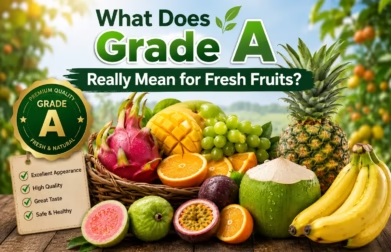
When you step into a premium supermarket or an imported food store, you are often drawn to the Fresh Fruits displays, featuring plump, glossy, perfectly uniform fruits with elegant labels and packaging. Many of these are marketed as “Grade A” or “Premium” fruits. However, as a discerning consumer or an agricultural produce business, do you truly understand What Does Grade A Really Mean for Fresh Fruits?.
In this in-depth article, we will take a closer look at global fruit grading standards, the stringent criteria required for an apple, orange, or bunch of grapes to achieve the “Grade A” designation, and why understanding these standards is of vital importance to the premium agricultural produce trade.
1. The Truth About the Term “Grade A” in the Fresh Fruits Industry
-
U.S. Extra Fancy or U.S. Fancy (commonly used in North America).
-
Class I or Extra Class (under European and Codex Alimentarius standards).
2. What Strict Criteria Does “Grade A” Require?
2.1. Appearance & Color
Visual appearance is the first and most stringent barrier. Grade A fruits must have a “flawless” appearance that is characteristic of the specific variety.
-
Color: The fruit must meet the minimum required percentage of characteristic coloration. For example, a U.S. Extra Fancy Red Delicious apple must have at least 66% of its surface covered by the characteristic bright red color.
-
Shape: The fruit must have a well-balanced shape and must not be misshapen, deformed, or exhibit abnormal biological development.
2.2. Size & Uniformity
-
The variation in size or weight between fruits within the same packing batch is very low (typically not exceeding 5–10%, depending on the type of fruit).
-
This uniformity is extremely important for supermarkets when it comes to visual merchandising and retail pricing on a per-piece basis.
2.3. Ripeness, Sweetness (Brix), and Firmness
-
Brix: This is a scale used to measure the concentration of sugars in fruit. Grade A fruits are typically harvested when they reach the ideal Brix level, ensuring a sweet and rich flavor.
-
Firmness: This is measured using a penetrometer. The fruit must meet the required firmness standard to ensure that it is not overly soft or overripe, allowing it to withstand long-distance transportation (logistics) while maintaining its crispness and firmness when it reaches the consumer.
2.4. Tolerance for Defects
This is the key distinction between Grade A and lower grades. Grade A fruits must not have serious defects such as:
- Dark spots, bruising, or impact damage.
- Cuts or cracks on the skin.
- Signs of pests, diseases, or insect damage.
- Frost damage or sunburn.
- Tolerance: Typically, only 1% to 5% of the fruits in a shipment are allowed to have very minor defects that do not affect the overall appearance.
3. Comparison Table of Fresh Fruits Grading Levels
| Evaluation Criteria | Grade A (Grade A / Extra Fancy / Extra Class) | Grade B (Grade B / U.S. No. 1 / Class I) | Grade C (Grade C / Utility / Class II) |
|---|---|---|---|
| Target Market | Premium supermarkets, 5-star restaurants, gift baskets, and export markets. | Traditional markets, mainstream supermarkets, and everyday consumers. | Industrial processing (jam, juice, dried fruit). |
| Color & Shape | Perfect, vibrant color with extensive surface coverage. Standard, characteristic shape. | Attractive shape, with minor and insignificant color defects allowed. | May be misshapen, have pale coloration, or develop unevenly. |
| Surface Defects (Skin) | Completely clean and glossy, with no scratches or bruising. | Minor superficial scratches or scars are allowed, provided the flesh is not affected. | Multiple cracks, scratches, bruises, or sunburn marks are permitted. |
| Size | Very large or meets the highest standard size, with 100% uniformity. | Relatively uniform, with moderate and consistent sizing. | Irregular sizing, with significant variation between large and small fruits. |
| Freshness & Shelf Life | Extremely fresh, with green stems (for cherries and grapes), and the longest shelf life. | Fresh and good quality, but with a slightly shorter shelf life than Grade A. | Usually requires rapid consumption or immediate delivery to a processing facility. |
| Pricing | Highest (Premium Price), targeting customers willing to pay more for superior quality. | Moderate, suitable for everyday household consumption. | Lowest, often sold in large lots or at wholesale prices. |
4. The Meaning of the “Grade A” Standard for Some Fresh Tropical Fruits
For Fresh Tropical Fruits such as dragon fruit, mangoes, pineapples, limes, and coconuts, the “Grade A” standard is not assessed solely based on attractive appearance. Depending on the type of fruit and the export market, Grade A typically reflects a combination of size, shape, color, ripeness, uniformity, skin condition, and internal quality. Particularly in export operations, Grade A fruits must meet stringent appearance and quality requirements to minimize rejection rates during packing, transportation, and inspection in the importing market.
4.1. Dragon Fruit
For Vietnamese Dragon Fruit, a product classified as Grade A typically needs to have a well-balanced shape, uniform size, and the characteristic color of the variety. Some of the commonly considered criteria include:
- Shape: The fruit should be well-developed and balanced, with the characteristic oval or elongated shape, without significant deformation or abnormality.
- Size: Fruits within the same carton should be relatively uniform in size and weight and comply with the size specification ordered by the buyer.
- Color: The skin should have the characteristic bright red or pink color. For white-fleshed or red-fleshed dragon fruit, the coloration should be uniform and free from abnormal signs.
- Bracts: The bracts should remain fresh and have their characteristic green color, without significant yellowing, drying, bruising, or breakage.
- Surface: The fruit should be free from rot, cracks, pest or disease damage, and serious mechanical damage. Minor scratches may be accepted within the tolerance limits specified by the relevant standard or market.
- Ripeness: The fruit must reach an appropriate commercial maturity level, with sufficient firmness to withstand transportation while maintaining quality upon reaching the consumer.
- Uniformity: This is particularly important for export shipments. Fruits within the same carton should have relatively uniform color, size, and maturity.
For exported dragon fruit, Grade A therefore does not simply mean “good-looking fruit.” It also reflects the product’s ability to maintain its quality, appearance, and freshness throughout the international logistics process.
4.2. Mango
For Fresh Mango, Grade A is generally assessed based on a combination of external appearance and internal eating quality. Depending on the mango variety and target market, the criteria can vary significantly. A Grade A mango typically needs to meet the following requirements:
- Shape: The fruit should be full, well-balanced, and characteristic of the variety, without significant deformation.
- Size and Weight: Fruits should be uniform within the same lot or carton and comply with the buyer’s size specification.
- Color: The skin should have the characteristic color of the variety and an appropriate degree of development. For varieties requiring color development, yellow, red, or orange coloration should develop uniformly.
- Skin: The surface should be clean and relatively glossy, without rot, cracks, or serious pest or disease damage.
- Stem: The stem should remain intact and show no signs of rot or abnormal sap leakage.
- Ripeness: Mangoes should be harvested at an appropriate maturity level for the transportation method. For sea freight exports, the fruit generally needs to be sufficiently firm to withstand the transit period and continue ripening during the logistics process.
- Internal Quality: The flesh should have the characteristic color, texture, and flavor of the variety, without internal rot, fermentation, or serious internal damage.
It is important to note that Grade A does not necessarily mean that every fruit must have a completely flawless appearance. In international trade, the acceptable level of defects generally depends on the grading standard, variety, importing country, customer, and intended use.
Therefore, when a supplier quotes “Grade A Fresh Mango” or “Grade A Dragon Fruit,” buyers should request clarification of the size, weight, maturity, color, tolerance, packaging, and quality specifications rather than relying solely on the term “Grade A.”
5. Why Do Supermarket Chains and Importers Choose Only Grade A Fresh Fruits?
Have you ever wondered why businesses specializing in premium fruits are willing to pay import prices that are two or even three times higher to bring in containers of Grade A Fresh Fruits? This is a strategic business decision:
-
Protecting Brand Reputation (Brand Reputation): Customers entering an imported food store expect to purchase perfection. Even bruising or a detached stem can be enough to damage the trust of premium customers. Grade A fruits serve as a guarantee of the company’s service quality
-
Extending Shelf Life (Extended Shelf-life): Grade A fruits are harvested at the appropriate maturity stage and have no open wounds (scratches or skin cracks), making them far less susceptible to bacterial and fungal contamination. As a result, they can remain on supermarket shelves longer while maintaining their freshness and quality, giving businesses more time to sell their products.
-
Minimizing Losses (Reduce Shrinkage): In produce retail, “shrinkage” (losses caused by spoiled products being discarded) is one of the biggest threats to profit margins. Grade C shipments may be cheaper, but spoilage rates can reach 20–30%. Grade A shipments have a higher purchase price, but spoilage rates are close to zero, potentially delivering better actual profit margins.
-
Optimizing Visual Merchandising (Visual Merchandising): The uniform size and attractive coloration of Grade A fruits allow supermarket staff to create visually appealing fruit displays, strongly stimulating consumers’ visual attention and encouraging impulse buying.
6. Do Consumers Really Need to Buy Grade A Fresh Fruits?
The truth is: There is no significant difference in nutritional value.
The Grade A, B, and C classification system focuses primarily on appearance, size, and texture. A Grade B dragon fruit with a small superficial scar on its skin can still provide the same vitamins, fiber, and minerals as a flawless Grade A dragon fruit. The biggest differences lie in the eating experience and external appearance.
-
Choose Grade A when: You need Fresh Fruits for gifts, business partners, fruit displays, or eating fresh (raw eating) to enjoy the best possible crispness and sweetness.
-
Grade B/C can be a good choice when: You are buying fruit to peel and cut into pieces for your family, use in smoothies, baking, juicing, or making jam. Choosing lower-grade fruit for these purposes can be a highly practical way to save money while still maintaining nutritional value.
7. How to Identify Fresh Fruits Grade A
For fresh fruits, especially tropical fruits such as dragon fruit, mangoes, pineapples, avocados, and limes, consumers should not rely on a single indicator to determine whether a product is Grade A. Quality should be assessed comprehensively based on appearance, uniformity, freshness, ripeness, and the condition of the fruit.
7.1. Check the Information on the Packaging
When purchasing packaged or imported fruit, check the carton label, product label, or packaging information. Important information commonly includes:
- Product name and variety.
- Country of Origin.
- Size or packing specifications.
- Net weight or number of fruits per carton.
- Packing date or lot/batch code.
- Packer/exporter information.
- Grade or Class, if the applicable grading system requires it to be indicated on the label.
It should be noted that “Grade A,” “Class I,” “Premium,” and “Extra Class” are not part of a single, globally standardized grading system. The specific meaning of each grade depends on the type of fruit, applicable standards, exporting country, importing country, and buyer requirements.
7.2. Assess the Fruit’s Appearance
This is one of the easiest factors to assess when evaluating fruit quality.
A high-quality product generally has:
- A relatively uniform shape that is consistent with the characteristics of the variety.
- Coloration that has developed according to the product’s characteristic appearance and stage of ripeness.
- Relatively uniform size within the same lot or package.
- A clean surface, without signs of rot, mold, or serious pest or disease damage.
- No cracks, bruising, or mechanical damage that affects quality.
However, Grade A does not mean that the fruit must be completely free of every minor defect. Some commercial standards still allow minor defects within specified tolerance limits, provided that they do not significantly affect the quality, storage potential, or usability of the product.
7.3. Check Freshness and Ripeness
Not all Fresh Fruits have the same firmness requirements. Buyers should evaluate firmness based on the type of fruit and its intended use.
For example:
- Dragon Fruit: The skin should have the characteristic coloration, while the bracts should remain relatively fresh and should not be severely dry or yellow.
- Mango: The fruit should reach an appropriate maturity level for the intended time of consumption or transportation method, without soft, mushy areas or signs of fermentation.
- Avocado: Firmness should be assessed according to its stage of ripeness; unripe fruit is generally firmer, while ripe fruit has its characteristic softness.
- Pineapple: The skin and stem area should show no signs of rot or fermentation, and the fruit should have its characteristic aroma when it reaches the appropriate stage of ripeness.
Therefore, a firm fruit does not necessarily mean it is of high quality, just as a soft fruit is not necessarily of poor quality.
7.4. Check the Stem and Characteristic Parts
For certain tropical fruits, the condition of the stem or other characteristic parts can help indicate freshness.
For example, in dragon fruit, fresh-looking bracts without severe drying or wilting are generally a positive sign. In mangoes, the area around the stem should be checked for signs of sap leakage, rot, or fermentation.
However, this is only one reference factor and cannot be used on its own to determine whether a fruit is Grade A.
7.5. Check the Aroma and Signs of Deterioration
Good-quality fresh fruits generally have a natural aroma characteristic of the specific fruit. Buyers should avoid products with:
- An unusual sour or fermented smell.
- A rotten or musty odor.
- Abnormal liquid leakage.
- Soft, darkened, or visibly decomposing areas.
In particular, a chemical odor is not a criterion for determining whether a fruit is Grade A or Grade B. If a product has an unusual odor, the cause and storage condition should be investigated rather than using the odor alone to classify its grade.
7.6. Don’t Judge Based on Just One Fruit
For commercial produce, Grade A is assessed based on the entire lot, not simply the best-looking individual fruit.
A high-quality Fresh Fruits lot typically demonstrates good uniformity in size, color, maturity, and overall appearance, while the proportion of fruits that fail to meet the requirements remains within the tolerance limits of the applicable standard.
Therefore, when purchasing fruit in large quantities, a more reliable approach is to check the specification, grade/class, size, tolerance, packing standard, and quality requirements for the entire lot rather than simply examining a few sample fruits.
8. Conclusion
Understanding “What Does Grade A Really Mean for Fresh Fruits” not only helps you become a knowledgeable consumer who understands what you are paying for, but is also essential foundational knowledge for anyone operating in the imported agricultural produce industry.
Fresh Fruits Grade A (or Extra Fancy / Class I) represents the finest qualities of nature combined with modern agricultural technology: visually appealing, uniform, true to its characteristic taste, and free from defects. Whether your goal is to find premium-quality food to support your family’s health or to source high-quality imported produce to elevate your business’s brand, prioritizing transparent grading standards is always the key to complete peace of mind.
If you are looking for premium Fresh Fruits that meet the highest Grade A standards and undergo rigorous inspection from international farms all the way to consumers, contact Great Farmer today a trusted supplier of export-quality agricultural produce to experience the true excellence of fresh fruits!
🌐 Website: www.greatfarmer.com.vn
📞 Phone/WhatsApp: +84 836314437
📧 Email: hoang.nguyen@greatfarmer.com.vn
 Blog & News