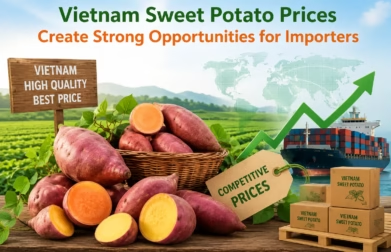
The global agricultural supply chain is continuously evolving, and forward-thinking buyers are always seeking emerging markets that can deliver the perfect balance of premium quality, stable supply, and competitive pricing. In recent years, Southeast Asia has strengthened its position as a powerhouse in the fresh produce industry. Among its products, Vietnam Sweet Potato has rapidly established a strong presence in the international market. With an annual production of 1.2–1.3 million metric tons cultivated across approximately 100,000 hectares, Vietnam has transformed itself into a strategic export hub for root vegetables.
For international buyers, the equation is remarkably simple: highly competitive Vietnam sweet potato prices, combined with increasingly stringent new export protocols, have created an unprecedented high-margin business opportunity. Whether you are supplying wholesale markets or premium supermarket chains, understanding the dynamics of this market is essential.
This article explores why importing sweet potatoes from Vietnam is a highly profitable business opportunity, provides a detailed overview of the available sweet potato varieties, analyzes the country’s pricing advantages, and explains why partnering with leading suppliers such as Great Farmer is the key to building a successful supply chain.
1. The Strategic Advantages of Vietnam’s Agricultural Sector
To understand why Vietnam sweet potato prices remain highly competitive in the global marketplace, it is essential to examine the country’s unique geographical and economic advantages. Vietnam’s agricultural sector is not merely sustaining itself; it is expanding rapidly through modernization and strategically implemented free trade agreements.
1.1. Favorable Climate & Year-Round Cultivation
Unlike many countries in the Northern Hemisphere, where sweet potato harvesting is limited to a single autumn season, Vietnam’s diverse microclimates enable near year-round production. The Mekong Delta, particularly Binh Tan District in Vinh Long Province, often referred to as Vietnam’s “sweet potato capital,” benefits from fertile alluvial soil and a tropical climate. Meanwhile, the Central Highlands including Gia Lai, Dak Lak, and Lam Dong Provinces offer fertile basalt red soil and a cool climate, making them ideal for cultivating premium sweet potato varieties.
This staggered harvesting cycle means that when global supply from other producing countries declines, sweet potato exporters in Vietnam can seamlessly fill the supply gap, helping stabilize prices and prevent the seasonal price spikes commonly seen in other markets.
1.2. Competitive Production and Labor Costs
Vietnam maintains highly competitive living costs and agricultural labor costs compared with major exporting countries such as the United States, Australia, and parts of Europe. This structural advantage significantly reduces on-farm production costs. Through optimized cooperative farming models, exporters are able to offer competitive FOB (Free On Board) prices that provide international importers with substantial retail profit margins.
1.3. Government Support and Free Trade Agreements (FTAs)
Vietnam’s strong integration into the global economy through free trade agreements (FTAs) has fundamentally transformed its export competitiveness. The EU–Vietnam Free Trade Agreement (EVFTA) has significantly reduced tariffs on Vietnam’s fresh agricultural products. Furthermore, Vietnam’s participation in the Regional Comprehensive Economic Partnership (RCEP) and the official phytosanitary protocols signed with China at the end of 2022 have streamlined customs procedures and removed trade barriers, making it easier and more cost-effective than ever to import sweet potatoes from Vietnam.
2. Major Export Varieties: Meeting Global Consumer Preferences
The diversity of Vietnam’s agricultural exports lies in its ability to cultivate different sweet potato varieties that cater to international consumer preferences.
2.1. Japanese Sweet Potato Vietnam
The Japanese Sweet Potato Vietnam variety is well known for its attractive reddish-purple skin and pale yellow flesh, which becomes deeper in color when cooked. Characterized by its rich chestnut-like sweetness and dry, fluffy texture, this variety is highly sought after in Japan, South Korea, and Taiwan.
-
Culinary Applications: Ideal for baking and traditional Asian desserts.
-
Pricing Trend: Bulk export wholesale pricing enables buyers to benefit from highly competitive tiered pricing.
2.2. Purple Sweet Potato Vietnam
The Purple Sweet Potato Vietnam variety is a nutrient-rich product. Featuring deep purple skin and vibrant purple flesh rich in anthocyanins (powerful antioxidants), demand for this variety is growing rapidly worldwide.
-
Culinary Applications: Widely used in the snack food industry, natural food coloring, bubble tea flavors (taro/purple sweet potato), and industrial food processing.
-
Pricing Trend: Highly cost-effective, offering substantial profit potential for importers.
2.3. Honey Sweet Potato
Primarily cultivated in cool-climate regions such as Da Lat and the Central Highlands, Honey Sweet Potato features orange flesh that becomes exceptionally soft, moist, syrupy, and naturally sweet when slow-roasted.
-
Culinary Applications: Premium retail consumption and ready-to-eat roasted snacks.
-
Pricing Trend: Positioned as a premium product, it is currently attracting increasing attention in the Middle Eastern and European markets.
Table 1. Overview Comparison of Vietnam’s Sweet Potato Varieties
| Sweet Potato Variety | Skin / Flesh Color | Flavor & Texture Characteristics | Main Export Markets | Ideal Applications |
|---|---|---|---|---|
| Japanese Sweet Potato | Reddish Purple / Yellow | Very sweet, chestnut-like flavor, dry and fluffy texture | Japan, South Korea, ASEAN | Roasting, Retail Supermarkets |
| Purple Sweet Potato | Purple / Deep Purple | Mildly sweet, firm texture, earthy flavor | China, EU, Food Processing Industry | Confectionery Processing, Health Foods |
| Honey Sweet Potato | Copper / Orange | Intensely sweet, syrupy, very moist | Middle East, EU, Domestic Market | Premium Retail, Roasting |
| White Sweet Potato | Light Yellow / White | High starch content, mild flavor, firm texture | Niche Asian Markets | Starch Extraction, Thickening Agent Production |
3. Analyzing Vietnam Sweet Potato Prices in the Global Market
For importers, price transparency is the foundation of effective risk management. Vietnam sweet potato prices consistently demonstrate a clear competitive advantage when compared with global market averages.
3.1. Cost–Benefit Analysis for Importers
-
Lower Procurement Costs: Enable international wholesalers to offset ocean freight expenses while still offering more competitive selling prices than domestic producers in Europe or Japan.
-
Stable Profit Margins: Thanks to multiple harvests throughout the year, buyers can sign long-term contracts with sweet potato exporters in Vietnam without worrying about sudden price surges caused by adverse weather conditions, as is common in countries with only a single harvest season.
-
Value for Industrial Processing: For importers supplying the snack food industry, the low cost of Purple Sweet Potato Vietnam provides a significant advantage over importing comparable antioxidant-rich root crops from South America.
4. The Critical Role of Quality Control and Post-Harvest Handling
Low prices are only valuable if the product arrives at its destination in perfect condition. The modernization of Vietnam’s export standards means that leading suppliers now utilize state-of-the-art post-harvest technologies.
4.1. Curing Process
Immediately after harvesting, sweet potatoes are placed in temperature-controlled curing rooms (approximately 29°C to 32°C) with 85%–90% relative humidity for several days. This process allows harvest wounds to heal, thickens the skin to minimize moisture loss during transportation, and initiates the conversion of starch into sugar.
4.2. Washing and Grading
For demanding markets such as Japan (which requires compliance with JAS standards), the sweet potatoes are washed, brushed, and visually inspected. Any roots showing signs of weevil infestation, severe bruising, or irregular shape are removed. The remaining products are then strictly graded by weight and size (Size S: 100–150 g, Size M: 150–250 g, Size L: 250–400 g).
4.3. Advanced Cold Chain Logistics
To successfully import sweet potatoes from Vietnam through long-distance ocean shipments, temperature management is essential. Sweet potatoes are packed in refrigerated (reefer) containers with temperatures carefully maintained between 13°C and 15°C, supported by continuous ventilation throughout the journey.
Great Farmer: Your Trusted Sweet Potato Exporter in Vietnam
Although Vietnam’s macroeconomic conditions are highly favorable for importers, the ultimate success of your supply chain depends entirely on the exporter you choose.
This is where Great Farmer makes the difference. As a leading Great Farmer sweet potato supplier, the company has built its reputation on transparency, direct-from-farm pricing, and uncompromising international standards.
Why Do Importers Choose Great Farmer?
-
Direct-from-Farm Pricing: By working directly with agricultural cooperatives, Great Farmer eliminates intermediary markups. This ensures that you receive the most competitive Vietnam sweet potato prices, maximizing your profit margins.
-
Trusted Certifications: Great Farmer operates under strict GlobalGAP and VietGAP standards. Its packing facilities are HACCP-certified, ensuring that every shipment complies with stringent food safety requirements.
-
Expertise in Premium Varieties: Whether you require vibrant Purple Sweet Potato Vietnam for industrial processing or flawless Japanese Sweet Potato Vietnam for the retail market, Great Farmer has dedicated growing regions to meet your requirements.
-
Complete Export Management: Great Farmer handles all export logistics, including the Phytosanitary Certificate, Certificate of Origin (C/O), Bill of Lading, and customized packaging according to customer requirements.
Table 2. Great Farmer Export Specifications
| Specification | Details |
|---|---|
| Available Varieties | Japanese Sweet Potato (Yellow Flesh), Purple Sweet Potato, Honey Sweet Potato (Orange Flesh) |
| Size Grades | S (100–150 g), M (150–250 g), L (250–400 g), 2L (400 g+) |
| Packaging Standard | 5 kg, 10 kg, or 20 kg ventilated carton boxes (Customizable) |
| Supply Capacity | More than 500 metric tons per month |
| Storage Temperature | 13°C–15°C (Reefer Container) |
| Certifications | GlobalGAP, HACCP, ISO 22000, Phytosanitary Certificate |
| Payment Terms | T/T (Telegraphic Transfer), L/C at Sight |
Step-by-Step Guide: How to Import Sweet Potatoes from Vietnam
For procurement managers looking to capitalize on these market trends, following a structured sourcing process will help minimize risk.
-
Define Your Product Specifications: Clearly outline the requirements of your target market. Do you need the premium appearance of Japanese Sweet Potato Vietnam for retail sales, or large volumes of Purple Sweet Potato Vietnam for industrial processing?
-
Request Samples and Inspect the Facilities: Work with reputable suppliers such as Great Farmer. Request videos of their curing facilities and washing lines, as well as third-party inspection reports (such as SGS).
-
Review Certifications: Ensure that the supplier holds GlobalGAP certification and the necessary export registration for your destination market (for example, a GACC registration for exports to China).
-
Negotiate Commercial Terms: Discuss FOB or CIF pricing. Although Vietnam sweet potato prices are highly competitive, fluctuations in ocean freight rates may affect your total landed cost.
-
Monitor Logistics: Clearly specify the required ventilation settings and storage temperature (13°C–15°C) in your shipping instructions.
Frequently Asked Questions (FAQ)
1. What is the shelf life of exported sweet potatoes?
When properly cured and stored at the optimal temperature of 13°C–15°C with 85% relative humidity, fresh Vietnamese sweet potatoes can maintain their quality for 3 to 6 months.
2. Do Vietnam sweet potato prices fluctuate significantly by season?
Although prices vary slightly throughout the year, Vietnam’s year-round harvesting capability across different growing regions (the Mekong Delta and the Central Highlands) keeps prices much more stable than in countries with only one harvest season.
3. Does Great Farmer offer private label packaging?
Yes. As one of the professional sweet potato exporters in Vietnam, Great Farmer provides comprehensive customized packaging solutions, including private branding and barcode printing.
4. Why are purple sweet potatoes becoming increasingly popular?
This variety is rich in anthocyanins and is widely used in the health food industry as well as the global beverage industry, including bubble tea products.
Conclusion
Global demand for healthy, versatile, and visually appealing carbohydrate products continues to grow steadily. The combination of low production costs, year-round production, and stringent quality standards means that Vietnam sweet potato prices are creating strong and sustainable opportunities for international importers.
By partnering with a proven industry leader such as Great Farmer, you can avoid the challenges of fragmented supply chains. Great Farmer delivers more than just a product it provides a complete export solution that offers premium quality, stable pricing, and complete peace of mind, from the farms of Vietnam directly to your warehouse.
 Blog & News