In the context of globalization and the growing consumer preference for health-conscious products, sourcing Premium Agricultural Products has become a critical strategic priority for businesses. For Importers, Wholesalers, and Retail Chains, ensuring product quality, supply volume, and consistency is not only essential to protecting profit margins but also fundamental to building long-term brand credibility.
This article serves as a comprehensive guide, offering accurate and in-depth insights into the premium agricultural products market. We will examine key export fruits and vegetables, quality standards, packaging specifications, and optimized supply chain solutions, enabling your business to confidently expand its presence and strengthen its position in the global marketplace.
1. Why Are “Premium Agricultural Products” the Key to Market Leadership?
The global agricultural market is undergoing a significant transformation. End consumers no longer seek food merely to satisfy basic needs; they increasingly demand products that are clean, safe, traceable in origin, and rich in nutritional value.
1.1. Meeting the Demanding Expectations of Modern Consumers
Premium Agricultural Products are cultivated in accordance with strict international standards such as GlobalG.A.P., VietGAP, USDA Organic, and EU Organic / Euro Leaf. These products are expected to meet permitted Maximum Residue Limits (MRLs) for pesticides, maintain consistent color and appearance, preserve their authentic flavor, and deliver superior nutritional value. For premium retail chains, these qualities play a crucial role in attracting and retaining loyal customers.
1.2. Optimizing Profitability for Importers and Wholesalers
Although the initial import cost of Premium Agricultural Products may be higher than that of mass-market commodities, their shrinkage rate during transportation and storage is significantly lower. Products that meet premium quality standards typically offer a longer shelf life, while their attractive appearance helps improve conversion rates at the point of sale. As a result, importers and wholesalers can achieve stronger net profit margins.
1.3. Building a Distinct Competitive Advantage
Access to a diverse and reliable supply of high-quality tropical and temperate agricultural products enables wholesalers and retail chains to differentiate themselves in the market. Consistently maintaining fresh, premium products on store shelves demonstrates a company’s supply capability, operational strength, and market scale.
2. Key Product Categories within the “Premium Agricultural Products” Portfolio
To meet the diverse demands of international markets, a comprehensive sourcing portfolio should feature the ideal combination of tropical fruits, energy-rich root crops, and premium vegetables. Below is a detailed analysis of each product from both a commercial perspective and a technical specification standpoint.
2.1. Tropical Fruits – The Appeal of Authentic Regional Flavors
2.1.1. Banana – A Global Export Standard
Bananas are among the most heavily traded fruits in the global market. Premium export bananas, typically the Cavendish variety, require exceptionally strict post-harvest handling procedures.
-
Characteristics: Long, slender fruit with a smooth green peel at the unripe stage, gradually turning bright yellow and blemish-free when fully ripened. The flesh is soft, pleasantly sweet, and naturally aromatic.
-
B2B Standards: Harvested at 75–80% maturity. The fruit is carefully treated to remove latex residue, then packed in perforated polybags and placed in 13.5 kg or 18 kg export cartons.
-
Transportation Conditions: Standard cold-chain storage temperature of 13.5°C to 14°C, with relative humidity maintained at 85–95%.
2.1.2. Pineapple – The Queen of Tropical Fruits
The MD2 pineapple variety currently dominates the Premium Agricultural Products segment thanks to its thin peel, shallow eyes, rich golden color, firm and less watery flesh, and especially its high sweetness level, without causing tongue irritation.
-
Commercial Characteristics: Standard Brix level above 14. The fruit should have a uniform cylindrical shape, with an average weight ranging from 1.2 kg to 2.0 kg per fruit.
-
Export Specifications: The stem is cut flat, while the crown remains intact, fresh, and green. Pineapples are packed in open-top cartons to protect the crown during handling and transportation. The recommended shipping temperature is 7°C to 10°C.
2.1.3. Keo Mango – An Ideal Choice for the Green Mango Segment
Keo mango has become a standout product in the Asian fruit market. Unlike ripe mango varieties, Keo mango is highly favored for consumption while still green, thanks to its crisp texture and well-balanced sweet-and-sour taste.
-
Commercial Applications: Suitable for direct retail as a fresh eating fruit, as well as for the food processing industry in products such as salads, shredded mango dishes, and seasoned snack items.
-
Packaging & Storage: Each fruit is individually wrapped in foam net sleeves and packed in 10 kg cartons. Recommended storage temperature ranges from 10°C to 12°C.
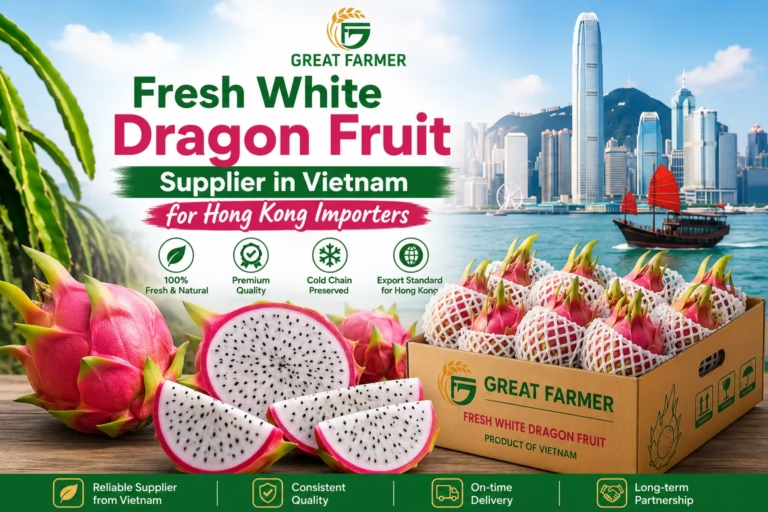
2.1.4. Dragon Fruit – A Striking Highlight on Supermarket Shelves
Dragon fruit, available in both red-fleshed and white-fleshed varieties, is a strong representative of the Premium Agricultural Products segment in demanding markets such as the EU, the United States, and Australia. With its distinctive appearance, featuring a vibrant pink peel and fresh green bracts, dragon fruit consistently stands out across premium Retail Chains.
-
Nutritional Value: Rich in antioxidants, vitamin C, and dietary fiber.
-
Export Standards: The fruit must be disease-free and show no signs of brown spot fungal infection. Its bracts should remain firm, upright, and fresh green in color. Weight grades must be clearly classified, such as 300–450 g and 450–600 g per fruit. Recommended transportation is in refrigerated containers at 5°C.
2.1.5. Sapodilla – A Sweet Caramel-Like Flavor
Sapodilla is a niche fruit with strong potential to deliver high profit margins. It is prized for its naturally rich sweetness, reminiscent of brown sugar and caramel, along with its smooth, delicate texture.
-
Challenges & Solutions: Sapodilla has a thin peel and is highly susceptible to bruising. To meet export standards, the fruit must be harvested at the proper maturity stage while still firm, carefully wrapped with protective foam, and subjected to a proper pre-cooling process to preserve quality during transportation.
2.1.6. Guava – A Vitamin C-Rich Superfruit
Pear guava and Queen guava are premium varieties highly favored in the market. A single guava contains approximately four times more vitamin C than an orange, making it an ideal choice for the growing demand for naturally functional foods.
-
Required Quality Standards: The fruit should have a smooth, clean peel, minimal seeds, and crisp, refreshingly sweet flesh.
-
Supply Chain Requirements: Each fruit should be protected with foam net sleeves while still on the tree to minimize insect damage. For export, guavas are packed in 5–9 kg cartons and stored at a recommended temperature of 5°C to 8°C.
2.1.7. Coconut – A Naturally Refreshing Beverage
Fresh drinking coconuts, especially young aromatic coconuts, are experiencing rapidly growing demand in global markets.
-
Export Product Forms: Common export formats include diamond-cut coconuts, bald coconuts, and easy-open coconuts.
-
Requirements for Importers: Coconut water should reach a Brix level of 6.5 or higher. Each coconut must undergo anti-mold treatment, be individually shrink-wrapped to maintain freshness, and stored under refrigerated conditions at 2°C to 4°C, with a potential shelf life of up to 60 days.
2.2. Premium Root Vegetables & Tubers – A Core Source of Nutrition
Root vegetables and tubers play an essential role in global food security and are indispensable ingredients in culinary traditions worldwide. For Wholesalers, this category offers strong commercial advantages thanks to its stable demand, longer storage life, and relatively low supply-chain risk.
2.2.1. Sweet Potato – A High-Quality Source of Starch
Honey sweet potatoes and Japanese sweet potatoes with red skin and yellow flesh are highly sought-after products within the Premium Agricultural Products category. They are rich in beta-carotene and dietary fiber, while also having a relatively low glycemic index (GI).
-
Curing Process – Essential Post-Harvest Treatment: This is a mandatory step for export-grade sweet potatoes. After harvesting, the tubers are placed in curing chambers at a temperature of 29°C to 32°C and relative humidity of 90% to 95% for 4 to 7 days. This process helps heal surface wounds, converts starch into sugar to enhance natural sweetness, and extends storage life to approximately 6 to 8 months.
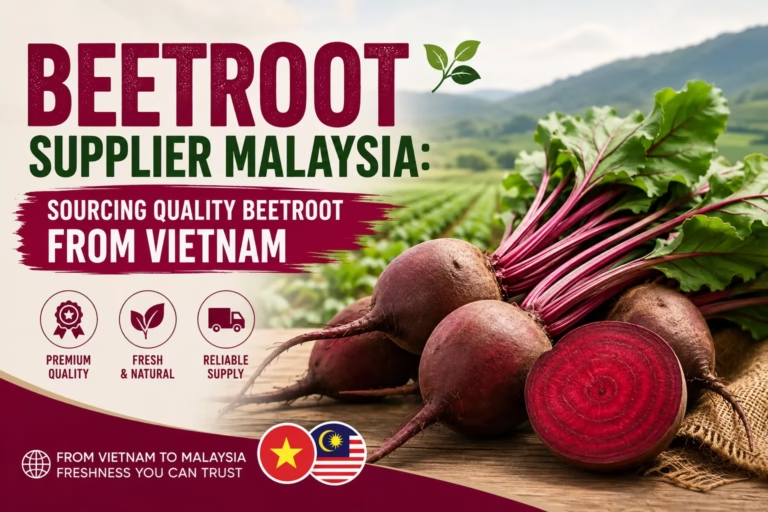
2.2.2. Beetroot – The Essence of Natural Red Pigmentation
Beetroot is a premium ingredient for both the fresh retail sector and the juice processing and food manufacturing industries.
-
B2B Characteristics: The roots should be uniformly round, with a smooth surface, a small taproot, and a distinctive deep red interior without visible white rings.
-
Storage Conditions: The tops are trimmed, leaving approximately 2 cm of stem, and the roots are cleaned to remove soil. Recommended storage conditions are 0°C with relative humidity maintained at 95–98%.
2.2.3. Jicama – Crisp, Refreshing Freshness
Jicama is highly favored in the North American market, particularly among Hispanic communities. It has a crisp, apple-like texture, a mildly sweet taste, extremely low calorie content, and a high water ratio.
-
Supply Standards: The tubers should remain intact, free from cracks, and have thin skin that is easy to peel. During transportation, the temperature must be maintained at 12°C to 15°C, as lower temperatures may cause chilling injury.
2.2.7. Yam – A Distinctive Ingredient with Global Relevance
Yam is not only a staple food across Africa and Asia, but it is also gaining recognition in Western fine-dining cuisine thanks to its unique texture and strong nutritional value.
-
B2B Trade Requirements: The tubers should be straight, with a relatively smooth surface and a starch content that meets commercial standards. They are typically packed in ventilated cartons and stored at 14°C to 16°C to help prevent sprouting.
2.3. Other Premium Vegetable Categories
2.3.1. Bell Pepper – A Vibrant Culinary Highlight
Bell peppers in red, yellow, green, and orange varieties, especially those cultivated in high-tech greenhouse systems, are high-value products that generate significant added value for Retail Chains.
-
Quality Requirements: The fruits should have a well-defined blocky shape, thick walls, smooth and glossy skin without wrinkles, and fresh green stems.
-
Logistics: Bell peppers are typically packed in 4–5 kg cartons, arranged in protective layers with cushioning materials, and carefully stored at 7°C to 10°C to prevent softening and damage.
3. Commercial and Technical Analysis Table: Premium Agricultural Products Data
To help Importers and Wholesalers plan their purchasing and logistics more effectively, the table below summarizes the key export specifications and technical parameters for the premium agricultural products mentioned above.
| Product | Storage Temperature (°C) | Shelf Life | Standard Packaging | Common Certification Requirements |
|---|---|---|---|---|
| Banana | 13.5–14.0 | 28–40 days, green stage | 13.5 kg / 18 kg cartons, polybags | GlobalG.A.P., Phytosanitary Certificate |
| Pineapple | 7.0–10.0 | 3–4 weeks | 12 kg open-top cartons | GlobalG.A.P., MRL Testing |
| Dragon Fruit | 5.0–6.0 | 25–30 days | 4.5 kg–9 kg cartons | VietGAP, GlobalG.A.P., Irradiation Treatment for the U.S. market |
| Keo Mango | 10.0–12.0 | 2–3 weeks | 10 kg cartons, individually foam-wrapped | VietGAP, Phytosanitary Certificate |
| Guava | 5.0–8.0 | 2–3 weeks | 5–9 kg cartons, foam net sleeves and plastic liners | VietGAP, Phytosanitary Certificate |
| Coconut | 2.0–4.0 | 45–60 days | POF shrink wrap, 9 fruits per carton | GlobalG.A.P., Microbial Treatment |
| Sapodilla | 15.0–20.0 | 1–2 weeks | Foam boxes / 5–10 kg cartons | MRL Testing, Phytosanitary Certificate |
| Sweet Potato | 13.0–15.0 | 6–8 months | 10–20 kg cartons / mesh bags | GlobalG.A.P., Curing Treatment |
| Beetroot | 0.0–2.0 | 4–6 months | 10 kg mesh bags / cartons | USDA Organic, GlobalG.A.P. |
| Jicama | 12.0–15.0 | 1–2 months | 10–18 kg cartons | Phytosanitary Certificate, GlobalG.A.P. |
| Yam | 14.0–16.0 | 3–5 months | 10–20 kg ventilated cartons | Phytosanitary Certificate |
| Bell Pepper | 7.0–10.0 | 2–3 weeks | 4–5 kg cartons, cushioned layer packing | GlobalG.A.P., Pesticide Residue Control |
Note: Shelf life may vary depending on post-harvest technology and the consistent maintenance of an uninterrupted cold chain throughout the supply process.
4. Solving the Supply Chain Challenge
NOne of the greatest concerns for Importers and Retail Chains when sourcing Premium Agricultural Products is product deterioration during transportation. To address this issue effectively, the entire supply process must be standardized from farm to shelf.
4.1. Optimized Harvesting and Post-Harvest Processing
Premium agricultural products should never come into direct contact with the ground. Immediately after harvest, they are transferred to HACCP- or BRC-compliant packing houses. There, fruits, vegetables, and tubers are cleaned through ozone washing systems or air-bubble washing systems to remove impurities, bacteria, and mold.
4.2. Pre-Cooling Technology
This is an essential process for most sensitive fruits and vegetables, such as guava, bell peppers, and pineapples. Its purpose is to rapidly remove field heat and bring the product core temperature down to the optimal level, thereby slowing respiration and ripening processes.
4.3. Advanced Cold Chain Management
The entire transportation process, from the packing facility to the seaport for sea freight or the airport for air freight, must utilize refrigerated trucks and reefer containers.
-
Controlled Atmosphere (CA) Technology: For long-distance sea shipments lasting 20 to 40 days to markets such as the EU or the Americas, CA containers are used to regulate oxygen levels, typically reducing them to 2–5%, while increasing carbon dioxide concentration. This helps place agricultural products into a near-dormant state, preserving freshness and ensuring they arrive at destination ports with quality close to that of freshly harvested produce.
5. Legal Standards and Certifications: The Passport to Billion-Dollar Markets
Wholesalers and retail chains cannot place products on shelves without valid and compliant documentation. A reputable supplier of Premium Agricultural Products must be able to provide a complete set of essential certifications and export documents, including:
-
GlobalG.A.P. / VietGAP: Certifications for Good Agricultural Practices, demonstrating that products are cultivated in a safe, sustainable, and environmentally responsible manner.
-
Phytosanitary Certificate: An official certificate issued by the relevant government authority, confirming that the shipment is free from pests, harmful insects, and regulated plant diseases.
-
MRLs – Maximum Residue Limits: Laboratory test reports on pesticide residue levels, usually conducted by independent testing organizations such as SGS or Eurofins. These requirements are especially stringent in markets such as the EU, the United States, and Japan.
-
Specialized Treatment Standards: For example, dragon fruit exported to the United States must undergo irradiation treatment, while mangoes exported to Japan and South Korea are commonly required to undergo Vapor Heat Treatment (VHT) to eliminate fruit flies and other quarantine pests.
6. Cost Optimization and Growth Strategies for B2B Buyers
As an Importer or a procurement manager for a Retail Chain, how can you leverage these agricultural products to maximize profitability?
6.1. Seasonal Sourcing
A clear understanding of the crop calendars of exporting countries provides a major competitive advantage. Although modern agriculture enables off-season cultivation, sourcing during the peak season typically delivers the best prices, superior fruit and vegetable quality, and the highest Brix levels.
6.2. Long-Term Supply Agreements and Contract Farming
To minimize exposure to price fluctuations in the open market, major Wholesalers often enter into long-term offtake agreements or establish direct partnerships with reputable cooperatives and exporters. This helps secure a stable supply of Premium Agricultural Products, even amid disruptions in the global supply chain.
6.3. Retail Portfolio Diversification
Rather than offering only fresh whole produce, supermarket chains should consider expanding into ready-to-eat formats, such as peeled, sliced, and packaged pineapple, dragon fruit, and sapodilla. They can also develop ready-to-cook product lines for sweet potatoes, beetroot, bell peppers, and jicama. This value-added strategy can significantly enhance retail profit margins, potentially increasing them from 30% to as much as 80%.
7. Future Trends in the Premium Agricultural Products Trade
The world is changing, and consumers are no longer guided by taste alone; they are also making purchasing decisions based on awareness, values, and responsibility.
-
Organic Agricultural Products: Demand for organic sweet potatoes, organic beetroot, and chemical-free fruits is growing at a double-digit rate year over year.
-
Blockchain-Based Traceability: Consumers in major supermarket chains increasingly expect to scan a QR code on a banana or Keo mango to view information about the farmer who grew it, the harvest date, and the product’s journey from farm to shelf.
-
Sustainable Packaging: Reducing plastic use and adopting recycled carton boxes, biodegradable trays, and other eco-friendly packaging solutions are becoming essential requirements among leading retail systems across Europe.
Conclusion
Mastering the supply of Premium Agricultural Products including tropical fruits such as bananas, pineapples, sapodillas, Keo mangoes, dragon fruit, guavas, and coconuts, as well as nutrient-rich root crops and vegetables such as jicama, beetroot, sweet potatoes, yam, and bell peppers is a foundational strategy for Importers, Wholesalers, and Retail Chains seeking to strengthen their leadership position in the market.
A professional supplier does not simply deliver agricultural products; they provide a comprehensive sourcing solution from internationally compliant quality standards and effective cold chain risk management to complete legal documentation and export certifications. By partnering with the right supplier, your business can significantly reduce operational risks, optimize profit margins, and bring genuine health-oriented value to end consumers.
If your company is looking for a reputable, transparent, and large-scale export-capable partner in Premium Agricultural Products, contact us today to receive wholesale quotations and the most competitive B2B cooperation policies.
Contact us:
🌐 Website: www.greatfarmer.com.vn
📞 Phone/WhatsApp: +84 836314437
📧 Email: hoang.nguyen@greatfarmer.com.vn
 Blog & News