
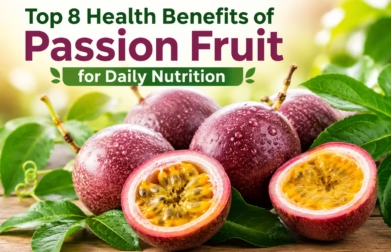
This article provides a comprehensive, in-depth, and scientifically accurate overview of the Health Benefits of Passion Fruit in daily nutrition. Beyond simply listing its advantages, we will explore the scientific mechanisms behind its health effects, present a detailed nutritional profile, and guide you on how to maximize the nutritional value of this remarkable tropical fruit.
1. Nutritional Profile of Passion Fruit
Below is a detailed nutritional breakdown found in 100 grams of fresh passion fruit (approximately 5–6 medium-sized fruits): (1)
| Nutritional Component | Amount per 100g | Recommended Daily Value (DV) |
|---|---|---|
| Calories | 97 kcal | 5% |
| Water | 72.93 g | — |
| Total Carbohydrates: | 23.38 g | 9% |
| – Dietary Fiber | 10.4 g | 38% (Very High) |
| – Natural Sugars | 11.2 g | 23% |
| Protein | 2.2 g | 5% |
| Fat (Lipids) | 0.7 g | 1% |
| Vitamin C (Ascorbic Acid) | 30 mg | 34% |
| Vitamin A | 64 µg | 8% |
| Potassium | 348 mg | 8% |
| Iron | 1.6 mg | 9% |
| Magnesium | 29 mg | 7% |
| Phosphorus | 68 mg | 6% |
| Folate (Vitamin B9) | 14 µg | 4% |
Note: The % Daily Value (DV) percentages are based on a 2,000-calorie daily diet.
As shown in the table above, passion fruit is exceptionally rich in dietary fiber, Vitamin C, Vitamin A, and essential minerals. It is precisely the powerful combination of these micronutrients that contributes to the remarkable health benefits this tropical fruit offers to the human body.
2. Top 10 Health Benefits of Passion Fruit for Overall Health
By incorporating passion fruit into your daily diet, you are providing your body with a natural protective shield and a powerful source of revitalizing energy. Below is an in-depth analysis of the top 10 health benefits offered by this remarkable tropical fruit:
2.1. An Excellent Source of Antioxidants
Antioxidants play a crucial role in neutralizing free radicals unstable molecules that can damage cells, cause oxidative stress, and contribute to chronic diseases such as cancer, heart disease, and premature aging. (2)
Passion fruit is particularly rich in powerful antioxidant compounds, most notably:
-
Vitamin C (Ascorbic Acid): Stimulates the activity of white blood cells, helping the body defend against infections and inflammation. (3)
-
Beta-carotene: A precursor of Vitamin A, which not only supports eye health but also helps protect cell membrane structures. (4)
-
Polyphenols (especially Piceatannol): Recent scientific studies have shown that passion fruit seeds contain significant amounts of piceatannol. This compound may improve insulin sensitivity in overweight men and plays an important role in inhibiting the formation of cancer cells. (5)
2.2. Improving and Protecting Digestive Health Through Exceptional Fiber Content
Just 100 grams of passion fruit provides approximately 10.4 grams of dietary fiber, covering nearly 40% of the recommended daily fiber intake. Unlike many other fruits, the fiber in passion fruit exists largely in the form of soluble fiber (found in the mucilaginous layer surrounding the seeds) and insoluble fiber (primarily in the edible seeds themselves).
-
Soluble fiber: This type of fiber dissolves in water and forms a gel-like substance in the stomach, which slows down the digestive process. It may help reduce cholesterol levels and blood sugar spikes. It also acts as a prebiotic, serving as nourishment for beneficial gut bacteria.
-
Insoluble fiber: This type of fiber does not dissolve in water. It helps move material through the digestive tract and adds bulk to stool. As a result, it can be beneficial for individuals experiencing constipation or irregular bowel movements. (6)
2.3. Promoting Cardiovascular Health and Supporting Blood Pressure Regulation
One of the most widely recognized Health Benefits of Passion Fruit is its ability to support heart health. This mechanism is driven primarily by two key factors:
-
High in potassium, low in sodium: Passion fruit contains a relatively high level of potassium (approximately 348 mg per 100 g), while being naturally very low in sodium. Potassium acts as an electrolyte that helps relax blood vessels, thereby reducing vascular tension and naturally lowering blood pressure. Maintaining a high potassium-to-sodium ratio in the diet is considered a key factor in reducing the risk of heart attack and stroke. (7)
-
Fiber helps remove cholesterol: The abundant dietary fiber in passion fruit can bind to low-density lipoprotein (LDL) cholesterol in the digestive tract and help eliminate it from the body before it is absorbed into the bloodstream. (8)
2.4. Low Glycemic Index (GI) – A Friendly Fruit for Blood Sugar Management
Many individuals with diabetes often avoid fruit due to concerns about blood sugar spikes. However, passion fruit is an excellent exception.
-
Low GI value: Despite its naturally sweet taste, passion fruit has a very low glycemic index (GI), approximately around 30. This means that the carbohydrates in passion fruit are absorbed slowly, preventing sudden spikes in blood glucose levels after consumption. (9)
-
Supports insulin regulation: Piceatannol, a compound found in passion fruit seeds, has been scientifically shown to help improve cellular insulin sensitivity, enabling the body to regulate blood sugar levels more effectively. (10)
2.5. Improving Sleep Quality and Reducing Stress (Anxiety)
Do you often experience insomnia or face work-related stress? Instead of immediately turning to synthetic sedatives, passion fruit has long been used in traditional medicine as a natural relaxing remedy.
The flowers and pulp of passion fruit contain a group of alkaloid compounds, particularly Harman. This compound is believed to act as a mild natural sedative, helping to:
- Reduce feelings of anxiety and restlessness.
- Relax the central nervous system.
- Encourage the brain to enter a state of rest, promoting deeper and more restorative sleep. (11)
Enjoying a warm glass of passion fruit juice before bedtime can be an excellent relaxation practice.
2.6. Supporting Bone and Joint Health
Few people know that passion fruit is a rich source of essential minerals, including iron, copper, magnesium, and phosphorus. These minerals act as the fundamental “building blocks” that help form and maintain strong bone structure.
The combined action of these trace minerals contributes to increased bone mineral density and supports the regeneration of new bone cells. As a result, it may help effectively prevent osteoporosis in older adults while also supporting optimal height development in growing children. (12)
2.7. Effectively Preventing Anemia Through a Dual Mechanism
Passion fruit helps address iron-deficiency anemia through a highly efficient biological mechanism:
Non-heme iron (the form of iron found in plant-based foods) is typically difficult for the human body to absorb. However, passion fruit contains both a moderate amount of iron and a very high level of vitamin C. Vitamin C acts as a powerful enhancer, helping convert non-heme iron into a more absorbable form and significantly increasing the body’s ability to absorb iron.
As a result, regular consumption of passion fruit may support healthy red blood cell production, contribute to improved skin tone and vitality, and help reduce symptoms such as dizziness and fatigue associated with iron deficiency anemia. (13)
2.8. Long-Term Vision Protection
The high content of vitamin A and beta-carotene in passion fruit is a key factor in maintaining healthy vision. Vitamin A helps protect the cornea, prevents dry eyes and night blindness, and may reduce the risk of age-related macular degeneration (AMD) one of the leading causes of vision loss in older adults. (14)
3. Purple Passion Fruit vs. Yellow Passion Fruit: Which One Is the Better Choice?
Today, the two most common types of passion fruit on the market are purple passion fruit and yellow passion fruit. Understanding their characteristics can help you optimize your nutritional intake and culinary use:
-
Purple Passion Fruit (Passiflora edulis): Smaller in size, with a dark purple rind when ripe. It typically has a more intense aroma, a sweeter taste, and lower acidity compared to the yellow variety. This type is particularly rich in anthocyanins (the antioxidants responsible for its purple color), which are highly beneficial for cardiovascular health and cellular protection, including the nervous system.
-
Yellow Passion Fruit (Passiflora edulis f. flavicarpa): Larger in size with a bright yellow rind, it has a more tangy, acidic flavor and a refreshing aroma. While slightly more sour, yellow passion fruit tends to contain a marginally higher amount of vitamin C compared to the purple variety, making it especially suitable for beverages and culinary applications such as juices and sauces.
Recommendation: Both varieties offer outstanding Health Benefits of Passion Fruit. It is ideal to use them alternately depending on your purpose—purple passion fruit for fresh consumption, and yellow passion fruit for drinks, cooking, and food preparation.
4. How to Incorporate Passion Fruit Into Your Daily Diet (With Meal Ideas)
To fully maximize the health benefits of passion fruit without experiencing flavor fatigue, you should go beyond simple juice preparation. Below are practical, professionally inspired culinary applications to help integrate passion fruit into your everyday meals:
4.1. Healthy Juices and Smoothies
-
“Tropical Energy” Smoothie: Blend 2 passion fruits (including seeds), 1 ripe banana, 1/2 mango, 1 tablespoon chia seeds, and 150 ml of unsweetened milk (or almond milk). This makes a perfect breakfast option, delivering a powerful energy boost, rich fiber content, and potassium.
-
Warm Passion Fruit Detox Drink with Honey: Mix the pulp of 1 passion fruit with 200 ml of warm water and 1 teaspoon of pure honey. Consuming this in the early morning may help support gut cleansing and promote digestive balance.
4.2. Elevating Savory Dishes with Passion Fruit Sauce
Thanks to its natural acidity, passion fruit is ideal for tenderizing proteins and creating a balanced sweet-and-sour flavor profile in savory dishes.
-
Pan-Seared Salmon with Passion Fruit Sauce: Pan-sear salmon fillets until golden. For the sauce, melt unsalted butter, sauté minced garlic, add passion fruit pulp, a small amount of sweetener, and a pinch of salt. Simmer until slightly thickened, then drizzle over the fish. This dish combines a rich source of omega-3 fatty acids with vitamin C.
-
Salad Dressing: Replace heavy mayonnaise-based dressings with a lighter blend of extra virgin olive oil, passion fruit juice, Dijon mustard, and a touch of honey. Drizzle over lettuce, cherry tomatoes, and grilled chicken breast for a fresh, nutritious salad.
4.3. Healthy Dessert Options
-
Greek Yogurt with Passion Fruit: Top a bowl of plain Greek yogurt with fresh passion fruit pulp, sliced almonds, and pumpkin seeds. This combination provides an excellent balance of probiotics and prebiotic fiber for gut health.
-
Chia Pudding with Passion Fruit: Soak chia seeds overnight in milk and coconut milk. In the morning, top with a homemade passion fruit compote made by gently simmering the pulp with a natural sweetener such as stevia.
5. Criteria for Selecting and Storing Passion Fruit Properly (Science-Based Guide)
To fully obtain the Health Benefits of Passion Fruit, proper selection and storage of the raw fruit are extremely important:
-
How to choose high-quality passion fruit: Select fruits that feel heavy for their size, as this indicates a higher juice content and well-developed pulp inside. A professional culinary tip is to avoid fruits with perfectly smooth skin. Instead, choose passion fruits whose skin has begun to wrinkle and feels slightly soft to the touch (but not overly mushy, leaking, or cracked). At this stage of ripeness, the fruit reaches its peak natural sweetness, while acidity is reduced and flavor intensity is maximized.
-
Storage methods:
-
Room temperature: Unripe passion fruit can be stored at room temperature (away from direct sunlight) for 3–5 days until it naturally ripens.
-
Refrigeration: Once the fruit becomes wrinkled and ripe, place it in a perforated zip bag and store it in the refrigerator. It can remain fresh for up to 2 weeks.
-
Freezing (long-term storage): For bulk purchases, cut the fruit open, scoop out the pulp, and portion it into ice cube trays before freezing. When needed, simply thaw a few cubes for use. This method is highly convenient and helps preserve nearly 100% of the nutrients, including vitamins and antioxidants.
-
6. Side Effects and Important Considerations When Overconsuming Passion Fruit
Although passion fruit offers numerous health benefits, like any superfood, improper use or excessive consumption may lead to adverse effects. Below are key safety considerations recommended by health professionals:
6.1. Warning for Individuals with Latex Allergy
This is an important medical consideration. A phenomenon known as cross-reactivity may occur. Passion fruit contains protein structures that are similar to those found in natural latex. As a result, individuals with a history of latex allergy may have a higher risk of allergic reactions when consuming passion fruit. Symptoms may include hives, itching in the throat, or difficulty breathing. If you belong to this group, it is strongly recommended to consult a healthcare professional before consumption.
6.2. Caution for Individuals with Gastric Conditions
Passion fruit contains a relatively high level of organic acids, including citric acid and malic acid. Individuals suffering from gastric ulcers or gastroesophageal reflux disease (GERD) should avoid consuming it on an empty stomach, as acidic foods may irritate the gastric lining, leading to discomfort, pain, or acid reflux symptoms.
Recommendation: Consume passion fruit at least 30–60 minutes after meals and consider diluting it with warm water or combining it with other foods to reduce acidity.
6.3. Cyanogenic Compounds in Unripe Passion Fruit
While the pulp and seeds of fully ripe passion fruit are safe and highly nutritious, the peel and unripe (green) fruit may contain cyanogenic glycosides, which can release cyanide in the body. Consumption of unripe fruit may cause toxicity symptoms such as nausea or discomfort. Therefore, only fully ripe fruits (with purple or yellow skin) should be consumed.
6.4. Drug Interactions
Due to its mild sedative effect and potential blood pressure-lowering properties, passion fruit should be consumed with caution by individuals taking prescription medications for hypertension, sedatives, or antidepressants. Combining them may enhance the effects of these drugs, potentially leading to excessive drowsiness or abnormally low blood pressure.
7. Frequently Asked Questions (FAQs) About the Health Benefits of Passion Fruit
To help readers gain a clearer understanding and address common concerns, we have compiled the most frequently asked questions regarding the Health Benefits of Passion Fruit:
Q1: Should I eat the seeds or discard them?
Answer: You should absolutely eat the seeds of passion fruit. The seeds are rich in insoluble dietary fiber (which supports bowel regularity), protein, and powerful antioxidant compounds such as piceatannol. They are crunchy and safe for digestion when properly chewed before swallowing. The only exception is for individuals with diverticular disease (diverticulitis), who may be advised by a doctor to avoid small seeds.
Q2: How much passion fruit should I consume per day?
Answer: Although passion fruit is highly nutritious, the recommended daily intake is typically 1 to 3 fruits per day. This amount provides sufficient vitamin C and dietary fiber without overloading the stomach with acid or excessive calories especially when combined with sweeteners like sugar or honey.
Q3: Can pregnant women eat passion fruit?
Answer: Yes, absolutely and it is beneficial. Passion fruit provides vitamin C to support immune health, essential minerals for fetal bone development, and a high fiber content that helps relieve pregnancy-related constipation. It also contains folate (vitamin B9), which plays an important role in reducing the risk of neural tube defects in the fetus. However, pregnant women should be mindful of added sugar when consuming passion fruit beverages.
Q4: Is it good to drink passion fruit juice before bedtime?
Answer: Yes, it can be beneficial if consumed properly. A diluted glass of passion fruit juice with warm water (low or no sugar), taken about 1 to 1.5 hours before bedtime, may help promote relaxation. The presence of alkaloid compounds (such as Harman) is believed to support nervous system relaxation, reduce mental stress, and improve sleep quality.
Q5: Can I include passion fruit in a weight loss diet (Eat Clean / Keto)?
Answer: Yes, it is highly recommended. Per 100g, passion fruit contains approximately 97 calories but provides about 10.4g of dietary fiber, which helps increase satiety and reduce cravings. Its low glycemic index also helps prevent sudden blood sugar spikes, making it an excellent choice for weight management. It can be incorporated into salads or green smoothies instead of refined sugar or artificial sweeteners.
8. Conclusion
The journey through the Health Benefits of Passion Fruit clearly reveals one important truth: true health is built from the simplest and most natural foods. From strengthening a robust immune “defense wall” with vitamin C, to nurturing a healthy digestive system through exceptional fiber content, and even promoting mental calmness with deeper, more restful sleep passion fruit truly deserves its status as a tropical superfood.
Investing in nutrition is one of the most rewarding investments you can make for your future and your family. Start today by incorporating fragrant passion fruit into your daily meals. Be sure to save this guide, apply the creative recipes, and share this scientifically grounded information with your loved ones to help elevate overall quality of life.
 Blog & News