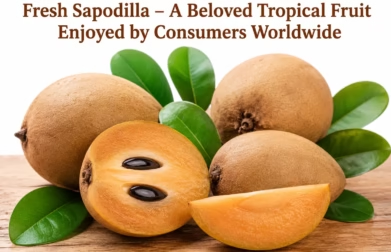
In the vibrant and diverse world of tropical fruits, Sapodilla commonly known in Vietnam as hồng xiêm or sa pô chê stands out as a true gem, celebrated for its uniquely sweet flavor and exceptional nutritional value. Once regarded as a familiar local delicacy across rural regions of Asia and Latin America, Sapodilla has now emerged as one of the most sought-after and widely appreciated tropical fruits among consumers worldwide.
Beneath its rustic, rough-textured brown skin lies a soft, velvety flesh with an intensely sweet taste reminiscent of brown sugar, delicately blended with notes of pear, caramel, and honey. This distinctive flavor profile allows Sapodilla to captivate even the most discerning palates. This article provides a comprehensive, in-depth, and accurate overview of Fresh Sapodilla covering its botanical characteristics, nutritional composition, remarkable health benefits, commercial value, and practical guidance for selecting premium-quality fruit.
1. The Exceptional Nutritional Value of Fresh Sapodilla
| Nutritional Components | Amount per 100g | Unit | % Daily Value (DV) |
|---|---|---|---|
| Energy (Calories) | 83 | kcal | 4% |
| Water | 78 | g | — |
| Total Carbohydrates | 20 | g | 6% |
| Dietary Fiber | 5.3 | g | 21% |
| Natural Sugars | 12 | g | — |
| Protein | 0.44 | g | 1% |
| Fat (Lipids) | 1.1 | g | 2% |
| Vitamin C | 14.7 | mg | 24.5% |
| Vitamin A | 60 | IU | 2% |
| Folate (Vitamin B9) | 14 | µg | 3.5% |
| Calcium | 21 | mg | 2% |
| Iron | 0.8 | mg | 6% |
| Magnesium | 12 | mg | 3% |
| Potassium | 193 | mg | 4% |
| Phosphorus | 12 | mg | — |
Professional Note: Fresh Sapodilla contains a relatively high calorie content compared to many other fruits, primarily due to its natural sugars such as fructose and sucrose. This makes it an excellent source of instant energy, particularly suitable for physically demanding workers, athletes, and individuals with active lifestyles.
2. Outstanding Health Benefits of Fresh Sapodilla
With its impressive nutritional profile, regular and balanced consumption of Fresh Sapodilla can provide a wide range of remarkable health benefits for the human body. Rich in essential vitamins, minerals, natural antioxidants, and dietary fiber, this tropical fruit contributes significantly to overall wellness, energy production, digestive health, and immune system support.
2.1. A source of powerful plant compounds
Research suggests that diets rich in polyphenols may lower the risk of chronic diseases like heart disease and type 2 diabetes, and are linked to slower biological aging due to their antioxidant effects.
Animal and lab studies also show sapodilla extract may help reduce cellular damage and improve liver health markers.
However, these benefits are not unique to sapodilla many fruits and vegetables provide similar protective plant compounds when consumed regularly as part of a balanced diet. (1)
2.2. High in fiber
Fiber supports gut health by feeding beneficial bacteria, improving digestion, increasing fullness, and helping regulate blood sugar and cholesterol.
It also contributes to overall health benefits linked to higher fiber intake, including reduced risks of heart disease and colon-related conditions.
However, many people still fall short of daily fiber needs (about 25g for women and 38g for men under 50), so adding sapodilla alongside other fiber-rich foods like fruits, vegetables, and legumes can help meet these goals. (2)
2.3. Other potential benefits
Some animal studies suggest sapodilla may help reduce blood sugar, blood fat levels, and even show antitumor activity, but these effects have not been clearly proven in humans.
Overall, while sapodilla is nutrient-rich and potentially beneficial, more research is needed to confirm these specific health effects in people at normal dietary intake levels. (3)
3. Commercial Value and Export Potential of Fresh Sapodilla
3.1. Steadily Growing Global Demand for Fresh Sapodilla
In an era where the “eat clean, healthy living” lifestyle has become a dominant global trend, consumers in developed markets such as North America, Europe, and Japan are increasingly expanding their preferences toward unique and exotic tropical fruits. Fresh Sapodilla perfectly aligns with this trend thanks to its distinctive sweetness, smooth texture, and natural origin.
The growing Asian and Latin American communities in the United States and Europe have also become a major driving force behind the rising consumption of Sapodilla. Demand for the fruit continues to increase across Asian supermarkets, multicultural retail chains, and large-scale fresh produce markets, where consumers actively seek authentic tropical flavors and culturally familiar food products.
3.2. Challenges and Solutions in the Export of Fresh Sapodilla
- Short Post-Harvest Shelf Life: Sapodilla ripens very quickly and is highly sensitive to mechanical impact. Its thin outer skin is easily scratched or bruised during handling, packaging, and transportation, which can significantly reduce product quality and market value.
- Difficulty in Determining Optimal Ripeness: The fruit must be harvested at the proper stage of physiological maturity while still firm, then allowed to ripen naturally after harvest. If picked too early, Sapodilla may never ripen properly, resulting in hard flesh and an unpleasant astringent latex content. This makes harvesting management and quality control particularly important in the export supply chain.
In addition, advanced post-harvest treatment technologies such as Vapor Heat Treatment (VHT) and irradiation are being widely adopted by exporting countries including Vietnam and Thailand. These technologies help eliminate pests and reduce microbial risks while maintaining fruit quality, thereby enabling exporters to comply with the stringent phytosanitary requirements imposed by high-standard markets such as the United States and Australia.
3.3. Diversification Trends in Processed Sapodilla Products
To increase added value and extend product shelf life, the food industry is actively expanding beyond the export of fresh Sapodilla by investing in the research and development of various value-added processed products:
-
Dried and Freeze-Dried Sapodilla: Preserves the fruit’s rich natural sweetness while transforming it into a premium, nutritious snack product with longer shelf stability.
-
Sapodilla Jam and Syrup: Widely applicable in the bakery, dessert, and beverage industries, offering unique tropical flavor profiles for food and drink formulations.
-
Sapodilla Powder: Used as a natural flavoring ingredient in ice cream, smoothies, nutritional beverages, and functional food products.
This diversification strategy represents a highly promising direction for the tropical fruit processing industry. It not only enhances commercial value and reduces post-harvest losses but also opens access to profitable niche markets for agricultural processing enterprises in tropical-producing countries.
4. A Complete Guide to Selecting and Storing Fresh Sapodilla Properly
4.1. How to Identify and Select Naturally Ripened, High-Quality Sapodilla
-
Observe the Outer Skin: A high-quality, properly matured Fresh Sapodilla typically has a dark brown skin with slight natural cracking near the stem area. Avoid fruits with pale yellow or yellowish-green skin, as these are often signs of premature harvesting or artificial ripening. Such fruits usually develop a bland flavor and a firm, grainy texture when consumed.
-
Check the Firmness: Gently press the surface of the Fresh Sapodilla with your fingers. A naturally ripened fruit should feel slightly soft with good elasticity and a gentle give under pressure. If the fruit is too firm, it is likely underripe. Conversely, if it feels excessively mushy or leaks liquid, it may already be overripe, damaged, or undergoing fermentation.
-
Inspect the Stem Area: A naturally matured Fresh Sapodilla will produce little to no white latex when the stem is gently removed. If a large amount of sticky white sap oozes from the stem area, the fruit was likely harvested too early and should be avoided.
-
Aroma: A properly ripened Fresh Sapodilla naturally emits a distinctive sweet and pleasant fragrance. Fruits treated with artificial ripening chemicals often lack this characteristic natural aroma.
4.2. Proper Storage Techniques to Preserve the Full Flavor of Fresh Sapodilla
- For Unripe Fruits: Never store unripe Sapodilla in the refrigerator. Instead, keep the fruit in a dry, well-ventilated area at room temperature (approximately 25–30°C). To accelerate and evenly promote natural ripening, Fresh Sapodilla can be placed in a paper bag or rice container together with a ripe banana or apple. The ethylene gas naturally released by these fruits helps stimulate the ripening process, allowing the Sapodilla to ripen more uniformly within approximately 2–3 days.
- For Fully Ripened Fruits: Fully softened Sapodilla should ideally be consumed as soon as possible to enjoy its best flavor and texture. If not consumed immediately, the fruit should be tightly wrapped with plastic film or stored in an airtight container before being placed in the refrigerator. A storage temperature between 4°C and 8°C can help maintain its quality for approximately 3–5 days. Extended storage beyond this period is not recommended, as the fruit may gradually lose its flavor, develop a grainy texture, and begin natural fermentation.
5. Diverse Culinary and Lifestyle Applications of Sapodilla
Beyond simply peeling, removing the seeds, and enjoying Fresh Sapodilla as a traditional dessert fruit, its smooth texture and naturally rich sweetness also create endless opportunities for creative culinary applications and innovative food creations.
-
Smoothies and Juices: Sapodilla blends exceptionally well with fresh milk, condensed milk, and crushed ice to create a rich, creamy, and naturally sweet smoothie commonly known in Vietnam as Sinh tố Sa pô chê. For added depth and complexity of flavor, ingredients such as cocoa powder or coffee can also be incorporated into the recipe.
-
Ice Cream and Sorbet: In the artisanal ice cream and gelato industry, Sapodilla is considered an excellent ingredient. Its natural sweetness helps reduce the amount of refined sugar required in recipes, while its smooth and creamy texture contributes to a perfectly rich and velvety consistency in ice cream and sorbet products.
-
Desserts and Pastries: Diced Sapodilla flesh can be used as a delicious topping for tarts, pancakes, and waffles, or served together with Greek yogurt and oatmeal as part of a healthy breakfast menu.
-
Vegetarian Stews: In certain Caribbean culinary traditions, slightly underripe Sapodilla fruits are occasionally sautéed or incorporated into vegetarian stews. Their firmer texture and mildly astringent flavor create a unique and distinctive culinary experience.
6. Important Considerations When Consuming Sapodilla
Although Sapodilla offers numerous health benefits, excessive consumption may not always be beneficial. To ensure safe and appropriate consumption, consumers should pay attention to the following important considerations when enjoying this tropical fruit:
6.1. Blood Sugar Considerations for Individuals with Diabetes
Due to its relatively high glycemic index (GI), resulting from its considerable carbohydrate and natural sugar content, individuals with Diabetes or insulin resistance should carefully control their consumption of fresh Sapodilla. It is generally recommended not to consume more than one medium-sized fruit per day, and consultation with a qualified nutrition specialist or healthcare professional is advisable for personalized dietary guidance.
6.2. Potential Side Effects of Excessive Consumption
-
Digestive Discomfort: Although dietary fiber is beneficial for digestive health, consuming an excessive amount of soluble fiber from Sapodilla within a short period may lead to bloating, abdominal discomfort, and indigestion.
-
Choking Hazard from Seeds: Sapodilla seeds are extremely hard and feature a sharp, hook-like tip. If accidentally swallowed, the seeds may become lodged in the throat or potentially irritate the lining of the stomach and intestines. Parents should exercise particular caution by carefully removing all seeds before serving the fruit to young children.
6.3. Avoid Consuming Unripe Sapodilla
7. Frequently Asked Questions (FAQ) About Sapodilla
To help readers gain a deeper understanding of this tropical fruit, below are answers to some of the most commonly asked consumer questions:
Q1: Is Sapodilla safe for pregnant women?
Answer: Absolutely. Sapodilla is rich in Vitamin C, Folate (Vitamin B9), and calcium essential nutrients that support fetal growth and development. In addition, its natural sugars may help reduce fatigue and morning sickness, while its high dietary fiber content can effectively relieve pregnancy-related constipation. However, pregnant women diagnosed with gestational diabetes should consume Sapodilla in moderation and follow professional medical advice.
Q2: Does eating Sapodilla cause weight gain or obesity?
Answer: A medium-sized Sapodilla typically provides approximately 140–200 calories. When consumed in moderate amounts (around 1–2 fruits per day) as part of a balanced diet, Sapodilla does not necessarily cause weight gain. On the contrary, its fiber content helps promote satiety and may assist in controlling appetite. However, excessive consumption especially in high-calorie preparations such as smoothies containing large amounts of condensed milk and sugar can contribute to excess calorie intake and fat accumulation.
Q3: What is the best time of day to eat Sapodilla?
Answer: The ideal time to consume Sapodilla is during mid-morning snacks (around 10:00 AM) or afternoon breaks (approximately 3:00–4:00 PM). At these times, the body benefits from a quick natural energy boost to maintain alertness and productivity. It is advisable to avoid eating Sapodilla immediately after a very large meal, as this may place additional strain on digestion. Consuming it too close to bedtime is also not recommended due to its relatively high natural sugar content, which may affect sleep quality and dental health if oral hygiene is neglected.
Q4: Is there a safe way to ripen Sapodilla naturally without chemicals?
Answer: One of the safest and most effective traditional methods is to first wash off the powdery coating on the fruit’s skin and dry it thoroughly. The fruits can then be stored in a covered container lined with newspaper or natural leaves to help retain warmth and promote ripening over approximately two days.
A simpler and widely used modern method is to place the Sapodilla in a paper bag together with ripe bananas or apples. These fruits naturally release ethylene gas, which safely accelerates and evenly stimulates the ripening process without the need for artificial chemicals.
Conclusion: Sapodilla – A Golden Nutritional Choice for Modern Living
From a wild fruit once found deep within the tropical forests of South America, Sapodilla has undergone an extraordinary journey to establish itself as a globally recognized commercial fruit. Its harmonious combination of delicate sweetness, smooth texture, and an impressive nutritional profile rich in essential vitamins, minerals, dietary fiber, and powerful antioxidants clearly demonstrates that Sapodilla is far more than just a refreshing dessert fruit it is a naturally nourishing superfruit that supports the body from within.
For consumers, incorporating Sapodilla into a balanced diet on a regular basis can contribute positively to digestive health, bone strength, immune support, skin vitality, and overall well-being. For businesses, farms, and retailers, Sapodilla particularly organically cultivated and internationally certified varieties such as GlobalG.A.P.-compliant products presents substantial commercial opportunities in both domestic consumption markets and international export industries.
By fully understanding the true value of Sapodilla, along with proper selection, storage, and culinary applications, consumers and businesses alike can maximize the remarkable benefits that nature has offered through this exceptional tropical fruit.
 Blog & News