If you are looking for a reliable source of high-quality Easy Open Coconut with consistent sweetness and full compliance with strict international export standards from Vietnam, you have come to the right place. This article provides comprehensive technical information, quality standards, and optimized import solutions from Great Farmer, tailored specifically for wholesalers, supermarket chains, and global distributors. Let’s explore the real value this innovative product brings to your supply chain.
Fresh coconuts have long been a popular refreshment worldwide due to their naturally refreshing taste and outstanding health benefits. However, one of the biggest barriers for consumers has always been the hard shell, which requires knives or machetes to open, creating safety risks and inconvenience. The introduction of Easy Open Coconut has completely transformed the market turning a traditional raw agricultural product into a convenient, premium, and fully safe consumer product. At the same time, it has opened up significant profit opportunities for retailers. So, what exactly drives the strong global demand for this innovative coconut solution?
This growing appeal comes from the perfect combination of modern processing technology and the premium quality of carefully selected agricultural produce. To fully understand this enormous market potential, it is essential to explore the product definition as well as the rapidly evolving consumer trends shaping the global coconut industry today.
1. What Is Easy Open Coconut and Why Has It Become a Global Trend?
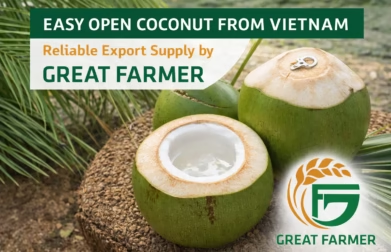
Easy Open Coconut is a fresh coconut that has been fully husked, polished, and processed with laser-etched grooves on the hard shell. A pull-ring cap or a naturally thinned coconut eye is applied, allowing users to easily open the coconut or insert a straw without using sharp tools. This enables instant access to fresh coconut water and tender coconut meat while maintaining natural sweetness and freshness.
This innovation solves major challenges in the retail sector, particularly convenience, waste reduction, and display efficiency. Instead of managing bulky husk waste, supermarkets can display compact, clean coconuts in refrigerated shelves, appealing to busy consumers seeking healthy “Grab-and-Go” beverage options. The compact design also significantly improves transportation efficiency.
Refrigerated containers can hold up to three times more coconuts compared to whole-husk coconuts, reducing logistics costs per unit and increasing profit margins for importers. However, beyond convenience and efficiency, the key factor driving global demand lies in the superior quality of the coconut water itself. To understand why Vietnam is an ideal source for this product, it is important to examine the region’s unique natural advantages.
2. Why Choose Easy Open Coconut From Vietnam?
Vietnamese fresh coconuts typically have a Brix level of 7.0–9.0, about 15–20% sweeter than coconuts from many other regions.
Vietnam, especially the Mekong Delta and the coconut hub Ben Tre, benefits from fertile alluvial soil and a tropical monsoon climate. These natural conditions help coconuts develop higher natural sugar content and a richer, more distinctive flavor, making Vietnamese coconuts highly valued in global markets.
As a result, Vietnamese coconut water offers a clean, naturally sweet taste that remains stable during cold storage, while the coconut meat is soft, creamy, and flavorful. Popular varieties such as aromatic and green dwarf coconuts are known for their balanced size, concentrated flavor, and strong nutritional value.
To meet strict import requirements in markets regulated by organizations such as the U.S. Food and Drug Administration and GlobalGAP, all product parameters must be carefully standardized and controlled.
The following section outlines the key technical specifications required for export-quality Easy Open Coconut.
3. Technical Specifications and Quality Standards (Detailed Table)
At Great Farmer, we understand that consistency is the key to success in international B2B trade. Importers cannot accept shipments with inconsistent sweetness, size, or shelf life. Therefore, we have established strict technical specifications for our Easy Open Coconut products before loading them into containers.
The specification table below provides a clear and transparent overview of our quality commitments and standardized export parameters.
| Technical Criteria | Great Farmer Standard Specifications |
|---|---|
| Coconut Variety | Vietnamese Green Dwarf Coconut |
| Sweetness (Brix) | 7.0 – 9.0 (Naturally sweet, no added sugar) |
| Net Weight | Size S: 300g – 350g Size M: 350g – 420g Size L: 420g – 500g+ |
| Water Volume | 220ml – 330ml (Depending on fruit size) |
| Shelf Life | 60 – 90 days (Strictly stored at 2°C – 4°C) |
| Opening Technology | Laser-etched circular groove with pull-ring cap or push-button design for easy opening or straw insertion |
| Primary Packaging | POF shrink wrap for scratch protection, customized labeling available upon request |
| Carton Packaging | 5-layer moisture-resistant carton box: 9 pcs/carton (with inner dividers) |
| Container Type | 20ft RF or 40ft RF (Reefer Container) |
| Certifications | GlobalGAP, HACCP, ISO 22000, Phytosanitary Certificate, Full CO Documentation |
With standardized specifications like these, importers can accurately plan logistics costs and distribution strategies. Every packaging detail is designed to withstand high humidity during long-distance sea transport. However, maintaining consistent quality at scale requires more than manual processing.
So how does a raw coconut become a smooth, polished, easy-open product without harmful preservatives?
The answer lies in a combination of automated production systems and skilled craftsmanship. Let’s explore the closed production process and see how each coconut is transformed from raw material to export-ready product.
4. Easy Open Coconut Production Process at Great Farmer
Every export coconut passes through a strict 6-step quality control process, with rejection rates of up to 20%, ensuring only premium products are delivered to partners.
The process starts at GlobalGAP-certified farms, where coconuts are harvested at 8.5–9 months for peak sweetness and water content. After harvesting, coconuts are transported to the factory within 12 hours to maintain freshness.
They then undergo dehusking, polishing, and precision laser cutting to create an easy-open groove. A pull-tab cap or straw-ready membrane is applied using food-grade bio-adhesive for safe and convenient use.
Finally, coconuts are treated with UV drying, sealed with POF shrink film, and inspected through weighing and metal detection systems before export packing ensuring consistent quality for long-distance shipping.
5. Great Farmer – Your Trusted Supply Partner
In international trade, a reliable supplier delivers not only products, but also stability, transparency, and supply chain confidence.
Great Farmer works directly with farming cooperatives managing thousands of hectares of coconut plantations in Ben Tre and Tien Giang. This direct control over raw materials allows us to maintain stable pricing and ensure consistent supply for long-term contracts of 12–24 months, even during peak seasons.
We are fully equipped to handle large-volume orders for supermarket chains and distributors. Our R&D team continuously improves packaging materials to meet growing eco-friendly and ESG requirements, especially in European markets.
Our processing facilities are certified under HACCP and ISO 22000, and we provide comprehensive support from OEM/Private Label design to export documentation such as Phytosanitary Certificates and Certificates of Origin. This end-to-end service helps importers reduce operational time and costs.
To better understand the product’s advantages, let’s compare Easy Open Coconut with traditional whole coconuts and diamond-cut coconuts currently available on the market.
6. Comparison Between Easy Open Coconut and Traditional Fresh Coconut
To help procurement managers make informed sourcing decisions, the comparison table below provides a clear overview of the most common fresh coconut product types.
The differences go beyond appearance they significantly impact storage efficiency, logistics costs, and the end-user experience.
| Criteria | Traditional Whole Husk Coconut | Diamond Cut Coconut | Easy Open Coconut (Pull-Tab Coconut) |
|---|---|---|---|
| Convenience | Very low (Requires specialized knives, skills, and time). | Moderate (Requires a knife to trim the top layer). | Maximum (Opens by hand within seconds, straw-ready). |
| Shipping Weight | Heavy (1.5kg – 2.5kg/unit), mostly husk weight. | Medium (0.8kg – 1.2kg/unit). | Very light (0.35kg – 0.5kg/unit), highly optimized for sea freight. |
| Safety | High risk when opening at home; potential for injuries. | Moderate risk (Still requires cutting tools). | Extremely safe for all ages, including children and elderly users. |
| Display Efficiency | Bulky, occupies large space, may create mess in display areas. | Relatively compact, but white surface may discolor over time. | Highly compact, smooth, shrink-wrapped, clean, and premium appearance. |
| Distribution Channels | Traditional markets, restaurants with trained staff. | Supermarkets, specialty fruit stores. | Supermarkets, convenience stores, cafés, airports, gyms. |
| Shelf Life | About 2–3 weeks at room temperature. | 30–45 days under refrigeration. | 60–90 days under refrigeration (2°C – 4°C) with protective shrink technology. |
Clearly, Easy Open Coconut offers strong advantages in logistics efficiency and consumer safety, enabling access to high-value channels such as convenience stores and gyms. However, maintaining these benefits depends on proper transportation and storage.
Fresh dehusked coconuts require strict cold chain control, as temperature fluctuations can quickly lead to spoilage. So, what are the key rules importers must follow to protect product quality?
7. Storage Guidelines and Shelf-Life Optimization
After husk removal, fresh coconuts rely entirely on cold storage for protection. For Easy Open Coconut, the required temperature must be strictly maintained at 2°C–4°C (35.6°F–39.2°F) throughout the entire cold chain, monitored by temperature data loggers.
Proper ventilation is equally important. Since coconuts naturally release CO₂ and ethylene, container ventilation should be set at 10–15 CBM/hour to prevent mold and maintain product quality. Adequate airflow must also be ensured in cold storage facilities.
At distribution and retail levels, pallets should not block airflow, and products should be displayed in chillers using the FIFO (First In, First Out) principle to maintain freshness.
With proper cold chain management, businesses can fully protect product quality and unlock strong financial returns. Let’s now examine the profit potential of this product compared to other beverage categories.
8. Profit Potential of Easy Open Coconut Business
Easy Open Coconut offers an attractive ROI in the F&B sector. Its premium pull-tab packaging allows retailers to position it as a Premium Health Drink, where consumers pay not only for coconut water but also for convenience, safety, and lifestyle value. In markets such as North America and Northern Europe, retail prices typically range from $4–$6 per unit, creating strong profit margins after logistics and storage costs.
The market potential extends far beyond supermarkets. HORECA channels including restaurants, bars, and resortsn prefer Easy Open Coconut because it reduces preparation time and labor costs. Fitness centers and yoga studios also promote it as a natural isotonic drink, making it a healthier alternative to sugary sports beverages.
In addition, OEM partnerships with Great Farmer allow importers to build their own branded product lines, creating recurring revenue and long-term customer loyalty.
To help you start your sourcing journey with confidence, the next section addresses the most frequently asked operational questions from global importers.
Frequently Asked Questions (FAQ) from International Importers
The average production and packing time for a 40ft reefer container is approximately 5–7 days after order confirmation.
Q1: What is the Minimum Order Quantity (MOQ) for Easy Open Coconut?
To optimize shipping costs and maintain cold chain integrity, the minimum order quantity (MOQ) is 1 × 20ft reefer container. However, we recommend using a 40ft reefer container to achieve the most competitive FOB/CIF/CNF pricing.
Q2: Does Great Farmer support Private Label and logo printing?
Yes. We provide full OEM services, including label design, logo printing on shrink film, and customized carton packaging based on your brand identity. For large-volume orders, these services may be offered at minimal or no additional cost.
Q3: How does Great Farmer handle damaged or cracked coconuts during shipping?
Thanks to shock-resistant packaging and strict shell inspection, our defect rate is typically maintained below 1–2%. In verified cases of damage caused by packaging or product quality, compensation will be arranged based on inspection reports and applied to subsequent orders.
Choosing the right supplier not only reduces operational costs but also protects your brand reputation in global markets. By combining Vietnam’s premium coconut resources with advanced processing technology, Great Farmer delivers a reliable Easy Open Coconut solution that meets the strict demands of international B2B buyers.
Contact Great Farmer today to receive a detailed quotation, request free samples, and start bringing premium Vietnamese Easy Open Coconut to your market.
📞 Phone/WhatsApp: +84 836314437
📧 Email: hoang.nguyen@greatfarmer.com.vn
🌐 Website: www.greatfarmer.com.vn
 Blog & News