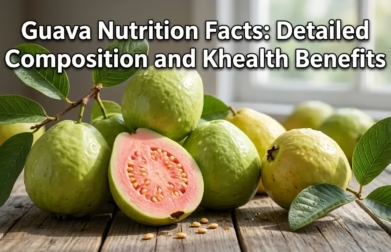
Did you know that just one small guava can provide more Vitamin C than many common fruits? In fact, guava contains approximately four times more Vitamin C than oranges (1), while also delivering a rich supply of dietary fiber that supports digestion, helps with weight management, and improves gut health. It is no coincidence that many nutrition experts consider guava to be one of the most nutrient-dense fruits, yet it is often underestimated in everyday diets. As a result, many people unknowingly miss out on the significant health benefits it offers.
So, what exactly nutrients are found in 100 grams of guava, and what benefits do they provide for your body? Let’s take a closer look at the most accurate nutritional composition of guava, where each figure will help you understand why this familiar fruit is considered one of the smartest choices for maintaining good health..
1. Detailed Nutritional Composition of Guava (Per 100g)
Did you know how many calories 100 grams of fresh guava (equivalent to approximately one small guava) contains?
With only 68 calories, guava is considered one of the most nutrient-dense fruits, offering a high concentration of essential nutrients relative to its calorie content. Below is a precisely compiled nutritional composition table based on data from the United States Department of Agriculture (USDA), providing a comprehensive overview of what you are actually consuming.
Be sure to pay close attention to the Vitamin C content and dietary fiber levels highlighted in this table, as these are among the most remarkable nutritional strengths of guava.
| Nutrient | Amount per 100g Fresh Guava | Estimated Daily Value (DV%) |
|---|---|---|
| Energy (Calories) | 68 kcal | 3% |
| Water | 80.8 g | — |
| Total Carbohydrates | 14.3 g | 5% |
| Dietary Fiber | 5.4 g | 20% |
| Sugars | 8.92 g | — |
| Protein | 2.55 g | 5% |
| Total Fat | 0.95 g | 1% |
| Vitamin C | 228.3 mg | 254% |
| Vitamin A | 624 IU | 12% |
| Folate (Vitamin B9) | 49 µg | 12% |
| Potassium | 417 mg | 9% |
| Magnesium | 22 mg | 5% |
| Lycopene (especially in pink guava) | 5,204 µg | — |
Looking at the table above, you can clearly see that guava is essentially a natural micronutrient powerhouse. Most remarkable is its protein content of 2.55 g per 100 g and its exceptionally high Vitamin C content of 228.3 mg per 100 g. This makes guava one of the relatively rare fruits that provides a notable amount of protein compared to many other commonly consumed fruits.
However, what do these numbers truly mean for your body in everyday life? The answer lies in the well-balanced combination of macronutrients and micronutrients that guava naturally contains.
2. In-Depth Analysis: Why Is the Nutritional Structure of Guava So Unique?
1. Exceptional Fiber Content
With 5.4 g of dietary fiber per 100 g, guava provides up to 20% of the recommended daily fiber intake for an adult. This fiber includes both soluble and insoluble fiber, a powerful combination that serves as a golden key to maintaining a healthy digestive system and a slimmer body shape. However, fiber does not work alone in supporting and protecting your health.
2. Outstanding Vitamin C Levels
The figure of 228.3 mg of Vitamin C (meeting 254% of the recommended daily intake) is far from just a number. It transforms guava into a powerful antioxidant shield, helping protect cells from damage caused by free radicals. Interestingly, most of this Vitamin C is concentrated just beneath the outer skin, which means peeling guava can result in a significant nutritional loss.
So, how exactly do these abundant nutrients affect each organ in your body?
Let’s move on to the next section to explore 7 scientifically proven health benefits of guava.
3. 7 Scientifically Proven Health Benefits of Guava
More than just a delicious fruit, guava acts like a natural preventive medicine.
Numerous clinical studies have shown that regular consumption of guava can lead to noticeable improvements in key health indicators. Below is an in-depth analysis of how guava heals and protects your body at the cellular level.
3.1. Boosts Immune System
Your immune system requires fuel to produce white blood cells that fight against bacteria and viruses, and Vitamin C is one of the most essential fuels for this process.
Since guava provides more than four times the amount of Vitamin C compared to an orange of the same weight, it serves as an excellent natural source to support and strengthen immune function. (2), Vitamin C plays a key role in supporting a strong and well-functioning immune system. While it has not been proven to completely prevent the common cold, research suggests that adequate vitamin C intake may help lessen the severity of symptoms and shorten recovery time.
In addition, vitamin C is associated with antimicrobial properties that support the body’s natural defenses against harmful bacteria and viruses that may cause infections.
Since vitamin C is a water-soluble nutrient that is not stored in large amounts in the body and can be easily excreted, it is important to consume sufficient amounts regularly through daily foods. (3) (4)
3.2. A Savior for Digestive Health
Guava is widely recognized as a rich source of dietary fiber, making it beneficial for digestive health. Increasing fiber intake from foods like guava may help promote regular bowel movements and lower the risk of constipation.
A single guava can supply a notable portion of the daily recommended fiber intake, contributing to better gut function and overall digestive balance.
In addition, extracts derived from guava leaves have been studied for their potential digestive benefits. Some research indicates that guava leaf extract may help reduce both the severity and duration of diarrhea.
Several studies have also reported that guava leaf extract exhibits antimicrobial properties, meaning it may help control harmful microorganisms in the digestive tract that are associated with diarrhea. (5)
3.3. Guava May Support Cardiovascular Health
Guavas may offer several benefits for heart health. Their high content of antioxidants and vitamins especially in guava leaves may help protect the cardiovascular system from damage caused by free radicals.
In addition, the potassium and soluble fiber found in guava contribute to maintaining healthy blood pressure and cholesterol levels, both of which are key factors in cardiovascular well-being. Studies have linked guava leaf extract to reduced blood pressure, lower LDL (“bad”) cholesterol, and higher HDL (“good”) cholesterol, supporting its potential role in lowering the risk of heart disease and stroke.
The fruit itself may also provide cardiovascular benefits. For example, a 2022 study observed that consuming ripe guava was associated with an overall reduction in blood pressure, reinforcing results from previous research. (6)
3.4. Guava May Help Regulate Blood Sugar Levels
There is evidence suggesting that guava may help support healthy blood sugar levels. Research from cell and animal studies, including investigations conducted in 2020 and 2022, indicates that guava leaf extract can improve blood sugar control, enhance long-term glucose regulation, and reduce insulin resistance.
These effects may be particularly beneficial for individuals with diabetes or those at risk of developing the condition. Similar positive trends have also been observed in studies involving human participants. (7)
3.5. Helps Alleviate Menstrual Pain
Many women experience dysmenorrhea painful menstrual symptoms such as abdominal cramps.
Emerging research indicates that guava leaf extract may help alleviate the intensity of menstrual cramps. Some studies suggest that consuming guava leaf extract can not only reduce menstrual pain, but may also help decrease uterine bleeding and ease other related symptoms. (8)
3.6. Rejuvenates Skin and Fights Aging
Guava contains a rich combination of vitamins and antioxidants that can be highly beneficial for skin health. These antioxidants help protect skin cells from oxidative damage, which may slow visible signs of aging such as fine lines and wrinkles.
In addition, extracts from guava leaves have shown potential in supporting acne treatment when applied topically to the skin. However, further scientific research is still needed to fully understand how guava and its extracts contribute to long-term skin health.(9)
3.7. May Help Prevent Cancer with Potent Antioxidants
Research suggests that guava leaf extract may possess anticancer properties. Laboratory and animal studies indicate that compounds in the extract can inhibit the growth of cancer cells and, in some cases, prevent their formation.
These effects are thought to result from the extract’s high antioxidant content, which helps protect cells from damage caused by free radicals a factor involved in cancer development.
However, while these findings are promising in lab settings, there is currently no conclusive evidence that guava leaf extract can treat cancer in humans, and further research is necessary before any definitive claims can be made. (10)
4. Nutritional Differences: White-Fleshed Guava vs. Pink/Red-Fleshed Guava
Why does the flesh color of guava determine its nutritional value?
The most common guavas on the market today are white-fleshed guavas (such as Taiwanese pear guava or “guava glove”) and pink/red-fleshed guavas (such as “xá lị” or ruby guava). While both are extremely healthy, they offer different micronutrient strengths that you should know to match your personal health needs.
-
White-Fleshed Guava: Generally crisper and slightly higher in Vitamin C than pink guava. They also have lower sugar content, making them ideal for those on strict diets, fat reduction plans, or individuals with diabetes who need to carefully control carbohydrate intake.
-
Pink/Red-Fleshed Guava: Softer and more fragrant. The standout feature of pink guava is its high Lycopene content, even surpassing that of tomatoes. Lycopene is a powerful antioxidant that protects the skin and may help prevent prostate cancer. In addition, pink guavas usually contain slightly more water and Vitamin A.
Regardless of which type you choose, the way you incorporate guava into your diet is what ultimately determines its effectiveness. So, how can you eat guava in the most beneficial and scientific way?
5. Scientific Guide to Selecting, Storing, and Consuming Guava
Not every guava delivers 100% of its nutritional potential as shown in the table above if you buy unripe fruit or store it improperly.
To maximize nutrient retention, the process from choosing guava at the store to consuming it should be done correctly.
How to Choose Nutritious, Delicious Guava:
- Look for fruits with bright green skin tinged with yellow, a sign that the guava is perfectly ripe.
- The skin should have a slightly rough texture, often indicating a crisp, thick-fleshed fruit with fewer seeds.
- When held, the guava should feel heavy for its size, and gentle pressure should reveal a subtle elastic give, not rock-hard or overly soft.
- A naturally ripe guava will emit a strong, fragrant aroma, even before cutting.
How to Store Guava:
- If the guava is not fully ripe, leave it at room temperature for 1–2 days.
- Once ripe, the best way to preserve crunchiness and Vitamin C is to store it in a zipper bag or airtight container in the refrigerator.
- Avoid exposing guava directly to cold air, as this causes wilting and rapid moisture loss. Proper storage preserves both flavor and texture, allowing you to use it in recipes immediately.
How to Incorporate Guava into Your Diet:
- Eat Fresh with Skin: Wash thoroughly with lightly salted water, cut, and eat directly. A pinch of Himalayan pink salt enhances the flavor. Note: Do not peel, as 80% of Vitamin C is concentrated in the skin.
- Green Guava Smoothie: Blend 1 guava, a handful of spinach, half a banana, and coconut water for a nutritious breakfast that energizes and detoxifies.
- Guava Salad with Shrimp and Chicken: Dice or slice guava and mix with sprouts, boiled shrimp, seared chicken breast, and a light vinaigrette. The crisp, sweet-tart flavor of guava balances the richness of protein.
- Guava Juice: Excellent for hydration and cooling, though you will lose a significant portion of fiber compared to eating the whole fruit.
While guava is extremely safe and healthy, any food can have negative effects if overused or consumed by the wrong individuals. Proper moderation and mindful consumption are key.
6. Important Precautions and Potential Side Effects When Consuming Guava
As wonderful as it is, guava is not a harmless “miracle fruit” if consumed improperly.
Overconsumption of certain components in guava may cause undesirable digestive issues. To ensure safety, remember these three essential rules:
6.1. Guava Seeds and Irritable Bowel Syndrome (IBS)
Guava seeds are very hard and contain insoluble fiber. For most people, chewing them thoroughly can aid bowel movements. However, swallowing a large number of seeds whole, or consuming them if you have gastric ulcers or IBS, can irritate the intestinal lining, potentially leading to stomach pain or severe constipation. If your digestive system is sensitive, it is best to remove the seeds.
6.2. Overconsumption May Cause Bloating
Guava contains a natural sugar called fructose. The human body has a limited capacity to absorb fructose at once. Eating 3–4 guavas in a single sitting can lead to fermentation in the small intestine, producing gas and causing bloating or discomfort. The recommended portion is 1 guava (about 150–200 g) per day.
6.3. Interaction with Chronic Kidney Disease
Although potassium is beneficial for heart health, patients with chronic kidney disease whose kidneys cannot effectively filter excess potassium from the blood should consume potassium-rich fruits like guava only under strict medical supervision, with carefully calculated portions.
To address more detailed questions, we have compiled the most frequently asked concerns by users below.
Frequently Asked Questions About Guava Nutrition (FAQs)
Q1: Will eating guava at night cause weight gain?
Not at all. Guava is very low in calories and contains no saturated fat. However, eating fruit too close to bedtime may make your digestive system work late, potentially causing sleep discomfort. The ideal times to enjoy guava are during mid-morning snacks (around 10 a.m.) or afternoon snacks (around 3 p.m.).
Q2: Is guava safe and beneficial for pregnant women?
Absolutely. Guava contains folate (Vitamin B9), an essential nutrient that helps prevent neural tube defects in the fetus. Additionally, its high fiber content effectively relieves pregnancy-related constipation, while Vitamin C enhances iron absorption, helping prevent anemia in expectant mothers.
Q3: Is it okay to eat guava on an empty stomach?
For individuals with a healthy stomach, eating a few pieces of guava on an empty stomach can maximize Vitamin C absorption. However, if you have a history of acid reflux or gastric ulcers, the natural acids in guava (especially sour or green varieties) may increase stomach acidity, causing discomfort. It is best to consume guava 30 minutes to 1 hour after a main meal.
Conclusion
Guava is more than just an ordinary tropical fruit it is truly a nutritional treasure. From providing massive amounts of Vitamin C, ideal dietary fiber, to a variety of minerals that protect the heart, regulate blood sugar, and enhance skin health, the Guava Nutrition Facts table demonstrates its remarkable power. By following proper portion sizes and consuming seeds safely, you can boost overall health with just one guava a day.
Great Farmer – Fresh, Clean, Nutrient-Rich Guava
You already know the incredible nutritional value of guava, but how do you find a source that is clean, chemical-free, and retains full nutrients?
Great Farmer is your trusted partner, providing guavas that meet the highest quality standards from seed selection and cultivation to harvest. We practice sustainable farming and strictly control pesticide residues, ensuring guavas are crisp, sweet, fragrant, and completely safe.
Our optimized distribution system preserves Vitamin C and antioxidants. Whether you are an individual consumer or a business partner, Great Farmer delivers clean, bulk, and export-standard guavas.
👉 Protect your family’s health today!
Contact us to day:
📞 Phone/WhatsApp: +84 836314437
📧 Email: hoang.nguyen@greatfarmer.com.vn
🌐 Website: www.greatfarmer.com.vn
 Blog & News