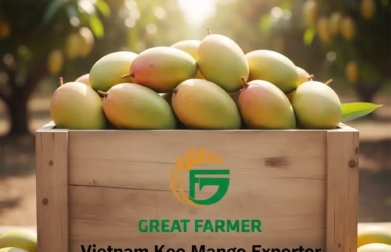
The international fruit market is rapidly shifting toward product lines that offer high stability, ease of transportation, and suitability across multiple consumption segments. Within this landscape, Keo Mango is no longer merely a tropical mango variety; it has become a strategic import item in the portfolios of many distributors across Asia, the Middle East, and Europe. The product’s advantages lie in its firm flesh structure, low post-harvest loss during logistics, and its ability to serve both green (unripe) and ripe consumption markets factors that help optimize inventory turnover and profit margins.
However, the core challenge does not lie in the product itself, but in the capability of the supplier. Partnering with a Vietnam Keo Mango Exporter that operates certified growing areas, implements standardized grading processes, and is capable of delivering full-container-load volumes on fixed schedules is a prerequisite for ensuring an uninterrupted supply chain. The following content will focus directly on the key determinants: technical standards, quality control procedures, residue management, export packaging specifications, commercial terms, and the criteria for evaluating a truly capable supplier rather than merely a trading intermediary.
1. Why Choose Vietnamese Keo Mango for B2B Import Operations?
Keo Mango originates from Ta Keo Province; however, it is now cultivated on a very large commercial scale in the southern provinces of Vietnam such as Dong Thap, An Giang, and Tay Ninh where soil conditions and the tropical monsoon climate are particularly well suited to its growth. Importing Keo Mango from Vietnam provides multiple competitive advantages for B2B enterprises:
1.1. Unique and Versatile Taste Profile
Unlike many mango varieties that reach their optimal flavor only when fully ripened and soft, Keo Mango is most renowned when consumed at the green or slightly blushed (early yellowing) stage. At this point, the flesh delivers a distinct crisp texture with a refreshing sweet-and-sour balance that is highly appealing.
When fully ripened, the mango turns a vibrant golden yellow, with soft, juicy flesh and a rich, aromatic fragrance.
This versatility enables importers to access multiple customer segments: from fresh consumption markets and Asian-style salad applications to processing facilities specializing in sliced frozen products (IQF).
1.2. Extended Shelf Life
For fresh fruit importers, shelf life is a critical commercial factor. Keo Mango features relatively thick skin and firm flesh when harvested at 70–80% maturity.
These characteristics allow the fruit to withstand the pressure of long-distance sea freight without bruising or damage, significantly reducing shrinkage rates for distributors and improving overall logistics performance.
1.3. Large and Stable Bulk Supply Capacity
Vietnam, and Great Farmer in particular, is positioned among the world’s leading mango-exporting origins. Specialized Keo Mango growing areas in the Mekong Delta apply advanced off-season cultivation techniques, enabling near year-round harvesting.
This ensures supply continuity and minimizes the risk of disruption in the importer’s distribution chain.
2. Product Specifications – Vietnamese Keo Mango for Export
To assist importers in clearly understanding the technical parameters prior to order placement, below is a detailed export specification framework for Vietnamese Keo Mango supplied by a reliable bulk supplier:
| Specifications | Standard Details |
|---|---|
| Product Name | Fresh Keo Mango |
| Origin | Mekong Delta and Tay Ninh, Vietnam |
| Harvest Maturity | 70% – 85% (depending on logistics transit time) |
| Color | Jade-green skin or slightly yellow-blushed. Deep lemon-yellow flesh. |
| Size / Weight | Small: 250g – 350g per fruit Medium: 350g – 450g per fruit Large: 450g – 600g+ per fruit |
| Brix Level | 12% – 15% (at green/blushed stage); 18% – 22% (at fully ripe stage) |
| Certifications | VietGAP, GlobalGAP, Phytosanitary Certificate, Certificate of Origin (C/O), ISO, HACCP |
| Post-harvest Treatment | Cleaning, fungal treatment, irradiation or Vapor Heat Treatment (VHT) depending on the import country’s requirements |
| Packaging | 5kg, 10kg, 15kg, or 20kg export cartons (OEM/private label available upon request) |
| Cold Storage Temperature | 10°C – 13°C (Relative Humidity: 85% – 90%) |
| Shelf Life | 20 – 30 days under standard refrigerated storage conditions |
3. Export Handling and Quality Control Process
A professional Vietnam Keo Mango Exporter must strictly adhere to a comprehensive quality control system from farm to port. This process not only determines the external appearance and internal quality of the product but also ensures full compliance with the technical barriers imposed by demanding markets such as the EU, the United States, Japan, South Korea, and the Middle East.
Step 1: Sourcing & Harvesting at Certified Growing Areas
Keo Mango is harvested manually in the early morning or late afternoon to avoid heat shock. Workers use specialized cutting tools to trim the stem, leaving approximately 1–2 cm attached to prevent latex (sap) from flowing onto the skin and causing surface damage.
Only orchards with registered Planting Unit Codes (PUC) and compliant with GlobalGAP or VietGAP standards are selected for export production.
Step 2: Washing & Sap Treatment
Upon arrival at the packing house, the mangoes are immediately washed in clean water tanks treated with ozone or a diluted alum solution to remove dirt, microorganisms, and residual sap from the skin.
This is a critical step to prevent sap burn and black skin discoloration during transportation and storage.
Step 3: Grading & Sizing
The fruit is transferred to the grading line, where mangoes with pest stings, scratches, deformities, or weight deviations are removed.
Qualified mangoes are then sorted into uniform size categories using either automated grading machines or skilled manual selection to ensure optimal visual presentation when packed into export cartons.
Step 4: Pest Control Treatment
Treatment protocols depend on the phytosanitary regulations of the importing country:
-
Asia–Europe and Middle East markets: Typically require thorough cleaning, foam net wrapping, and issuance of a Phytosanitary Certificate.
-
Japan, South Korea, and New Zealand: Mandatory Vapor Heat Treatment (VHT) to eliminate fruit fly eggs without the use of chemicals.
-
United States market: Requires irradiation treatment in accordance with U.S. phytosanitary regulations.
Strict adherence to these procedures ensures compliance with quarantine requirements and smooth customs clearance upon arrival.
4. Advanced Packaging & Logistics Solutions from a Bulk Supplier
To transport dozens or even hundreds of tons of fresh mangoes across oceans, logistics management and packaging standards play a decisive role in maintaining product quality and minimizing commercial risk.
4.1. Standard Packaging Specifications
Protective Wrapping: Each Keo Mango is individually wrapped in a foam net to prevent impact damage and friction during handling and transportation.
Carton Boxes: Water-resistant 3–5 ply corrugated cartons are used for export. These boxes are designed with carefully calculated ventilation holes to ensure consistent cold air circulation throughout the shipment, allowing uniform temperature distribution to every fruit.
Net Weight: The most common export formats are 10 kg and 15 kg cartons. A standard pallet typically accommodates 80–100 cartons, depending on stacking configuration and container size.
4.2. Sea Freight vs. Air Freight
Air Freight: Designed for premium or urgent orders requiring fast delivery (approximately 2–4 days). While the cost is significantly higher, this method ensures optimal freshness and minimal transit risk. Shipments are typically packed in 5 kg cartons for air transport.
Sea Freight (Reefer Containers): This is the most cost-effective and scalable solution for bulk suppliers. Mangoes are loaded into refrigerated containers (20ft or 40ft reefers).
-
Temperature maintained at 10°C – 12°C
-
Ventilation rate set at 15–20 cbm/h
-
Controlled humidity to reduce dehydration
Transit times range from 7 to 25 days, depending on the destination port. Under proper cold chain management, the mangoes maintain firmness and freshness upon arrival, ensuring strong commercial viability for importers and distributors.
5. Key Criteria for Selecting a Reputable Vietnam Keo Mango Exporter
Among hundreds of trading and export companies in the market, selecting the right long-term partner requires a structured evaluation. The following core criteria should be carefully assessed:
5.1. Farm Integration and Direct Sourcing
A reliable exporter should own or maintain direct partnerships with certified growing areas and agricultural cooperatives.
Direct farm integration enables better control over production costs and quality from seed selection and fertilizer management to harvest timing ensuring consistency and traceability across shipments.
5.2. Modern Packing House Infrastructure
A professional bulk supplier must operate a well-equipped packing facility, including:
-
Pre-cooling and cold storage systems
-
Ozone or aerated washing tanks
-
Standardized grading and sorting lines
-
Refrigerated storage facilities
The facility should comply with internationally recognized food safety standards such as HACCP or ISO 22000 to ensure hygienic handling and export readiness.
5.3. Transparency in Legal Documentation & Export Compliance
The exporter must be capable of providing complete and accurate export documentation in a timely manner, including:
-
Bill of Lading (B/L)
-
Commercial Invoice
-
Packing List
-
Phytosanitary Certificate
-
Certificate of Origin (Form A, B, E, D, AK, etc., depending on the importing market)
Timely and precise documentation is essential to prevent customs delays and additional demurrage costs.
5.4. Clear Risk Management & Compensation Policy
Fresh fruit is inherently perishable and carries a certain level of commercial risk. A professional exporter should clearly define:
-
Acceptable shrinkage or tolerance rates
-
Claims procedure
-
Compensation mechanisms in case of unforeseen quality issues
Transparent risk-sharing terms reflect operational confidence and long-term partnership commitment.
For Great Farmer Specifically
For Great Farmer, the competitive advantage lies not only in supply capability but also in an integrated farm-to-export model, standardized quality control systems, and a structured contract framework designed to protect both importer and supplier interests.
This approach ensures stable pricing, consistent quality, and reliable delivery schedules key factors for B2B partners seeking sustainable and scalable mango sourcing solutions.
6. Harvesting Seasonality of Keo Mango in Vietnam
One of the strongest advantages of working with a Vietnam Keo Mango Exporter is the continuity of supply throughout the year.
6.1. Peak Season
The main harvest season typically runs from October to April of the following year.
During this period:
-
Production volume reaches its highest level
-
Fruit size and external appearance are at their best
-
Brix levels generally achieve optimal sweetness
-
Pricing is the most competitive of the year due to abundant supply
For importers, peak season offers the most favorable conditions for large-volume procurement and margin optimization.
6.2. Off-Season
The off-season spans from May to September.
Thanks to advanced off-season flowering induction techniques applied by Vietnamese farmers, bulk suppliers are still able to maintain export operations during this period. While overall output may be lower and prices may increase slightly, supply remains sufficiently stable to fulfill long-term contracts and continuous distribution programs.
This year-round harvesting capability is a critical factor for importers seeking uninterrupted inventory flow and consistent market presence.
Frequently Asked Questions (FAQs) from Importers
1. What is the Minimum Order Quantity (MOQ) for exported Keo Mango?
For air freight shipments, the MOQ typically starts from 500 kg to 1 metric ton.
For sea freight, the most cost-efficient option is:
-
1 x 20ft reefer container (approximately 8–10 metric tons), or
-
1 x 40ft reefer container (approximately 20–22 metric tons).
Containerized shipments significantly optimize logistics costs per kilogram and are recommended for bulk import operations.
2. How long can Keo Mango withstand sea transportation?
If harvested at the proper maturity level (approximately 75–80%), treated effectively against fungal infection, and stored under strict cold-chain control at 10–12°C, Keo Mango can safely endure sea transit times of 20 to 25 days.
Under these conditions, the fruit maintains firmness and commercial quality upon arrival.
3. What payment terms are commonly applied?
Reputable Vietnamese exporters typically offer flexible payment structures, including:
-
T/T (Telegraphic Transfer): 30% deposit, 70% balance upon receipt of the Bill of Lading (B/L) copy.
-
L/C at sight (Letter of Credit at sight): Commonly applied for large-volume orders to ensure financial security for both parties.
Payment terms may be negotiated based on order size and long-term partnership agreements.
4. Do suppliers support OEM (private label) packaging?
Yes. Professional bulk suppliers provide OEM packaging services, including customized carton design and logo printing according to the importer’s brand identity.
This enables distributors to strengthen brand recognition and market positioning within their domestic retail networks.
Conclusion
The international fresh fruit trade is highly competitive, and securing a reliable source of high-quality produce is the key to long-term success. Vietnamese Keo Mango, with its superior crisp texture, distinctive flavor profile, extended shelf life, and large-scale supply capacity, represents a high-value SKU capable of delivering strong commercial returns to your business.
By partnering with a reputable and professional Vietnam Keo Mango Exporter, you are not simply purchasing fresh fruit—you are investing in supply chain reliability and operational peace of mind. From export documentation and customs compliance to optimized logistics solutions, the right partner ensures smooth execution at every stage of the transaction.
Ready to Add Premium Keo Mango to Your Product Portfolio?
Are you prepared to introduce high-quality Keo Mango into your distribution network and strengthen your competitive edge in the fresh fruit market?
If you would like to receive our latest wholesale quotation (FOB / CIF / CNF) or discuss detailed product specifications, packaging options, and shipment planning for your upcoming order, simply let us know your destination port and target volume.
Our export team will provide a tailored proposal aligned with your logistics requirements and market positioning.
Contact us today to secure the most competitive pricing, consistent premium quality, and a reliable long-term supply partnership. Let’s build a sustainable and profitable mango program together.
Contact us:
📞 Phone / WhatsApp: +84 836314437
📧 Email: hoang.nguyen@greatfarmer.com.vn
🌐 Website: www.greatfarmer.com.vn
 Blog & News