Among tropical fruits with high export value, fresh passion fruit is prioritized not because of production volume or widespread popularity, but due to its ability to generate stable value across diverse international markets. Its intense flavor profile, distinctive pulp structure, and high concentration of natural compounds make passion fruit a difficult-to-substitute raw material in both fresh consumption and food processing applications.
The nature of passion fruit extends beyond that of a simple edible fruit; it is a commodity shaped simultaneously by biological characteristics, cultivation conditions, and commercial standards. Its botanical origin, historical dissemination across tropical climates, and varietal differences directly influence fruit quality and export suitability.
This article examines passion fruit from three perspectives: botanical foundations, geographical distribution history, and the international standards governing its commercial value, with the aim of providing an accurate and practical understanding of the role passion fruit plays in today’s global agricultural export supply chain.
1. Detailed Definition: What Is Fresh Passion Fruit?
Fresh Passion Fruit refers to the fruit produced by plants of the Passiflora genus, most commonly Passiflora edulis. The term “fresh” emphasizes fruit that has been recently harvested and has not undergone thermal processing or concentration, thereby retaining its natural rind condition (either taut or naturally wrinkled) and its pulp (arils), which remains rich in active enzymes.
1.1. Botanical Classification (Taxonomy)
From a scientific perspective, Fresh Passion Fruit is classified as follows:
-
Kingdom: Plantae
-
Order: Malpighiales
-
Family: Passifloraceae
-
Genus: Passiflora
-
Species: P. edulis (the most commercially important species)
The Passifloraceae family comprises more than 500 species, though only a limited number are edible and of commercial value. Passion fruit plants are perennial herbaceous vines that grow by climbing and anchoring themselves to support structures using strong tendrils.
1.2. Morphological Structure
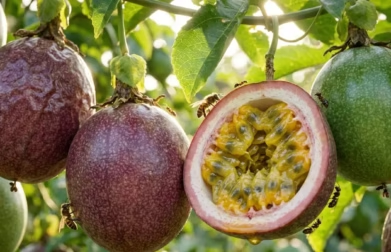
Fresh Passion Fruit is botanically classified as a berry. Its structure consists of three primary components:
-
Exocarp (Outer Rind):
A firm, waxy outer layer that protects the interior from environmental stress. Its color transitions from green when immature to deep purple or bright yellow at full ripeness. -
Mesocarp (Middle Layer):
A thin, white, spongy layer beneath the colored rind. Although largely neutral in flavor, it functions as a natural shock absorber, protecting the pulp during handling and transport. -
Endocarp and Arils (Pulp and Seeds):
The core value of the fruit. Each small black seed is surrounded by a translucent sac filled with aromatic yellow-orange juice. This component contains approximately 90% of the fruit’s flavor compounds and nutritional value.
2. Origin and Global Dissemination
The presence of Fresh Passion Fruit on dining tables in temperate countries is the result of a historical journey spanning several centuries.
2.1. South American Origins
Fresh Passion Fruit is native to the subtropical regions of South America, specifically the area stretching from southern Brazil through Paraguay to northern Argentina. Indigenous Amazonian tribes have used this fruit for thousands of years as a natural source of energy and as a traditional calming remedy. (1)
2.2. Spanish Discovery and the Meaning of the Name “Passion”
In the 16th century, when Spanish explorers and missionaries arrived in South America, they were captivated by the unusual and intricate beauty of the passion flower.
Religious symbolism:
Missionaries interpreted the structure of the flower as symbolic of the “Passion of Christ.” The five petals and five sepals were seen to represent the ten faithful apostles, the tendrils symbolized the whips used in the crucifixion, and the ovary represented the Holy Grail.
International nomenclature:
As a result, the term “Passion fruit” was formally recorded in botanical literature worldwide. The name is entirely religious in origin and should not be confused with the modern meaning of “passion” associated with romantic love.
2.3. Global Dissemination Across Continents
-
Arrival in Hawaii (1880): Yellow passion fruit was introduced and quickly became an iconic crop, later spreading to Australia.
-
Expansion into Africa (Early 20th century): Kenya and South Africa emerged as major producers of purple passion fruit, benefiting from their cool highland climates.
-
Introduction to Southeast Asia: Vietnam, Thailand, and Indonesia adopted passion fruit cultivation later than other regions, yet achieved remarkable production volumes due to modern farming techniques and favorable soil conditions particularly in Vietnam’s Central Highlands.
3. Identifying Characteristics of Fresh Passion Fruit
To accurately identify a high-quality Fresh Passion Fruit, evaluation should be based on sensory assessment combined with technical indicators.
3.1. Shape and Size
-
Shape: Most fruits are round or oval. Well-balanced, symmetrical fruits without deformities typically indicate more uniform pulp quality.
-
Size: Diameter generally ranges from 4 cm to 8 cm, depending on the variety. Purple passion fruit is usually smaller and denser, while yellow passion fruit is noticeably larger.
3.2. Skin Color
Skin color is the primary indicator of ripeness and variety:
-
Green: Immature fruit with high starch content, very high acidity, and little to no aroma.
-
Deep Purple / Wine Red: Indicates ripe purple passion fruit. Darker coloration generally corresponds to higher sweetness.
-
Bright Yellow / Amber: Characteristic of yellow passion fruit varieties.
3.3. Surface Texture
A distinctive identifying feature unique to Fresh Passion Fruit:
-
At early ripeness: The skin is smooth, glossy, and firm. At this stage, the fruit offers a clean, sharp acidity, making it suitable for culinary garnishing.
-
At full ripeness: The skin becomes drier and develops a wrinkled texture. This is not a sign of spoilage. On the contrary, wrinkled fruits often contain the highest sugar concentration and most intense flavor, as natural moisture loss concentrates the pulp.
3.4. Weight and Hand Feel
A quality Fresh Passion Fruit should feel heavy for its size. This indicates well-developed, juice-filled arils and confirms that the fruit is neither hollow nor affected by internal dehydration or pest damage.
3.5. Aroma
Fresh Passion Fruit has an exceptionally complex aromatic profile, composed of over 100 volatile compounds, including esters, alcohols, and ketones. The aroma is highly expressive and can often be perceived even before the fruit is cut open.
4. Classification of Commercial Fresh Passion Fruit Varieties
In international trade, accurate variety differentiation is critical, as it directly determines pricing, market positioning, and end-use applications.
| Characteristic | Purple Passion Fruit | Yellow Passion Fruit | Sweet Passion Fruit (Granadilla) |
|---|---|---|---|
| Scientific Name | P. edulis | P. edulis f. flavicarpa | Passiflora ligularis |
| Size | 4–6 cm | 6–12 cm | 5–9 cm |
| Brix (Sugar Content) | 14–18% | 12–15% | 18–22% |
| Acidity | Moderate | High | Very low |
| Pulp Color | Deep yellow-orange | Bright lemon yellow | Milky white / pale gray |
| Primary Uses | Fresh consumption, bakery applications | Juice processing, industrial use | Direct consumption as a premium fruit |
| Optimal Growing Regions | Highlands (>1,000 m elevation) | Tropical lowlands | Cool, high-altitude mountainous regions |
5. Nutritional Value of Fresh Passion Fruit
Fresh Passion Fruit is often described as a “superfood” due to its exceptionally high nutrient density relative to its small size.
5.1. Comprehensive Vitamin Profile
-
Vitamin C: One passion fruit provides approximately 9% of the recommended daily intake. This powerful antioxidant supports collagen synthesis and helps protect the body against free radical damage.
-
Vitamin A (Beta-Carotene): Essential for visual health, immune support, and the regeneration of skin cells.
-
Vitamin B2 (Riboflavin) and Vitamin B3 (Niacin): Play a key role in energy metabolism and help maintain a healthy, stable nervous system. (2)
5.2. Essential Minerals
-
Potassium: Supports heart rhythm regulation and blood pressure control. Passion fruit is recognized as one of the most potassium-rich fruits.
-
Iron: Although plant-based iron is generally less bioavailable, the naturally high vitamin C content in passion fruit significantly enhances iron absorption, improving overall iron utilization by the body.
-
Magnesium: Contributes to stress reduction, helps alleviate anxiety, and supports improved sleep quality. (3)
5.3. Dietary Fiber and Phytochemicals
The seeds of Fresh Passion Fruit are an excellent source of insoluble dietary fiber, which supports intestinal health and promotes effective digestive cleansing. In addition, both the peel and seeds contain piceatannol a polyphenolic compound structurally similar to resveratrol (found in red wine) which has been studied for its potential to improve insulin sensitivity and support cardiovascular health. (4)
6. Outstanding Health Benefits of Fresh Passion Fruit
6.1. Blood Pressure Reduction
One cup of passion fruit provides about 821 mg of potassium (24–32% of the daily recommended intake). Potassium helps the body excrete excess sodium, supports vasodilation, and contributes to lower blood pressure there by reducing the risk of stroke and kidney damage. (5)
6.2. Weight Management Support
Plant-based diets are linked to greater weight loss, largely due to their high fiber content. Passion fruit is high in fiber, low in fat, and promotes satiety, making it a suitable fruit for weight-loss-focused eating plans. (6)
6.3. Reduces Cancer Risk
Colorful fruits and vegetables like passion fruit are associated with a lower overall cancer risk due to their high antioxidant content. Passion fruit contains beta-carotene and anthocyanins in its seeds, pulp, and skin, and studies suggest its extracts may offer therapeutic benefits when used to enrich foods. (7)
6.4. Promotes Skin Repair
Passion fruit is an excellent source of vitamin C, with one cup providing nearly the full daily requirement. Vitamin C is essential because the body cannot produce or store it, and it plays a key role in antioxidant protection, collagen formation, skin health, and wound healing. (8)
6.5. Prevents Iron-Deficiency Anemia
Iron deficiency can cause fatigue, dizziness, and impaired cognition, especially in plant-based diets where iron is less easily absorbed. Passion fruit provides a meaningful amount of iron and is rich in vitamin C, which significantly enhances iron absorption, helping support healthy iron levels. (9)
6.6. Passion fruit peel supplement may reduce inflammation
Passion fruit peels are rich in antioxidants and may have anti-inflammatory effects when used as supplements. Small studies suggest purple passion fruit peel extract may reduce asthma symptoms and alleviate pain and stiffness in people with knee osteoarthritis. However, evidence is still limited, and further research is needed to confirm these effects. (10)
7. Export Quality Standards for Fresh Passion Fruit
In professional commercial trade, Fresh Passion Fruit must pass strict quality assessments before being accepted for export markets.
7.1. Brix Level and pH Value
-
Brix: Measures total soluble solids, primarily sugars. For fresh exports to European markets, the Brix level typically must reach 15% or higher.
-
pH: The pH of passion fruit generally ranges from 2.8 to 3.3. This naturally acidic environment contributes to extended shelf life compared to many sweeter fruits.
7.2. Visual Quality Standards
-
Grade A: Premium fruit with no surface defects, uniform coloration, and fresh, intact stems.
-
Grade B: May display minor skin blemishes (not exceeding 5% of the surface area) that do not affect internal pulp quality.
-
Grade C: Fruits may show slight deformation or sunburn marks and are typically designated for domestic markets or further processing.
7.3. Pesticide Residue Control
This is a critical compliance factor for accessing markets such as Japan and the European Union. Farms must adhere to GlobalG.A.P. standards, maintain detailed cultivation records, and strictly observe pre-harvest interval requirements to ensure residue levels remain within permitted limits.
8. Harvesting and Post-Harvest Handling Techniques
Why can fruits from the same variety vary so widely in flavor some sweet and aromatic, others overly sour or bitter? The answer lies largely in harvesting practices.
8.1. Harvesting at the Optimal Stage
Passion fruit is classified as a climacteric fruit. However, to achieve optimal flavor quality, harvesting is typically carried out once the fruit has reached at least 75% color change. In some growing regions, fruits are allowed to naturally drop onto collection nets, as natural abscission indicates the fruit has reached full physiological maturity, delivering the best balance of sweetness and aroma.
8.2. Post-Harvest Handling
-
Cleaning: Fruits are washed with clean water and food-grade sanitizing solutions to remove surface contaminants and fungal spores.
-
Grading: Laser scanning systems are used to sort fruits by size and color uniformity.
-
Rapid Cooling (Pre-cooling): Fruit temperature is quickly reduced to approximately 7–10°C to slow respiration and delay ripening.
-
Packaging: Ventilated corrugated cartons or Modified Atmosphere Packaging (MAP) bags are employed to extend shelf life during storage and transportation.
9. Applications of Fresh Passion Fruit in Culinary and Industrial Sectors
The versatility of Fresh Passion Fruit has established it as a key ingredient across multiple industries.
9.1. In Mixology
The intense and aromatic flavor profile of passion fruit effectively balances and softens harsh alcoholic notes, resulting in well-rounded cocktails. Popular creations include Passion Fruit Mojitos, Passion Fruit Martinis, and tropical fruit teas.
9.2. In Patisserie
The natural acidity of passion fruit provides a perfect counterbalance to rich dairy components such as heavy cream and cream cheese. Classic applications include passion fruit mousse and passion fruit sauces for crêpes and desserts.
9.3. In the Cosmetics Industry
Passion fruit seed oil, extracted from the seeds, is rich in lycopene and beneficial fatty acids. It is widely used in premium skincare formulations, particularly in serums designed to support anti-aging, skin repair, and soothing of sun-damaged skin.
10. Important Notes When Using Fresh Passion Fruit
Although regarded as a “superfood,” Fresh Passion Fruit should be consumed with proper knowledge to maximize benefits and avoid unwanted effects.
-
High Acidity: Due to its naturally high acid content, passion fruit should not be consumed on an empty stomach, as it may irritate the gastric lining, especially in individuals with sensitive digestive systems.
-
Passion Fruit Seeds: While the seeds are rich in fiber and beneficial compounds, consuming excessive amounts at once without proper chewing may place strain on digestion in people with sensitive gastrointestinal conditions.
-
Potential Drug Interactions: Certain bioactive compounds found in passion fruit may enhance the effects of sedative or calming medications. Individuals undergoing treatment for anxiety, insomnia, or other psychological conditions should consult a healthcare professional before consuming large quantities.
11. Market Potential and Future Trends
The global Fresh Passion Fruit market is experiencing steady growth at an estimated rate of 7–9% annually, driven by shifting consumer preferences toward healthier and more natural food options.
-
Clean Label Trend: Consumers are increasingly moving away from sugar-added packaged juices and processed beverages, opting instead for fresh, whole fruits with minimal processing. Fresh Passion Fruit fits perfectly into the clean-label movement thanks to its natural flavor intensity and high nutritional density.
-
The Rise of Sweet Yellow Passion Fruit: New premium varieties such as Colombian Yellow Passion Fruit and Ecuadorian Sweet Granadilla are gaining rapid popularity in China and the Middle East. Their naturally sweet taste profile eliminates the need for added sugar, making them highly attractive to health-conscious and high-end consumers.
-
Freeze-Drying Technology (Lyophilization): Freeze-dried Fresh Passion Fruit retains its original shape, vibrant color, aroma, and nutritional value. As a result, it is emerging as a premium snack category, particularly favored in developed markets where convenience and nutrition are equally valued.
Conclusion
Fresh Passion Fruit is more than just a fruit; it is the embodiment of tropical richness, a highly efficient nutritional solution, and a commodity with remarkable commercial potential. Understanding its definition, origin, and identifying characteristics not only empowers consumers to make smarter food choices but also enables businesses to meet international benchmarks and elevate this fruit’s presence on the global agricultural map.
Whether you are a chef in search of bold, distinctive flavors or an exporter exploring high-growth markets, Fresh Passion Fruit remains a timeless and strategic choice. Each drop of its golden pulp represents the result of natural evolution, favorable terroir, and dedicated human cultivation a value that deserves recognition, preservation, and global appreciation.
Great Farmer is committed to delivering export-grade Fresh Passion Fruit with transparent origin and consistent quality contact Great Farmer today to receive a quotation and tailored supply solutions for your market.
Contact us:
📞 Phone / WhatsApp: +84 785 017 575 | +84 778 078 134 | +84 033 531 3567
📧 Email: mia@greatfarmer.com.vn | clay@greatfarmer.com.vn | loan@greatfarmer.com.vn
🌐 Website: www.greatfarmer.com.vn
 Blog & News