Over the past decade, the global agricultural landscape has witnessed the strong rise of Vietnam. No longer known solely for rice or coffee, Vietnam now ranks among the Top 13 mango-exporting countries in the world. For Importers, Wholesalers, and international supermarket chains, understanding the Vietnam Mango Supply Chain is no longer an optional reference it has become a mandatory requirement to diversify supply sources and optimize profitability.
However, importing fresh produce from a tropical country inevitably comes with inherent risks: price volatility, inconsistent quality, and disruptions within the cold chain. This article is designed as a strategic roadmap, helping you professional Buyers gain full visibility into the operational structure of the Vietnam Mango Supply Chain, enabling you to make accurate, secure, and well-informed purchasing decisions.
Part 1: Overview of Vietnam’s Supply Capacity
Before diving into technical details, it is essential to look at the bigger picture. Why should you choose Vietnam over Thailand, India, or Mexico?
1.1. Cultivation Area and Production Volume
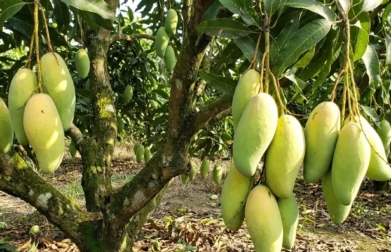
Vietnam has a mango cultivation area exceeding 115,000 hectares, with an annual output of nearly 1 million metric tons. The geographic distribution of growing regions from North to South creates a decisive competitive advantage for the Vietnam Mango Supply Chain: the ability to supply year-round.
-
Mekong Delta (ĐBSCL – Mekong Delta): Accounting for 48% of the country’s total mango-growing area. Key provinces include Dong Thap, Tien Giang, An Giang, and Vinh Long. This region is considered the “heartland” of premium mango varieties such as Cat Chu and Hoa Loc.
-
Southeast Region & South Central Coast: Including Dong Nai, Binh Thuan, and Khanh Hoa, well known for varieties such as Australian mango and Keo mango.
-
Northern Vietnam: Son La Province (Yen Chau mango) is emerging as a strategic production zone, supported by cultivation practices that meet export standards for demanding markets such as Australia and the United States.
This diversified regional structure reinforces the resilience, scalability, and reliability of the Vietnam Mango Supply Chain for international B2B buyers.
1.2. Position in the International Market
Vietnamese mangoes have successfully overcome the most stringent technical barriers to gain access to key global markets:
-
United States:
Mandatory Irradiation treatment. -
Japan, South Korea, New Zealand:
Requirement for Vapor Heat Treatment (VHT). -
European Union (EU):
Extremely strict control of Maximum Residue Limits (MRLs) and mandatory GlobalGAP certification. -
China:
A traditional market that is increasingly tightening requirements on growing area codes and traceability systems.
These achievements reinforce the credibility and export readiness of the Vietnam Mango Supply Chain in meeting diverse regulatory frameworks across global B2B markets.
Part 2: Anatomy of the Vietnam Mango Supply Chain
To effectively control quality, Buyers must clearly understand the journey of the mango. A standard supply chain structure in Vietnam consists of five core links:
Link 1: Cultivation & Growing Area Management (Farm Management)
The most significant shift over the past five years has been the transition from fragmented smallholder farming to Cooperative-based models and enterprise-linked production.
-
Input control: Export-designated growing areas are assigned official PUC (Production Unit Code) numbers. Farmers within these areas strictly comply with VietGAP or GlobalGAP protocols.
-
Farming logs: Detailed records of fertilizer application dates, pesticide spraying dates, and Pre-Harvest Interval (PHI) are mandatory to ensure mangoes pass residue testing at destination ports.
Link 2: Harvesting
This stage is critical in determining the shelf-life of the mango.
-
Technique:
Harvesting is done manually using poles fitted with mesh bags. The fruit is cut with a long stem (5–10 cm) to prevent sap burn, which can cause skin blackening. -
Maturity Index:
-
Sea shipment: Harvested at approximately 75–80% maturity.
-
Air shipment: Harvested at 85–90% maturity to ensure optimal flavor and eating quality.
-
Link 3: Packhouse Operations & Pre-Processing
The core of the Vietnam Mango Supply Chain lies at this stage. Standard packhouse operations typically include:
-
Receiving & De-stemming: Sap removal (de-sapping) using specialized solutions or lime water to prevent latex damage.
-
Washing & Fungus Control: Application of Hot Water Treatment combined with approved active ingredients to eliminate Anthracnose and Stem-end rot.
-
Grading: Sorting by size and weight, conducted either mechanically or manually.
-
Packaging: Use of 5-ply water-resistant carton boxes with ventilation holes, combined with protective liners or bags where required.
Link 4: Quarantine Treatment
Depending on the destination market, mangoes follow one of two treatment pathways:
-
Pathway 1 – Irradiation: Applied for the U.S. market. Mangoes are transported to licensed irradiation facilities (such as Son Son or Toan Phat) and treated with a minimum dose of 400 Gy.
-
Pathway 2 – Vapor Heat Treatment (VHT): Required for Japan and South Korea. Mangoes are placed in thermal chambers where the fruit core temperature is raised to 46–47°C for approximately 20–30 minutes to eliminate fruit fly eggs and larvae.
Link 5: Logistics & Export
-
Domestic transportation: Refrigerated trucks transport mangoes from the packhouse to ports or airports.
-
International freight: Shipment via Reefer containers, with temperature settings typically between 8–12°C (depending on variety) and appropriate ventilation configurations.
Part 3: Product Analysis – Key Mango Varieties (Product Portfolio)
From a B2B importer’s perspective, product selection must align precisely with the target end-user segment. Below is a structured product analysis designed to help you select the right mango varieties for your specific market positioning and distribution strategy.
Comparative Table of Vietnam’s Export Mango Varieties:
| Characteristics | Cat Chu Mango | Hoa Loc Mango | Keo Mango | R2E2 / Australian Mango | Tuong Da Xanh Mango |
|---|---|---|---|---|---|
| Appearance | Small, rounded, slightly elongated, thin skin | Large, elongated, full shoulders, bright yellow skin | Slim waist, deep green skin or light yellow tint | Apple-shaped, skin with pink-red blush | Very large (0.8–1.5 kg), thick green skin |
| Flavor Profile | Mild sweetness, chewy flesh, low fiber | Rich sweetness, very intense aroma | Balanced sweet–sour, crunchy when unripe | Medium sweetness, thick flesh, small seed | Crunchy, slightly sour when green; mildly sweet when ripe |
| Brix (Sweetness Level) | 18% – 20% | > 22% | 14% – 16% | 16% – 18% | 12% – 15% |
| Target Segment | Supermarket, Mass Market (Japan, Korea) | Luxury Gifts, High-end Market (France, Russia) | Salads, Processing, Asian Markets | Supermarkets (EU, Hong Kong) | Salads, Foodservice, Restaurants |
| Shelf-life | Medium. Thin skin, prone to damage | Short. Not suitable for long sea shipments | High. Thick skin, good impact resistance | Relatively high | Very high |
| Main Season | September – April (following year) | April – June & October – December | Year-round (peak from Oct–May) | October – December | Year-round |
If you are supplying mass-market supermarkets in the EU or the U.S. via sea freight, R2E2 mango or Keo mango are the safest choices in terms of low spoilage rate and logistics resilience.
For air cargo shipments targeting premium retailers and gourmet food shops, Hoa Loc mango becomes a powerful differentiation product to win over discerning consumers despite its higher cost structure.
Part 4: Supply Chain Pain Points & Mitigation Strategies
When researching the Vietnam Mango Supply Chain, most PAA (People Also Ask) questions revolve around risk management. Below, we break down the key pain points and outline practical mitigation strategies for professional buyers.
4.1. “Sap Burn” and “Skin Discoloration”
Vietnamese mangoes especially Cat Chu mango have relatively thin skin. Mango latex is highly acidic; if not properly managed, it can cause black spotting and uneven skin discoloration by the time the fruit reaches retail shelves.
Mitigation: Request process videos from suppliers covering stem cutting and washing procedures. Ensure the packhouse uses double-tank washing systems or applies proper lime treatment for effective sap neutralization.
4.2. Temperature Abuse
Vietnam’s hot and humid tropical climate poses a major risk during post-harvest handling. Transitioning mangoes from ambient temperatures (~30°C) to cold storage (~10°C) requires precise pre-cooling protocols.
-
Cooling too slowly: Accelerated ripening and reduced shelf-life.
-
Cooling too rapidly (thermal shock): Chilling injury, resulting in greyish skin and fruit that fails to ripen properly.
Mitigation: Deploy Data Loggers in every shipment or container to continuously record temperature and enable accountability and traceability throughout the logistics chain.
4.3. Pesticide Residues (MRLs)
The EU continues to tighten allowable MRLs, significantly increasing compliance risk. A single rejected shipment can cost tens of thousands of USD, along with long-term reputational damage.
Mitigation: Work exclusively with suppliers operating under controlled growing areas and Contract Farming models. Require third-party laboratory Test Reports (e.g., Eurofins, SGS) for each shipment prior to departure as part of Pre-shipment Inspection procedures.
Part 5: Sourcing Strategy & Commercial Negotiation
How can you secure high-quality mangoes at competitive prices within the Vietnam Mango Supply Chain?
5.1. The Golden Timing for Sourcing
Although mangoes are available year-round, Right Season sourcing is the key driver of Best Price outcomes.
-
Main Season (March – May):
Peak production with very high volumes and the lowest prices of the year. Ideal for large sea shipments and retail promotion programs. -
Off-Season (October – January):
Higher pricing, but also strong global demand driven by Christmas and Lunar New Year. This is when red- and pink-skinned varieties (such as R2E2 mango) gain strong market preference.
5.2. Post-Harvest Technology as a Negotiation Lever
During negotiations, buyers should actively assess the preservation technologies applied by suppliers:
-
MAP Bags (Modified Atmosphere Packaging):
These bags regulate O₂ and CO₂ levels, placing mangoes in a “hibernation state” and extending shelf-life to 30–40 days. This is the gold standard for sea freight shipments to the EU and U.S. -
Biological Solutions:
Use of edible coatings to reduce moisture loss and maintain freshness and surface gloss.
5.3. Payment Terms & Quality Claims
In fresh produce trading, quality disputes at destination ports are often unavoidable.
Best practice:
Contracts should clearly define “Arrival Quality Tolerance.” For example, allowing 3–5% spoilage. If this threshold is exceeded, the supplier must issue compensation via Credit Note applied to subsequent orders.
-
Incoterms:
-
For newcomers: CIF / DDP to minimize logistics risk.
-
For experienced buyers: FOB / Ex-Works to gain greater control over logistics and cost optimization.
-
Part 6: Some frequently asked questions
We have consolidated and addressed the most frequently asked questions when researching the Vietnam Mango Supply Chain:
Q1: “How to find reliable mango suppliers in Vietnam?”
Answer:
Do not rely solely on platforms such as Alibaba. Instead, prioritize the following channels:
-
Vietnam Fruit & Vegetable Association (VinaFruit).
-
Participation in international trade fairs such as Fruit Logistica (Berlin/Bangkok), Foodex (Japan), and Thaifex.
-
Request a Supplier Capability Profile, including cold storage capacity, GlobalGAP certifications, and a verified customer reference list.
Q2: “What is the transit time for mangoes from Vietnam to Europe?”
Answer:
-
Sea freight: 25–35 days, depending on the destination port (Rotterdam / Hamburg / Marseille). This requires advanced post-harvest technology, where MAP bags are mandatory.
-
Air freight: 1–2 days, via direct flights or trans-load routes.
Q3: “Is the Vietnamese mango supply chain sustainable?”
Answer:
Yes and it is continuously improving. Current industry trends include reducing chemical pesticide usage, increasing organic fertilizers, and adopting sustainable farming practices. Many packhouses and factories have invested in solar energy systems and water recycling to meet Green Certifications (Green Certs) required by the EU market.
Q4: “What is the difference between Cat Chu mango and Hoa Loc mango?”
Answer:
Think of Hoa Loc mango as the “Queen” delicate, difficult to preserve, premium-priced, but offering exceptional flavor. Cat Chu mango is the “Princess” more adaptable, higher in volume, more competitively priced, with quality reaching approximately 8/10 compared to Hoa Loc.
For large-volume commercial trade, Cat Chu mango is often the more profit-optimized choice within the Vietnam Mango Supply Chain.
Part 7: The Future of the Vietnam Mango Supply Chain
To build long-term sourcing strategies, Buyers must anticipate and adapt to emerging industry trends:
7.1. Deep Processing
Beyond fresh exports, the Vietnam Mango Supply Chain is rapidly expanding into value-added processing, including:
-
IQF Mango (Individually Quick Frozen):
Targeted at the F&B industry, ideal for smoothies, desserts, and ice cream applications. -
Soft Dried Mango:
A high-growth snack category that utilizes mangoes which do not meet fresh-market appearance standards (while maintaining internal quality), thereby reducing food waste and improving overall supply chain efficiency.
7.2. Digitalization & Transparency (Traceability)
The pilot application of Blockchain-based traceability is gaining momentum. By scanning a QR Code on the mango, a consumer in Paris can view the farmer’s profile in Dong Thap and the exact harvest date.
For retailers, this level of transparency is not only a compliance tool but also a powerful marketing asset, reinforcing trust, brand storytelling, and premium positioning within the Vietnam Mango Supply Chain.
Conclusion: Opportunities for First Movers
The Vietnam Mango Supply Chain is entering a phase of strong maturity. Logistics infrastructure continues to improve rapidly supported by projects such as the North–South Expressway, deep-sea ports like Cai Mep and Lach Huyen while post-harvest technologies are increasingly aligned with global standards. At the same time, farmers’ mindsets have shifted decisively toward market-driven production.
For B2B importers, Vietnamese mangoes are no longer just a commodity, but a strategic sourcing solution that enables you to:
-
Diversify supply risk: Reduce dependency on a single origin.
-
Increase profit margins: Benefit from production costs in Vietnam that remain more competitive than many alternative origins.
-
Delight end consumers: Offer distinctive tropical flavors that are difficult to replicate elsewhere.
The market does not wait. Establishing connections with the Vietnam Mango Supply Chain today gives you a clear first-mover advantage positioning your business ahead of competitors in an increasingly demanding global fresh produce market.
 Blog & News