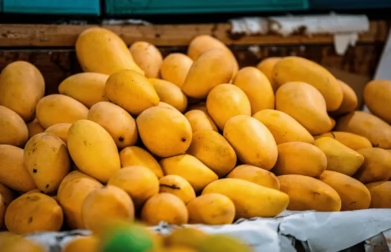
In the vibrant mosaic of global tropical agriculture, the Vietnamese Tropical Mango is emerging as a brilliant highlight. More than just a refreshing fruit, Vietnamese mangoes are increasingly asserting their role as a true “cultural ambassador,” bringing the sweet and distinctive flavors of Vietnam to some of the world’s most demanding markets, including the United States, Japan, South Korea, and the European Union.
This article offers a comprehensive and in-depth perspective on Vietnamese mangoes from their biological characteristics and renowned varieties to their remarkable export potential while uncovering the unique appeal of the Vietnamese Tropical Mango. Join us as we explore the journey of this “golden” fruit.
1. Overview of the Mango Industry in Vietnam
Vietnam, with its characteristic tropical monsoon climate, is a paradise for fruit crops, among which mango is one of the country’s key fruit commodities. Stretching from the North to the South, the mango cultivation area in Việt Nam continues to expand, with the highest concentration in the Mekong Delta (notably Dong Thap, Tien Giang, and Vinh Long) and the South Central Coast region (Khánh Hòa).
What sets Vietnamese Tropical Mango apart from competitors in India, Thailand, or Mexico lies in its diverse soil conditions. The fertile alluvial soil of Việt Nam produces rich, sweet mangoes, while the sandy coastal areas of the Central region create fruits with a uniquely intense and fragrant aroma.
Why Is the World Paying Attention to Vietnamese Mangoes?
In recent years, the keyword “Vietnamese Tropical Mango” has seen a surge in search volume across international agricultural trade platforms. This trend stems from Việt Nam’s successful adoption of global farming standards such as GlobalGAP, VietGAP, as well as advanced post-harvest preservation technologies (including cold treatment – VHT) to meet stringent technical requirements.
What differentiates Vietnamese mangoes from those of other countries (such as India, Thailand, or the Philippines) lies in their unique balance.
1.1. Flavor: Sweet, Sour, and Fragrant
If Indian mangoes tend to emphasize intense sweetness and Thai mangoes are known for their crisp texture, Vietnamese Tropical Mango offers a rich and diverse flavor profile.
-
Mild sweetness: When ripe, Vietnamese mangoes have a deep sweetness that is not overwhelming, leaving a refreshing aftertaste.
-
Captivating aroma: Particularly for the Xoài Cát Hòa Lộc variety, its fragrance can fill an entire room, offering a distinct and intense aroma that is hard to miss.
-
Fruit texture: The flesh of Vietnamese mangoes is usually firm, smooth, and low in fiber (especially in premium varieties), giving a melt-in-the-mouth sensation.
1.2. Soil and Climate: A Gift from Nature
Vietnam, especially the Mekong Delta region, is enriched by the alluvium from the Tiền and Hậu rivers. The mineral-rich soil, combined with the characteristic tropical day-night temperature variation, helps mango trees accumulate natural sugars more effectively. This is why the term “Vietnamese Tropical Mango” is always associated with a guarantee of superior flavor quality.
2. “The Four Great Mango Varieties” – The Mango Cultivars That Build the Brand
When talking about Vietnamese Tropical Mango, we are not referring to a single type, but rather a collection of mango varieties, each with its own distinct flavor and texture. Here are the names that have made Vietnamese mangoes famous.
2.1. Cat Hoa Loc Mango – The “Queen” of Mangoes
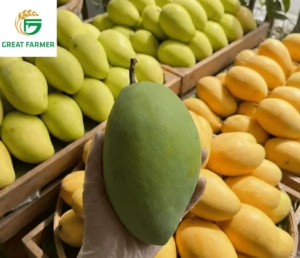
Originating from the Hòa Lộc region (Tiền Giang), Xoài Cát Hòa Lộc is considered the finest mango variety in Việt Nam and ranks among the top in the world.
-
Characteristics: Large fruit, with an average weight of 450–600g. When ripe, the skin turns an eye-catching bright yellow, and the flesh is thick, smooth, tender, and completely fiber-free.
- Shape: Elongated fruit with a rounded body and a well-defined navel. When ripe, the skin is bright yellow, thin, and covered with a fine white bloom.
-
Flavor: The flesh is thick, smooth, tender, and completely fiber-free, with a rich sweetness and a distinctive, intense fragrance. This variety commands the highest export value.
-
Market: As a premium variety, it is often used as a gift or exported to major international markets.
2.2. Cat Chu Mango – The “Precious Gem” of Cao Lãnh
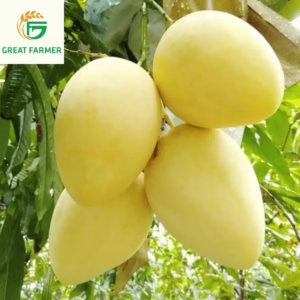
Once hailed as the “Royal Mango” in the past, Xoài Cát Chu (Đồng Tháp) is now a key variety for export.
-
Characteristics: Smaller and more slender than Hòa Lộc mangoes, with a rounded body, thin skin, and elongated shape. When ripe, it turns a beautiful deep orange-yellow (carrot color).
-
Flavor: Firm yet tender flesh, low in fiber, with a mild sweetness and a gentle, alluring aroma.
-
Advantages: High fruit set rate, stable yield, and firm flesh make this variety frequently chosen for export.
2.3. Green-Skinned Elephant Mango – A Delight for Crisp Mango Lovers
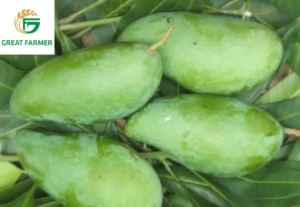
Unlike the two varieties mentioned above, which are typically eaten ripe, Xoài Tượng Da Xanh is famous when eaten raw or just slightly ripe.
-
Characteristics: “Giant” size, with fruits reaching up to 1 kg. The skin remains dark green even when fully mature.
-
Flavor: Crisp texture with a mildly tangy taste followed by a subtle sweetness. It is perfect for salads or served with salt and chili.
2.4. Keo Mango
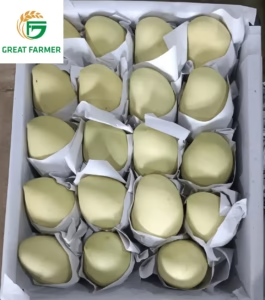
Although originally from Cambodia, this mango variety was later introduced to Việt Nam. Today, it is widely cultivated in southern provinces and heavily commercialized by Vietnamese businesses.
-
Characteristics: Slender waist, green skin with a hint of yellow.
-
Flavor: Notable for its dual-use property: it can be eaten both raw and ripe. When raw, it is crisp with a sweet-tart taste depending on the fruit; when ripe, it becomes soft and fragrant.
Comparison Table of Popular Vietnamese Mango Varieties
| Characteristics | Cat Hoa Loc Mango | Cat Chu Mango |
Green-Skinned Elephant Mango |
Keo Mango |
|---|---|---|---|---|
| Main Growing Region | Tien Giang | Đong Thap | Mountain areas / Mekong Delta | Southern provinces |
| Weight | 450g – 700g | 350g – 450g | 800g – 1,200g | 300g – 500g |
| Color When Ripe | Bright yellow | Deep orange-yellow | Green (eaten raw) | Apricot yellow |
| Sweetness (Brix) | Very high (17–22%) | High (16–21%) | Medium | Fairly sweet |
| Flesh Texture | Tender, smooth, fiber-free | Firm, low in fiber | Crisp, airy | Crisp / Soft |
| Main Use | Premium | Mass export | Processing, eaten raw | Snacking, processing |
3. What Makes Vietnamese Tropical Mango Stand Out Globally?
Why are consumers in Tokyo or New York willing to pay a premium for a Vietnamese Tropical Mango? The answer lies in three core factors:
3.1. Authentic Tropical Taste
Vietnamese mangoes are grown in tropical regions near the equator, where sunlight is abundant. The strong photosynthesis process allows the accumulation of natural sugars and rich aromatic compounds (aroma volatiles). Unlike greenhouse-grown mangoes in temperate regions, Vietnamese mangoes carry the flavors of sun, wind, and Mekong River alluvium, creating an explosive and unforgettable taste experience.
3.2. Year-round Availability
Thanks to advanced staggered cultivation techniques, particularly in Đồng Tháp and Tiền Giang, Việt Nam can supply fresh mangoes almost year-round. This allows international importers to maintain a stable supply without disruptions in the supply chain a significant competitive advantage over countries that have only a single harvest season.
3.3. Food Safety
The Vietnamese mango industry has undergone a “green revolution.” The assignment of Plantation Unit Codes (PUC) is strictly controlled. Mangoes exported to the United States are irradiated, while those sent to Japan and South Korea undergo hot water vapor treatment (VHT) to completely eliminate pathogens without affecting fruit quality.
Important Note: To fully enjoy the flavor, Vietnamese Tropical Mango should be stored at a cool temperature of around 10–12°C and consumed as soon as the skin turns evenly yellow and releases its rich aroma.
4. Nutritional Value: A Natural Superfood
Not only delicious, mangoes are also dubbed the “King of Fruits” due to their impressive nutritional profile. Consuming Vietnamese Tropical Mango provides a rich source of energy and vitamins.
Boosts immunity: One cup of mango (about 165g) provides nearly 67% of the daily requirement for Vitamin C, helping the body fight free radicals and strengthen the immune system. (1)
Good for eyes: Rich in beta-carotene (a precursor of Vitamin A) and zeaxanthin, mangoes help protect the eyes from blue light and prevent macular degeneration. (2)
Supports digestion: Mangoes contain enzymes such as amylase, which help break down proteins and carbs, along with fiber to promote smooth digestive function. (3)
Enhances skin health: Vitamin C supports collagen production, helping firm the skin and reduce wrinkles. (4)
5. From Farm to Table: The Journey to Global Markets
Bringing a Vietnamese Tropical Mango to international consumers involves a meticulous process.
-
Cultivation: Farmers follow VietGAP/GlobalGAP procedures, keep detailed field logs, and bag the fruits from an early stage to prevent pests and enhance the appearance of the skin.
-
Harvesting: Mangoes are hand-picked to avoid bruising, with careful cutting of the stem to prevent sap from darkening the skin.
-
Processing & Packaging: At the factory, mangoes are washed and automatically sorted by weight and size.
-
Quarantine Treatment: Depending on the target market, mangoes undergo either hot water treatment or irradiation.
-
Transportation: Cold containers with Controlled Atmosphere (CA) technology are used to regulate gases, putting the mangoes into a “sleep mode” that preserves freshness for up to 30–40 days during sea transport.
6. Culinary Applications: Vietnamese Mango in Kitchens Around the World
The versatility of Vietnamese Tropical Mango makes it a favorite ingredient among chefs.
-
Desserts: Mango Sticky Rice – although famous in Thailand, using Cat Hoa Loc Mango from Việt Nam elevates the dish, with the mango’s natural sweetness and chewiness taking it to a whole new level.
-
Salads: Dishes like mango shrimp-pork salad or dried fish mango salad are signature starters, using green or nearly ripe mangoes to create a perfectly balanced sweet-and-sour flavor.
-
Smoothies & Sauces: The flesh of Cat Chu Mango has a beautiful color and strong aroma, making it ideal for smoothies or mango sauces in Western cuisine (e.g., served with pan-seared salmon).
-
Dried Mango: Cold drying (freeze-drying) or soft drying technology turns Vietnamese mangoes into a healthy snack, popular on platforms like Amazon and Alibaba.
7. Expert Tips for Selecting and Storing Vietnamese Tropical Mango
7.1. How to Choose a Ripe Mango
-
Check the Skin: Choose mangoes with taut skin and an even yellow color (for ripe mangoes). Avoid fruits with wrinkled skin (harvested too long ago) or large black spots (bruised). However, tiny black specks (known as “sugar spots”) can sometimes indicate a very sweet mango.
-
Smell the Stem: Bring the stem end close to your nose. A proper Vietnamese Tropical Mango should have a distinctive fragrance. If there is no aroma or if it smells harsh, the mango may have been chemically ripened or is still unripe.
-
Check the Firmness: Hold the mango in your hand. It should feel solid. Gently press the flesh it should be soft yet elastic, without sinking deeply.
7.2. How to Store Vietnamese Tropical Mango
-
Unripe Mangoes: Keep them in a cool, well-ventilated place, away from direct sunlight to allow natural ripening. Do not refrigerate immediately, as this can make the mangoes hard and slow down the ripening process.
-
Ripe Mangoes: Once the mangoes are fully yellow and fragrant, wrap them in newspaper or plastic wrap and store them in the refrigerator’s cool compartment. The cold temperature helps preserve freshness and makes the mango flesh more tender and delicious.
8. Challenges and Future of Vietnamese Mango
Despite significant achievements, the Vietnamese Tropical Mango industry still faces several challenges:
-
Climate Change: Saltwater intrusion in the Mekong Delta affects productivity.
-
Logistics Costs: Air and sea freight costs remain high compared to competitors.
-
Value-Added Processing: Fresh mango exports still dominate; there is a need to promote processed products (mango powder, concentrated juice) to increase value.
However, the future remains very promising. Free trade agreements (EVFTA, CPTPP) reducing tariffs to 0% are paving the way for Vietnamese mangoes to penetrate the EU market more deeply. The global trend towards “green” consumption and “traceable origin foods” also presents an opportunity for Vietnamese mangoes with their increasingly high-quality standards to gain consumers’ trust.
Conclusion
Vietnamese Tropical Mango is more than just a fruit. It is the culmination of nature’s blessings, as well as the intelligence and diligence of Vietnamese farmers. With its alluring sweet flavor, internationally recognized quality, and high nutritional value, Vietnamese mangoes truly deserve the title of a “superfood” on tables around the world.
Whether you are an importer seeking a stable supply or a traveler wanting to experience authentic tropical flavors, don’t miss Vietnamese mangoes. One taste, and you’ll be captivated for a lifetime.
Are you ready to savor it?
If you are looking for a high-quality supply of Vietnamese Tropical Mango, GREAT FARMER an export-standard supplier or processed mango products, contact us today for consultation and to receive the best quotes.
Contact us:
📞 Phone / WhatsApp: +84 785 017 575 | +84 778 078 134 | +84 033 531 3567
📧 Email: mia@greatfarmer.com.vn | clay@greatfarmer.com.vn | loan@greatfarmer.com.vn
🌐 Website: www.greatfarmer.com.vn
Frequently Asked Questions (FAQ)
Q1: When is the season for Vietnamese Tropical Mango?
Vietnamese mangoes can be harvested year-round thanks to staggered cultivation techniques, but the peak season for the best quality usually falls between April and June each year.
Q2: How can you distinguish between Cat Hoa Loc Mango and Cat Chu Mango?
Cat Hoa Loc Mango is larger, has a more pointed tip, and its flesh is tender and sweeter. Cat Chu Mango is smaller, rounder, with firmer flesh and a deeper orange color when ripe.
Q3: Which countries export Vietnamese mangoes to?
Currently, Vietnamese mangoes are available in over 40 countries, including demanding markets such as the United States, Japan, South Korea, Australia, New Zealand, and the European Union (EU).
Q4: Are Vietnamese mangoes safe to eat?
Exported mangoes strictly comply with VietGAP and GlobalGAP standards and undergo thorough plant quarantine before entering international markets, ensuring absolute safety for consumers.
 Blog & News