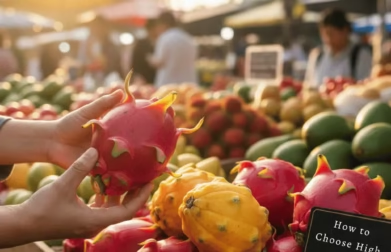
Dragon fruit, also known as Pitaya, is one of the most visually striking and captivating fruits you’ll find in any produce section. With its vibrant pink skin and eye-catching green scales, it looks as though it has been plucked straight from a tropical fairy tale. However, anyone who has ever purchased this exotic cactus fruit has likely experienced a moment of disappointment: you cut open a gorgeous dragon fruit only to find that the flesh inside is bland, flavorless, or already mushy.
Knowing how to choose high-quality dragon fruit is an art one that relies on your visual senses, touch, and an understanding of the different dragon fruit varieties. This guide will transform you from an everyday shopper into a true dragon fruit expert, ensuring that every fruit you pick is sweet, refreshing, and rich in nutrients.
1. Understanding Dragon Fruit (Pitaya): Why Does Quality Vary?
Before diving into the selection process, it is essential to have a clear understanding of the fruit you are buying. Dragon fruit grows on cacti of the Hylocereus genus, originally native to the Americas, but it is now widely cultivated in Southeast Asia, particularly in Vietnam, Thailand, and the Philippines.
The quality of a dragon fruit depends largely on two factors: the harvest time and the variety. Unlike bananas or avocados, dragon fruit does not ripen significantly after being picked. It is a non-climacteric fruit, which means that if it is harvested too early, it will never reach its natural sweetness. Therefore, the ability to recognize a dragon fruit picked at its peak ripeness is the most important factor in determining your shopping experience.
2. Visual Indicators: Observing the Exterior
When you approach the fruit section, your eyes are your first tool. Learning How to Choose High-Quality Dragon Fruit starts with a careful visual inspection.
Skin Color (Check for Vibrancy)
For the common red-pink varieties of dragon fruit, color is the main indicator of ripeness.
-
Ideal: Choose fruits with a deep, bright, and even magenta or pink color.
-
Under-ripe: If the skin still has too much green (except on the scales), the fruit was likely harvested too early.
-
Over-ripe: If the skin looks blotchy, has too many dark spots, or appears wrinkled, the fruit is past its prime.
-
Expert Tip: A few small spots are normal, but large, soft brown patches indicate that the fruit has gone bad.
“Wings” (Scales/Leaf-like Flaps)
The leaf-like flaps on the skin, often called scales or “wings,” indicate the fruit’s freshness.
-
Fresh Quality: The tips of the scales should be green or turning slightly yellow. They should look plump and healthy.
-
What to Avoid: If the scales have completely turned brown, dried out, or wilted, the fruit has been on the shelf too long. While the flesh inside may still be edible, the texture is likely to be soft or mushy rather than crisp.
Shape and Size
Does size matter? Generally, yes.
-
Symmetry: Look for a fruit with a balanced shape. Unusual bulges may indicate uneven ripening or issues with irrigation during cultivation.
-
Plumpness: The fruit should appear “full,” as if the skin is stretched by the juicy flesh inside. Wrinkled skin indicates the fruit has lost moisture.
3. Tactile Indicators: Testing Firmness
Once a dragon fruit passes the visual check, you need to pick it up. Feeling it with your hands provides the most accurate insight into the internal texture.
Firmness
Checking firmness is similar to selecting a ripe avocado, peach, or mango.
-
Hold the dragon fruit in the palm of your hand. Gently press the skin with your thumb or fingers.
-
Perfect Feel: The fruit should yield slightly but bounce back immediately. The sensation should be similar to a ripe kiwi.
-
Too Firm: If the fruit feels rock hard (like an apple), it is under-ripe and almost certainly bland.
-
Too Soft: If your fingers leave an indentation or the fruit feels mushy, it is overripe. The flesh inside is likely to have a slimy texture.
Weight
Always consider the weight of the fruit in your hand.
-
High-Quality: A high-quality dragon fruit should feel heavier than its size suggests. This indicates a high water content and dense, juicy flesh.
-
Low-Quality: If the fruit feels light or spongy, the moisture inside has evaporated, and the flesh will be dry.
4. Internal Indicators: Varieties Matter
You can’t truly know How to Choose High-Quality Dragon Fruit without understanding that different flesh colors deliver significantly different flavors. Supermarkets often display these varieties mixed together, so it’s important to know how to distinguish them from the outside.
White-Fleshed Dragon Fruit (Hylocereus undatus)
-
Exterior: Bright pink skin with green scales.
-
Interior: White flesh with small black seeds.
-
Flavor: Slightly tart, with a sweet, crisp core. This is the most common variety but often the least flavorful if not carefully selected.
-
Selection Tip: Look for larger fruits; smaller white-fleshed ones tend to be blander.
Red/Pink-Fleshed Dragon Fruit (Hylocereus costaricensis or Hylocereus polyrhizus)
-
Exterior: Deep magenta-pink skin, often with shorter or more reddish/purplish scales than the white-fleshed variety. The shape is usually rounder.
-
Interior: Bright red or purple flesh.
-
Flavor: Significantly sweeter than the white-fleshed variety, with a subtle berry-like taste. The texture is usually softer.
-
Selection Tip: This variety is rich in lycopene and betalains (antioxidants). Check firmness carefully, as red-fleshed fruits can become mushier than white-fleshed ones.
Yellow-Fleshed Dragon Fruit (Selenicereus megalanthus)
-
Exterior: Bright yellow skin with a rough texture (spines removed before sale) or scales similar to the white- or red/purple-fleshed varieties.
-
Interior: Translucent white/gray flesh with larger black seeds.
-
Flavor: The sweetest of all varieties, with floral notes and a much higher sugar content than red or pink-fleshed types.
-
Selection Tip: A few small brown spots on the yellow skin are acceptable, but prioritize a vibrant yellow color; this usually indicates the fruit has reached its peak sweetness (similar to a banana).
5. Comparison Chart: Common Dragon Fruit Varieties
To help you visualize the differences and make the best choice for your taste preferences, refer to the comparison chart below.
| Feature | White-Fleshed (Pink Skin) | Red/Purple-Fleshed (Deep Pink Skin) | Yellow-Fleshed (Yellow Skin) |
|---|---|---|---|
| Sweetness | Low to Medium | Medium to High | Very High |
| Texture | Crisp, firm, refreshing | Softer, denser, smoother | Juicy, slightly jelly-like |
| Exterior | Bright pink with long green scales | Deep pink/purple with shorter scales | Yellow, rough, with or without scales (varies) |
| Flavor | Slightly tart on the outside, sweet and juicy in the core | Berry-like, earthy, sweet | Floral, honeyed, very sweet |
| Best For | Salads, decoration (holds shape) | Smoothies, sorbets (vivid color) | Eating fresh, desserts |
| Price | Common / Affordable | Medium | Expensive / Rare |
6. Smell Test: The Subtlest Clues
Although most dragon fruit varieties are relatively odorless due to their thick skin, this is not always the case.
-
Standard Pink-Skinned: Usually has no noticeable smell. If it emits a musty or fermented odor, set it aside it is spoiled.
-
Yellow-Fleshed Dragon Fruit: When fully ripe, yellow-fleshed dragon fruit gives off a sweet, floral aroma. If you can smell the sweetness, it’s ready to eat.
7. Seasonality: The Best Time to Buy
Understanding How to Choose High-Quality Dragon Fruit also includes knowing when to look for it. Although global shipping makes dragon fruit available year-round, peak seasons yield the best-tasting fruits.
-
Summer to Early Autumn: This is the natural peak season for most dragon fruit varieties, especially those imported from Vietnam or grown in other tropical regions.
-
Winter: Dragon fruit is still available, but the fruits are often smaller or must travel longer distances, which can affect freshness.
8. Nutritional Value: Why Choosing High-Quality Matters
Choosing a high-quality dragon fruit isn’t just about flavor; it’s also about maximizing the nutrients you consume. A properly grown, fully ripe dragon fruit is a nutrient-rich powerhouse.
-
Antioxidants: Rich in betalains (red-fleshed) and hydroxycinnamates, which help combat oxidative stress and may help prevent cancer.(1)
-
Fiber: Excellent for digestion. Dragon fruit seeds contain healthy fats and promote regular bowel movements. (2)
-
Vitamin C: Boosts the immune system and supports healthy skin.
-
Magnesium: One of the few fruits high in magnesium, essential for muscle and nerve function.. (3)
Note: A fruit harvested too early (under-ripe) will have significantly lower levels of vitamins and antioxidants compared to one picked at optimal ripeness.
9. Storage and Preparation Tips
Once you’ve successfully applied your knowledge of How to Choose High-Quality Dragon Fruit and brought it home, proper storage is essential to maintain its quality.
Counter vs. Fridge
-
Uncut: If the fruit is still slightly firm, leave it on the counter for 1–2 days to soften a bit (though it won’t get much sweeter). If it’s perfectly ripe, eat it immediately or move it to the fridge.
-
Fridge: Store in the vegetable compartment. It can keep for up to 5 days. However, dragon fruit can absorb odors from other foods, so keep it separate or in a sealed bag if it has been cut.
-
Freezer: If you buy in bulk, cut the flesh into pieces and freeze. Frozen dragon fruit is excellent for smoothies, providing a creamy texture.
How to Cut Dragon Fruit:
-
Slice the dragon fruit in half lengthwise.
-
Method A (Scoop): Slide a spoon betwen the flesh and the skin, then scoop out the entire flesh.
-
Method B (Peel): Cut the halves into quarters. Peel off the thick skin (it will come off easily if the fruit is ripe).
-
Cut into cubes and enjoy.
Conclusion
Great Farmer has shown you that mastering How to Choose High-Quality Dragon Fruit can turn this tropical treat from a gamble into a guaranteed delight. By focusing on vibrant, even-colored skin, ensuring the “wings” (scales) are not wilted, and performing the important firmness test (similar to a kiwi), you can avoid the disappointment of bland fruit.
Whether you enjoy the crisp, light taste of the white-fleshed variety, the antioxidant-rich red-fleshed type, or the candy-sweet yellow-fleshed fruit, these indicators remain your best guide. Next time you’re in the fruit section, take a moment to observe, feel, and choose confidently. Your taste buds and your health will thank you.
Contact us:
📞 Phone / WhatsApp: +84 785 017 575 | +84 778 078 134 | +84 033 531 3567
📧 Email: mia@greatfarmer.com.vn | clay@greatfarmer.com.vn | loan@greatfarmer.com.vn
🌐 Website: www.greatfarmer.com.vn
 Blog & News