1. What Is “ Coconut Diamond Cut”? How It Differs From Regular “Fully-Peeled Coconut”
1.1. Definition and Shaping Process of “Coconut Diamond Cut”
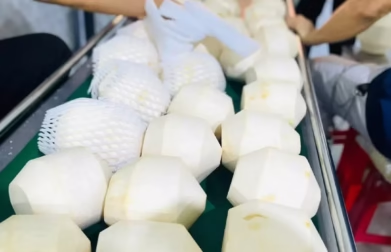
Coconut diamond cut is a fresh coconut product that has been trimmed to remove the thick, hard outer husk, leaving only the inner shell and a thin layer of brown testa. The most distinctive feature lies in the shaping technique: the bottom is cut flat so the coconut can stand upright easily, and the body is shaved into multiple smooth geometric facets, resembling the shape of a diamond.
This product is typically processed from the famous Green Siam Coconut variety of Vietnam, especially from Bến Tre – the country’s coconut capital.
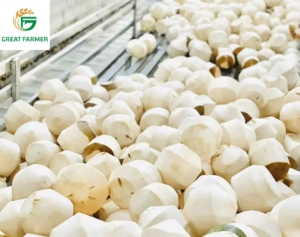
Professional Processing Workflow Includes:
-
Selection: Carefully selecting coconuts with the optimal maturity and sweetness level (typically Siam Dua or Green Siam coconut varieties).
-
Rough Husk Removal: Removing the outer green husk.
-
Diamond-Cut Shaping: Using specialized knives or machinery to create clean, smooth, flat facets. This is the most skill-intensive and experience-dependent step.
-
Cleaning and Sanitization: Treating the surface with ozone water or approved sanitizing solutions to ensure food safety and extend shelf life.
-
Vacuum Packing / Shrink Wrap: Using shrink wrap or vacuum-sealed packaging to prevent the intrusion of bacteria and mold.
1.2. Distinction Between Coconut diamond cut and Fully-Peeled Coconut
Many people often confuse these two concepts. Although both fall under the category of “peeled coconuts,” the Coconut diamond cut offers significantly higher aesthetic value and commercial appeal:
| Characteristics | Coconut diamond cut (Diamond Cut) | Fully-Peeled Coconut (Regular) |
|---|---|---|
| Shape | Geometric, sharp-edged, resembling a diamond or a perfectly shaped cylinder. | Round or oval, often with remaining husk fibers and inconsistent shapes. |
| Value | Premium, elegant; commonly used for export or high-end events. | Standard; typically sold in local markets or street stalls. |
| Processing Requirements | Requires advanced trimming techniques and modern machinery to ensure precision. | Simple manual peeling; does not require high craftsmanship. |
| Shelf Life | Usually processed more professionally, allowing for longer refrigerated storage. | Often less surface treatment, making it more prone to mold if not stored properly. |
2. Outstanding Benefits of Coconut diamond cut (Convenience & Aesthetic Value)
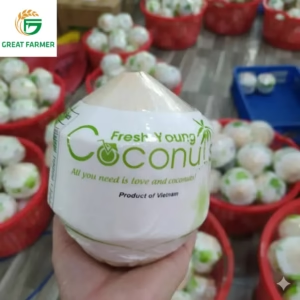
Coconut diamond cut is not only an agricultural product but also a convenient solution that meets the needs of modern lifestyles, enhancing overall user experience.
2.1. Maximizing Convenience
The core value of the diamond-cut coconut lies in eliminating the difficult and messy coconut-cutting process for consumers:
-
Easy to use: Consumers simply need to use a pointed tool or the included opener to pierce a hole through the thinly shaved “coconut cap” and insert a straw.
-
Space-saving: Removing the bulky husk reduces up to 40% of the weight and volume, optimizing costs for transportation, supermarket display, and household refrigeration.
-
Ready to serve: Ideal for busy lifestyles, catering to tourists, office users, and F&B chains that require speed and convenience.
2.2. Aesthetic and Commercial Value (Aesthetics and Branding)
With its refined and elegant shape, the Coconut diamond cut is a top choice for high-end commercial purposes:
-
Event decoration: Its premium appearance makes the Coconut diamond cut an ideal decorative element for weddings, conferences, and upscale buffet events, elevating the overall ambience and class of the occasion.
-
Branding (Personalization): The smooth, clean coconut shell provides an excellent surface for printing logos, messages, or QR codes. This offers a unique and highly effective marketing solution for tourism companies, hotels, and F&B brands.
-
Export: Consistent, visually appealing presentation is a key requirement for Vietnamese agricultural products to succeed in demanding markets such as Japan, South Korea, and Europe.
3. Selecting High-Quality Coconuts
To ensure Expertise and Authoritativeness, sourcing and quality control of coconuts must adhere to strict standards.
3.1. Ben Tre Green Siam Coconut – The Foundation of Quality
The Ben Tre region, with its favorable soil conditions and ideal mineral content, produces Siam coconuts with exceptional sweetness and aroma.
Pre-Selection Criteria for Coconuts:
-
Variety: Preferably Green Siam coconut or Siam Dua coconut, ensuring a mild sweetness (Brix: 6.5–8.0) and distinctive fragrance.
-
Harvest age: Coconuts must be harvested at the optimal age (usually 7.5–8 months) to maximize water content and balanced sweetness. Underripe coconuts are sour, while overripe ones have reduced water and thicker meat.
-
Size: Raw coconut weight should be at least 1.2 kg, ensuring a post-peeling water volume of 250–300 ml.
3.2. Post-Harvest Handling Expertise
Quality control extends beyond selection to peeling and storage technologies:
-
Temperature control: After peeling, coconuts must be immediately placed in cold storage to slow respiration, preserving freshness and sweetness.
-
Mold prevention: The coconut shell is prone to mold (black spots) when exposed to air. Professional processing units implement sanitization with ozone or health-approved antibacterial solutions, strictly avoiding harmful chemicals or bleaching agents.
4. Detailed Analysis of Quality Assessment Standards for Coconuts
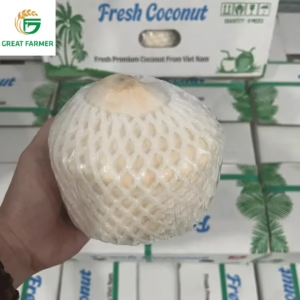
To purchase Grade 1 Coconut diamond cut (suitable for export), consumers and importers must be fully aware of the following criteria.
| Criteria | Grade A Coconut diamond cut (Export) | Grade B Coconut diamond cut (Domestic Consumption) |
|---|---|---|
| Size & Shape | Uniform, post-peeling weight 600–800 grams. Diamond shape clearly defined, minimal peeling defects. | Non-uniform, may have minor scratches. Weight may vary. |
| Sweetness (Brix) | Guaranteed ≥ 7.0 Brix (rich sweetness). | Guaranteed ≥ 6.5 Brix (mild sweetness). |
| Surface Color | Even ivory-white, free of black spots, mold, or cracks. | May have minor blemishes on the surface (does not affect water quality). |
| Packaging | Standard shrink wrap with traceability label, compliant with HACCP/GlobalGAP standards. | Basic packaging, may use regular shrink wrap. |
| Shelf Life | 45–60 days at 2–5°C (due to optimized processing). | Up to 30 days at 2–5°C. |
Note: When sourcing Coconut diamond cut at wholesale prices, it is essential to also verify these quality standards. Extremely low prices are often associated with inconsistent quality (Grade C) or under-ripe coconuts.
5. Coconut Diamond Cut Market: Export, Wholesale Prices & Influencing Factors
Trust and Authority in the Coconut diamond cut business are demonstrated through a reliable supply capacity and deep market knowledge.
5.1. Export Market Analysis
Technical Specification & Packing List:
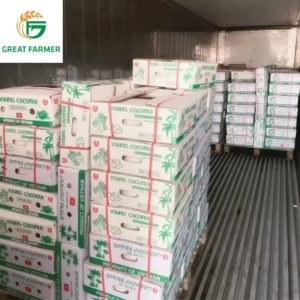
This is the standard technical data table for export orders and large supermarket distribution channels:
| Category | Specification | Technical Note |
|---|---|---|
| 1. Physical Properties | ||
| Variety | Green Siam / Siam Dua Coconut | Origin: Vietnam (Ben Tre) |
| Cutting Style | Diamond Cut (9–12 beveled facets) | Flat bottom for stability |
| Diameter | 11 cm – 13 cm | Tolerance ± 0.5 cm |
| Height | 12 cm – 15 cm | Depends on natural coconut shape |
| Water Volume | Approx. 280–350 ml per coconut | 100% natural coconut water |
| 2. Physico-Chemical & Microbiological Parameters | ||
| pH | 5.2 – 5.8 | Natural pH of fresh coconut water |
| SO₂ Residue (Sulphur) | Non-detectable | FDA/EU standard compliant (No bleaching agents) |
| E.coli / Salmonella | Negative | Controlled in ISO 17025 certified lab |
| 3. Packing Specification | ||
| Primary Packaging (Unit) | Food-grade POF shrink wrap + Label | Wrap snugly, no water accumulation |
| Carton Box | 3–5 ply, waterproof, durable | Standard size: 48 × 36 × 16 cm (reference) |
| Quantity | 9 coconuts/carton (Large size) 12 coconuts/carton (Medium size) | Net weight: 8–10 kg |
| 4. Logistics | ||
| 20ft RF Container | 980 cartons | Do not stack more than 10 layers |
| 40ft RF Container | 2,200 cartons | Keep fans on for continuous airflow |
| Transport Temperature | 2°C – 4°C | Continuous maintenance (Cool Chain) |
| Ventilation | 10 CBM/h | Ensure air circulation, prevent water condensation |
5.2. Key Factors Determining Wholesale Prices of Diamond-Cut Coconuts
The wholesale price of Coconut diamond cut is not fixed and is influenced by multiple factors:
| Influencing Factor | Detailed Description |
|---|---|
| Season & Weather | Raw coconut yield is affected by dry and rainy seasons. Rainy season reduces sweetness and may increase raw material costs. |
| Cutting Standards | Coconuts meeting export-grade Coconut diamond cut (Grade A) standards incur 15–20% higher labor and processing costs compared to regular fully-peeled coconuts. |
| Preservation Technology | Using specialized shrink wrap, vacuum packing, and sanitization increases cost, but ensures higher quality and longer shelf life. |
| Supplier | Large-scale suppliers directly connected to the Ben Tre coconut region generally offer more stable and competitive wholesale prices. |
Advice: When sourcing large quantities of Coconut diamond cut, consider not only the price but also the supplier’s ability to provide Certificate of Quality (CQ) and Certificate of Origin (CO).
7. Conclusion
Coconut diamond cut is the clearest example of the successful combination of traditional Vietnamese agricultural products and modern processing technology. More than just a refreshing beverage, it is a product that offers aesthetic value, convenience, and opens significant opportunities for exporting Vietnamese agricultural produce.
To ensure quality, businesses and consumers should always prioritize the origin (Ben Tre), the diamond-cutting technique, and professional storage procedures.
If you are seeking a high-quality, wholesale source of Coconut diamond cut suitable for export, we GREAT FARMER confidently provide products processed in a closed-loop production system, compliant with international food safety standards, directly from Ben Tre – the coconut capital of Vietnam.
Contact us:
📞 Phone / WhatsApp: +84 785 017 575 | +84 778 078 134 | +84 033 531 3567
📧 Email: mia@greatfarmer.com.vn | clay@greatfarmer.com.vn | loan@greatfarmer.com.vn
🌐 Website: www.greatfarmer.com.vn
 Blog & News