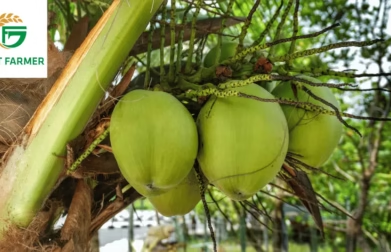
When it comes to Vietnam, the image of lush green coconut trees along the rivers has long become a cultural symbol. Yet over the past decade, Vietnamese Coconut has gone far beyond that image transforming from a traditional agricultural product into a highly sought-after food and beverage ingredient in international markets.
For businesses, importers, and retail chains, the demand for sustainable, high-quality, and traceable raw materials is becoming increasingly essential. Vietnamese Coconut stands as a comprehensive solution.
This article explores why Vietnamese Coconut is not only a consumer trend but also a strategic B2B investment and partnership opportunity unlocking enormous potential within the export value chain, where quality and innovation create a sustainable competitive advantage for enterprises.

Vietnamese Coconut: The Allure in the Consumer Market
Vietnamese Coconut has not become a consumer favorite by chance. Its growing popularity is driven by a convergence of multiple factors from intrinsic quality to overarching market trends.
Unique Quality Rooted in Fertile Alluvial Soil
Vietnam, particularly the Mekong Delta region (notably Bến Tre, the country’s “coconut capital”), is naturally endowed with fertile alluvial soil and an ideal tropical climate. These conditions create the distinct quality that defines Vietnamese Coconut.
- Coconut Water: Vietnamese coconut water, especially from the Siamese Green (Xiêm Xanh) variety, is renowned for its naturally sweet, refreshing taste and high mineral content (such as potassium). This makes it a key ingredient sought after by beverage manufacturers and businesses looking for a reliable supply source from Vietnamese Coconut.
- Distinctive Aroma: A light, natural, and pleasant coconut fragrance never overpowering is the hallmark of premium-quality coconuts.
- Coconut Meat: Vietnamese coconut meat is known for its thickness, richness (high oil content), and signature aroma, making it the perfect raw material for producing Virgin Coconut Oil (VCO), coconut milk, and coconut cream.
Commitment to Standards – Quality as the Foundation of Trust
Recognizing the importance of export markets, leading Vietnamese Coconut suppliers including Great Farmer have made significant investments in cultivation practices and quality management systems.
- Sustainable Cultivation: Many coconut-growing regions have adopted VietGAP, GlobalG.A.P., and Organic standards, meeting the strictest requirements for food safety and traceability.
- More Than a Product — A Solution: Vietnamese enterprises understand that B2B partners are not merely purchasing a coconut. They are investing in a solution for the end consumer. This mindset drives continuous innovation and value creation throughout the supply chain.
Market Analysis: Vietnamese Coconut in Numbers
Vietnam is now among the world’s leading producers and exporters of coconuts. The Vietnamese coconut industry has made remarkable progress, with a strong shift toward exporting fresh Vietnamese Coconut.
Below is an analytical overview of key aspects of Vietnamese Coconut:
| Analytical Aspect | Details | Implications for B2B Partners |
|---|---|---|
| Production Scale | Vietnam has a vast coconut cultivation area of approximately 200,000 hectares, concentrated mainly in the Mekong Delta, with an annual output of around 2 million tons. (1) | Stable Supply Source: Capable of meeting large MOQ orders and ensuring consistent supply for continuous production. |
| Export Markets | Key export destinations include high-standard markets such as the U.S., EU, Canada, and South Korea. (2) | Proven Quality: Successful market entry demonstrates that Vietnamese Coconut meets strict international safety and quality standards. |
| Trade Agreements (FTA) | Vietnam’s participation in multiple Free Trade Agreements (FTAs) — including EVFTA, CPTPP, and RCEP — creates favorable conditions for coconut exports. | Competitive Cost Advantage: Eligible for low or zero import tariffs, helping reduce input costs and enhance market competitiveness. |
| Organic Certification | The area of Organic Coconut certified under USDA, EU, and JAS (Japan) standards is rapidly expanding. (3) (4) | Aligned with Green Consumer Trends: Able to supply organic and sustainable raw materials, catering to premium and eco-conscious market segments. |
The Convenience Revolution: The Rise of Value-Added Fresh Vietnamese Coconut
This is the moment when Vietnamese Coconut shines leading the global trend. Traditional fresh coconuts have long faced a key challenge: inconvenience they are heavy, bulky, and difficult to open. Vietnamese exporters have turned this challenge into a premium experience, ushering in a new era for Vietnamese Coconut.
1. Peeled / Shaved Coconut – The Foundation of Convenience
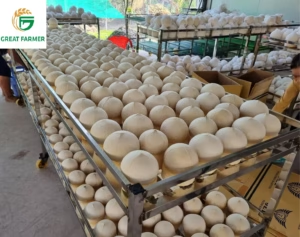
Description: The green husk is completely removed, leaving only the smooth, ivory-white shell.
B2B Advantages:
-
Optimized Logistics: Reduced weight, volume, and transportation costs.
-
Base Material: Serves as the foundation for developing higher-end products such as Diamond Cut Coconut.
-
Ease of Handling: Cleaner, faster, and simpler to process compared to raw coconuts.
2. Diamond Cut Coconut – Refined Aesthetic Appeal

Description: The peeled coconut is sculpted into diamond or cone shapes, tailored for the HORECA (Hotel, Restaurant, Café) and premium retail segments.
B2B Advantages:
-
High Aesthetic Value: Elegant appearance suitable for restaurants and resorts.
-
Labor Efficiency: Eliminates the need for manual trimming.
-
Branding Opportunity: Logos can be laser-engraved on the coconut surface for brand differentiation.
3. Push-Button Coconut – Instant Convenience

Description: The coconut is engineered with a push-top button on its crown; users simply press or push to insert a straw.
B2B Advantages:
-
Engaging User Experience: The “push” action adds novelty and fun, especially appealing to younger consumers.
-
Safe & Hygienic: No knife required, no packaging waste.
-
Cost-Effective: A practical mid-tier convenience solution with broad market appeal.
4. Ring Pull / Easy Open Coconut – The Pinnacle of Innovation

Description: Using laser technology and a ring-pull cap, this design transforms a coconut into a luxurious natural beverage can.
B2B Advantages:
-
Premium Experience: Effortless and safe opening delivering a “wow moment.”
-
High-End Positioning: Ideal for airlines, organic supermarkets, and luxury consumers.
-
Brand Differentiation: A unique, cutting-edge product that defines leadership in the segment.
B2B Opportunity Matrix: Key Fresh Vietnamese Coconut Products
To help B2B partners better visualize the market landscape, the table below provides a comparative analysis of the major fresh Vietnamese coconut product categories:
| Product Type | Key Features | Target Market / Segment | B2B Advantages | Business Potential |
|---|---|---|---|---|
| Peeled / Shaved Coconut | Fully peeled, clean ivory shell | Beverage processors, importers, mid-tier retail | Easier handling, lower logistics cost, stable supply | High volume base product for export |
| Diamond Cut Coconut | Sculpted into diamond or cone shapes | HORECA (Hotels, Restaurants, Cafés), premium retail | Elegant design, customizable branding (laser logo) | Growing niche ideal for brand differentiation |
| Push-Button Coconut | Push-top for instant straw insertion | Convenience stores, modern retail, youth-oriented channels | Novel, safe, and hygienic; no tools required | Strong trend appeal modern consumer experience |
| Ring Pull / Easy Open Coconut | Equipped with laser-cut ring pull cap | Airlines, organic supermarkets, luxury retail | Premium experience, innovative packaging, brand prestige | High-end segment limited supply, high margin |
Why Now Is the Golden Time to Partner?
Navigating Vietnam’s Coconut Supply Chain: Opportunities & Challenges
B2B collaboration is not merely about product transactions it is about co-developing a flexible and sustainable supply chain.
Strategic Opportunities:
- Traceability: Many suppliers in Vietnam have adopted technology-driven traceability systems and farmer-linked production models, enabling tracking down to the individual farm a major advantage in product transparency.
- FTA Advantage: Vietnam’s participation in multiple Free Trade Agreements (FTAs) helps reduce tariffs, creating a price competitiveness edge for import partners choosing Vietnamese Coconut.
- Innovation & R&D: Vietnamese enterprises are intensifying R&D efforts to develop new products such as blended coconut water, coconut-based snacks, and cosmetic ingredients opening opportunities for co-development and innovation-driven partnerships.
Key Challenges to Consider:
- Climate Change: Drought and saltwater intrusion in the Mekong Delta are impacting coconut yield and quality, posing challenges for long-term supply stability.
- Consistency: Ensuring product uniformity and reliability requires partnering with suppliers that maintain strict QA/QC standards throughout production and processing.
- Logistics: Transportation and cold-chain management costs especially for fresh coconut water need to be optimized to maintain product freshness and cost efficiency.
Great Farmer – A Pioneer in Vietnam’s Sustainable Coconut Supply Chain

Great Farmer is a leading exporter of Vietnamese Coconut, pioneering a fully integrated value chain from certified cultivation areas meeting VietGAP, GlobalG.A.P., and Organic (USDA, EU, JAS) standards to advanced processing and global export.
With its “From Farm to Global Market” strategy, Great Farmer offers a diverse portfolio including fresh whole coconuts, Diamond Cut coconuts, Push-Button coconuts, and Ring Pull coconuts, flexibly catering to B2B partners worldwide.
The company stands out for its product customization capabilities, advanced cold-chain preservation, empowering partners to build unique brand value on the foundation of premium Vietnamese Coconut.
Conclusion: Vietnamese Coconut – A Sustainable Strategic Partner
Vietnamese Coconut stands as a testament to the quality, flexibility, and adaptability of Vietnam’s agricultural sector.
With its three core pillars High Quality, Sustainability, and Competitive Cost it is not merely a choice, but a strategic decision within the global supply chain.
Connect with us today to partner with internationally certified organic coconut suppliers, receive competitive quotations, and explore comprehensive B2B sourcing solutions tailored to your business needs.
Contact us:
Phone/Whatsapp: +84 785017575 | +84 778 078 134
Email: mia@greatfarmer.com.vn | clay@greatfarmer.com.vn
Website: https://www.greatfarmer.com.vn
 Blog & News