Overview of Guava Pink and White Varieties
Origin and Classification
Before comparing pink guava and white guava, it’s essential to understand what makes this tropical fruit special. Guava (Psidium guajava) is believed to have originated in Peru around 800 BCE and is now native to North and South America, Central America, Mexico, and the Caribbean (1).
Known for its distinct aroma, texture, and rich nutrition, guava is grown in over 50 countries, with India, China, and Thailand as top producers.
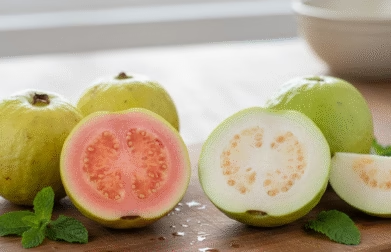
The key difference between pink and white guava lies in the flesh color, determined by carotenoids & Lycopene the same pigments that give tomatoes and watermelons their red hue. But this difference is more than just appearance.
Pink Guava vs White Guava: Identifying the “Contenders”
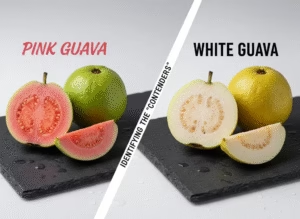
Before diving into a detailed comparison, let’s first explore the key characteristics that distinguish these two varieties:
| Criteria | Pink Guava | White Guava |
|---|---|---|
| Skin | Green when unripe, turning bright yellow when ripe; the surface can be either smooth or slightly rough, sometimes showing light brown patches. (2) | Dark green when unripe, turning yellowish green upon ripening. (3) |
| Flesh / Pulp | Light pink to deep pink, sometimes creamy in color depending on the variety. (4) | Creamy white to ivory, depending on the variety. (5) |
| Seeds | Small, edible seeds, often fewer than those found in white guavas. (6) | Pale yellow or white seeds, more numerous and evenly distributed throughout the pulp. (7) |
| Texture | Softer, juicier, and more delicate in structure. (8) | Firmer and crunchier, especially near the inner rind, with denser flesh overall. (9) |
The Flavor Showdown: Which One Reigns Supreme?
Flavor is the most important factor when choosing fruit. So, between pink guava and white guava, which offers the more delightful taste experience?
Sweetness and Aroma
Texture
The texture of guava plays a major role in the overall eating experience.
- Pink guava: Typically has a softer, juicier texture with fewer seeds. Its smooth, tender flesh almost melts in the mouth, making it ideal for fresh eating or blending into smoothies.
- White guava: Features a firmer, crunchier texture with more seeds. Its crisp bite provides a satisfying crunch, perfect for salads or pairing with chili salt for a refreshing snack.
The choice ultimately depends on personal preference if you enjoy soft, juicy fruit, pink guava is your best pick, but if you prefer a crisp, crunchy bite, white guava is the way to go.
Comparing the “Golden” Health Benefits
Both types of guava are excellent sources of vitamins and minerals. However, there are a few notable differences in their nutritional composition. (10)
Pink guava stands out for its high levels of lycopene and carotenoids, powerful antioxidants that help protect the body from oxidative stress.
White guava offers more vitamin C, fiber, and starch, making it an equally healthy option. Both are rich in vitamin C even higher than oranges supporting a strong immune system.
Both pink and white guavas offer remarkable health benefits, including: (11)
- Blood Sugar Management: High fiber content helps slow sugar absorption. Pink guava, with lower sugar and starch levels, may be slightly better for people with diabetes.
- Immune Support: Abundant vitamin C boosts immunity and promotes collagen production.
- Digestive Health: Fiber supports bowel movement and gut health.
- Heart Health: Antioxidants help lower cholesterol and blood pressure.
- Weight Management: Low in calories and high in water and fiber, guava promotes a feeling of fullness.
- Cancer Prevention Potential: Lycopene in pink guava may help reduce cancer risk, while both varieties possess anti-inflammatory properties.
With its higher antioxidant content especially lycopene pink guava holds a slight edge. However, both pink and white guavas are excellent choices for overall health and well-being.
Culinary Masterpiece: How Each Guava Shines in the Kitchen
With their distinct characteristics, each guava variety brings its own charm to different culinary creations.
Pink Guava – The “Queen” of Desserts and Beverages
With its vibrant color, rich sweetness, and smooth texture, pink guava is perfect for smoothies, juices, jams, jellies, desserts, and cocktails, adding a tropical twist and natural pink allure.
White Guava – The “Secret Spice” for Savory Dishes and Salads
Crisp and mildly sweet, white guava shines in fruit salads, savory slaws, chili-salt snacks, and dried treats, offering refreshing texture and gentle sweetness.
No absolute winner each guava is a culinary master, excelling in its own flavorful domain.
Guava Selection & Storage Tips
To enjoy guava’s best flavor, follow these simple steps:
- Color: Pick light yellow-green guavas with smooth, shiny skin. Avoid dark spots or softness.
- Firmness: Choose fruits that are firm yet slightly springy — not too hard or mushy.
- Aroma: Ripe guavas have a sweet, pleasant scent.
- Storage: Keep at room temperature for quick use or refrigerate (3–5 days) for freshness.
Final Verdict: Who’s the Real Winner?
Pink guava stands out with its sweet flavor, fragrant aroma, and rich lycopene content, giving it a slight edge in taste and nutrition.
However, white guava, with its crisp texture and refreshing sweetness, remains the unbeatable choice for salads and a favorite snack with chili salt.
Ultimately, the “winner” depends on your taste and purpose pink guava for sweet desserts, white guava for fresh, crunchy bites.
Try both types of guava and discover your own “winner”!
Whether it’s the rich sweetness of pink guava or the crisp, refreshing taste of white guava, each offers an unforgettable experience.
So, which side are you on today — Team Pink Guava or Team White Guava? Share your choice with us!
Contact us :
Phone/Whatsapp : +84 785017575 ( Minh)
Email: mia@greatfarmer.com.vn
Website: www.greatfarmer.com.vn
 Blog & News