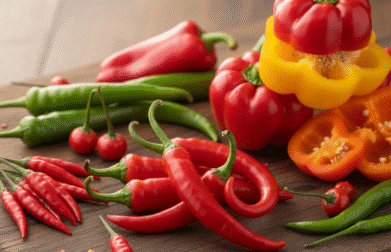
Vietnamese cuisine is renowned for its rich and bold flavors, in which Popular Chili plays an important role by bringing a distinctive fiery spiciness. From casual street food to lavish feasts, Popular Chili not only stimulates the taste buds but also adds depth to the flavor, becoming the soul of many specialties. Thanks to its diverse climate and soil conditions, Vietnam boasts a rich collection of Popular Chili varieties with different shapes, flavors, and levels of spiciness, cultivated widely from the Mekong Delta to the Central Highlands, serving both domestic consumption and export. Among them, these Popular Chili types hold a significant place, being both familiar to Vietnamese people and highly appreciated in the international market.
In this article, we will introduce the 6 most popular and favored Popular Chili varieties in Vietnam, along with their Scoville Heat Unit (SHU) ratings, uses, and applications in cuisine. Whether you are a fan of fiery flavors, a home cook, or seeking a chili supplier, especially the Popular Chili types listed below, this exploration will help you better understand this familiar spice and how it elevates Vietnamese dishes.
1. Bird’s Eye Chili (Chili Only Pointing to the Sky)
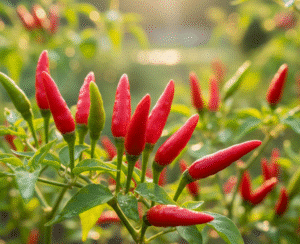
Bird’s eye chili (Capsicum annuum L.) is one of the most iconic and widely recognized Popular Chili varieties in Vietnam, familiar and used across the country. Its most distinctive feature is the upright-growing fruit that points skyward, creating a characteristic appearance and giving rise to the name “Chỉ Thiên” (literally “pointing to the sky”).
- Identification: The chili fruits are small and slender, typically 2 – 4 cm long, with a sharp tip resembling a bird’s beak. When unripe, the fruits are dark green and gradually turn bright red when fully ripe.
- Flavor and Heat Level: Bird’s eye chili is renowned for its intense, explosive spiciness, delivering sharp heat instantly, perfect for adding vitality without overpowering other flavors. On the Scoville scale, its heat ranges from 100,000 to 250,000 SHU, a significant level of spiciness for seasoned chili lovers.
- Culinary Uses: This Popular Chili is popularly referred to as a “national favorite.” From bowls of fish sauce with crushed garlic and chili, stews, stir-fries, and sour soups, to pho, noodle dishes, and fruit dipping salts, bird’s eye chili is used to enhance bold flavors and add a bit of challenge. It is also dried and ground into powder for year-round use.
- Popularity: This Popular Chili variety is widespread and has even reached international markets, where it is highly valued for its consistent quality and authentic flavor profile.
Bird’s eye chili thrives in Vietnam’s warm, humid climate and can be harvested year-round. It is grown both in household gardens and commercial farms, ensuring a stable supply. Green chilies offer a mild fragrance, while red chilies are spicier with a slightly sweet undertone.
2. Siam Chili (“Hiem Chili”)
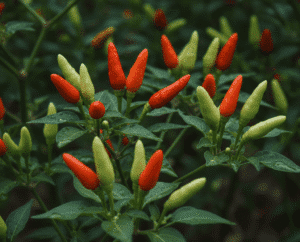
Siam chili, also known as “Bird Poop Chili” (Capsicum frutescens), is another widely recognized Popular Chili in Vietnam. The name “Hiểm” (meaning “dangerous”) hints at the formidable spiciness of this chili, despite its tiny size. This small but powerful chili brings heat that defines many Vietnamese dishes. Its name originates from its diminutive size, and it is a staple product in markets throughout Hanoi, Ho Chi Minh City, and beyond.
- Identification: Siam chili is very small, typically only 1–2 cm long. The fruits grow in clusters and have a slender, pointed shape or sometimes slightly rounded. Siam chili comes in a variety of colors, including green, yellow, orange, red, and occasionally purple.
- Flavor and Heat Level: Don’t be deceived by its tiny appearance Siam chili is extremely hot, usually ranging from 50,000 to 100,000 SHU, spicier than jalapeño but milder than habanero. Its heat is sharp and lingering, accompanied by a distinctive aroma that is unmistakable.
- Culinary Uses: In Vietnamese cuisine, this Popular Chili is the heart of many specialty dishes, especially hot pots such as the famous “Chicken Hot Pot with Siam Chili.” It is also used fresh, thinly sliced into soups or stir-fries, pickled in vinegar, made into dipping sauces, or eaten fresh alongside grilled and boiled dishes to enhance flavor.
Growing Siam chili is relatively simple in Vietnam’s tropical climate. It thrives in well-drained soil with plenty of sunlight and reaches maturity in about 80–90 days. Home gardeners highly value it for its high yield and resistance to pests.
3. Horn Chili (Buffalo Horn Chili)
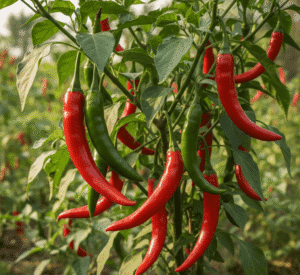
Moving on to larger varieties, horn chili (Capsicum annuum L.) deserves its place among the 6 most Popular Chili in Vietnam due to its characteristic curved shape resembling a buffalo horn. It is a perfect choice for those who appreciate the color and aroma of chili but cannot tolerate extreme spiciness. This chili focuses less on intense heat and more on enhancing flavor.
- Identification: Horn chili fruits are large and long (10–15 cm), with a slightly curved shape resembling a buffalo horn. The skin is smooth and thick, green when unripe and turning deep red when fully ripe.
- Flavor and Heat Level: Horn chili has a very mild spiciness, almost non-spicy, with only a subtle pungent flavor. Its heat level is very low, typically around 2,500–5,000 SHU. Instead, it offers a slight sweetness and a pleasant aroma.
- Culinary Uses: With its vibrant color and mild spiciness, this Popular Chili is often used for decoration, garnishing, and adding liveliness to dishes. It is also used in stir-fries, salads, or sliced to accompany pho and noodle dishes. Horn chili is a key ingredient in making chili sauce and satay, thanks to its ability to provide a naturally attractive red color.
Widely grown in the Mekong Delta, these chilies thrive in fertile, loose soil and can be harvested multiple times per season. For enthusiasts, they are easy to grow in pots, making them ideal for urban gardening. Fresh or dried, they add color and mild heat to salads, marinades, and even preserves.
4. Green Siam Chili
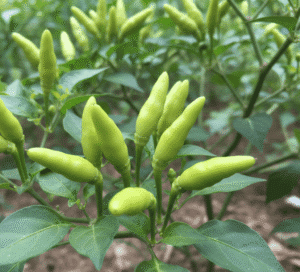
Green Siam chili, a variant of Siam chili (Capsicum annuum L.), is a widely recognized Popular Chili and a specialty commonly found in the Central and Southern provinces of Vietnam. This chili is loved not only for its spiciness but also for its unique aroma.
- Identification: Similar to Siam chili, green Siam chili has small fruits, but they are usually harvested while still green. The skin is thin and bright green, giving a fresh appearance.
- Flavor and Heat Level: Green Siam chili has a spiciness level comparable to Siam chili, around 50,000–100,000 SHU. Its most distinctive feature is its fragrant aroma, which balances the pungency and creates a pleasantly aromatic heat.
- Culinary Uses: This Popular Chili is an essential ingredient for making green chili salt to accompany seafood. The spicy aroma of the chili blends perfectly with the saltiness of salt and the sourness of lime, creating a legendary dipping sauce. Green Siam chili is also used in salads, Thai-style hot pots, or crushed to accompany grilled dishes.
5. Bell Pepper
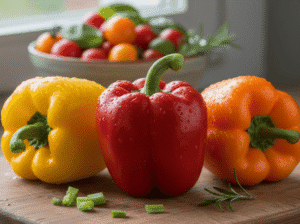
Completely different from its spicier relatives, bell pepper (Capsicum annuum) is almost entirely non-spicy but remains one of the widely recognized Popular Chili and is known as a nutritious vegetable. Vietnamese bell peppers deserve recognition for their essential role in Vietnamese cuisine.
- Identification: The fruits are large and block-shaped, resembling a bell. Bell peppers come in a variety of vibrant colors, including green, red, yellow, orange, and even purple. The flesh is thick, crunchy, and juicy.
- Flavor and Heat Level: Bell peppers are completely non-spicy, with a Scoville rating of 0 SHU. Instead, they are sweet, refreshing, and very crisp. Each color has a slightly different flavor profile; for example, red peppers are usually sweeter than green ones.
- Culinary Uses: Bell peppers are a common ingredient in both Asian and Western dishes. In Vietnam, they are often used in stir-fries, such as beef with bell peppers, in salads, on pizza, or stuffed with meat and cheese before baking. With high levels of vitamin C and antioxidants, bell peppers are an excellent addition to a healthy diet.
6. Ha Giang Wind Chili
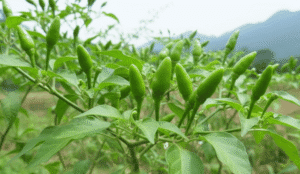
A rare specialty from the Dong Van Karst Plateau in Ha Giang, Ha Giang wind chili is a testament to the diversity and uniqueness of Vietnamese spices. It is a distinctive and precious Popular Chili.
- Identification: Ha Giang wind chili produces very small fruits, about the size of a chopstick tip, growing wild on rocky mountain slopes. When ripe, the fruits turn a bright, eye-catching red.
- Flavor and Heat Level: The most remarkable feature of this chili is its flavor. It has a mild spiciness that spreads gently, accompanied by a refreshing, herb-like aroma reminiscent of the mountain wilderness. Although there is no specific SHU rating, its heat is described as “fragrant and spicy without causing stomach discomfort.”
- Culinary Uses: Locals often use Ha Giang wind chili fresh, pickled with bamboo shoots, or as a special dipping spice. Visitors to Ha Giang often purchase it pickled in vinegar or salt as a souvenir. Its unique fragrant heat can elevate any dish, from a steaming bowl of pho to simple boiled meat.
Quick Summary Table
| Chili Name | Scientific Name | Heat Level (SHU) | Size | Key Features | Main Uses |
|---|---|---|---|---|---|
| Bird’s Eye Chili | Capsicum annuum | 100,000–250,000 | Small, 2–4 cm long | Intense heat, upright-growing fruit | Dipping sauces, stews, stir-fries, chili powder |
| Siam Chili | Capsicum frutescens | 50,000–100,000 | Very small, 1–2 cm | Extremely spicy, fragrant | Hot pots, pickled, eaten fresh |
| Horn Chili | Capsicum annuum L. | 0–500 | Large, 10–15 cm long | Mild heat, colorful, lightly fragrant | Decoration, stir-fries, chili sauce, satay |
| Green Siam Chili | Capsicum annuum L. | 50,000–100,000 | Small, 1–2 cm | Spicy, aromatic | Green chili salt for seafood, salads |
| Bell Pepper | Capsicum annuum | 0 | Very large, bell-shaped | Non-spicy, sweet, crunchy | Stir-fries, salads, roasted, raw |
| Ha Giang Wind Chili | (Not determined) | Mild heat | Very small | Fragrant, herbal aroma | Eaten fresh, pickled in vinegar, dipping spice |
Health Benefits of Consuming Popular Chili
The Popular Chili varieties mentioned above contain important compounds and vitamins beneficial to human health and offer several health advantages, including:
- Boosting Metabolism and Energy Expenditure: Capsaicin – the compound responsible for the spiciness in chili – can slightly increase metabolic rate and support fat burning (1). Some studies suggest that consuming chili may help raise body temperature (thermogenesis), thereby burning additional calories. (2)
- Supporting Circulation and Cardiovascular Health: Capsaicin may promote vasodilation and increase the production of nitric oxide (NO) – a mediator that helps blood vessels relax and improves blood flow (3). Additionally, there is evidence that regular chili consumption may be associated with reduced risk of cardiovascular mortality and stroke (4). Some animal studies also indicate that capsaicin may help lower blood pressure. (5)
- Anti-inflammatory and Antioxidant Effects: Chili contains numerous antioxidants, such as carotenoids (like capsanthin) and flavonoids, which help neutralize free radicals (6). Capsaicin has also been studied for its anti-inflammatory properties by inhibiting pro-inflammatory molecules. (7)
- Supporting Digestion: Chili may stimulate the secretion of digestive juices, such as increasing gastric juice production, which helps improve food digestion. Moreover, some studies indicate that capsaicin can positively affect gut microbiota, promoting the diversity of beneficial bacteria. (8)
 Blog & News